
As an IVF specialist and gynecologist, one of the most common concerns I hear from women is whether uterine fibroids can affect their ability to conceive or have a healthy pregnancy. In many cases, women are diagnosed with fibroids during a routine ultrasound and immediately begin worrying about fertility, miscarriage, or pregnancy complications.
The good news is that many women with fibroids go on to have successful pregnancies and healthy babies. However, the impact of fibroids varies depending on their size, location, and number. Understanding uterine fibroids and their impact on pregnancy outcomes can help women make informed decisions about fertility treatment, pregnancy planning, and medical care.
In my practice, I carefully evaluate each patient’s reproductive goals before recommending any treatment. Some women may simply require monitoring, while others may benefit from fertility-focused interventions to improve their chances of conception and a healthy pregnancy.
What Are Uterine Fibroids?
Uterine fibroids are non-cancerous growths that develop in or around the uterus. They are extremely common during the reproductive years and can range from tiny growths to large masses that change the shape of the uterus.
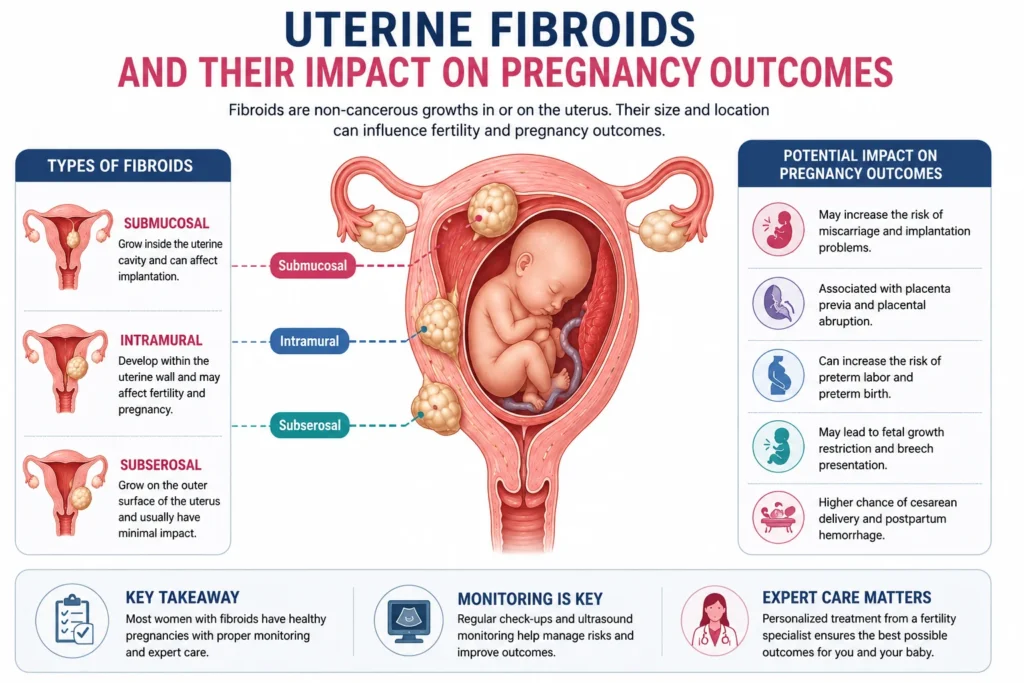
The four main types of fibroids include:
- Submucosal Fibroids – Located inside the uterine cavity.
- Intramural Fibroids – Found within the muscular wall of the uterus.
- Subserosal Fibroids – Grow on the outer surface of the uterus.
- Pedunculated Fibroids – Attached to the uterus by a stalk.
From a fertility perspective, the location of the fibroid is often more important than its size. Submucosal fibroids tend to have the greatest impact on fertility and pregnancy outcomes because they directly affect the uterine cavity where implantation occurs.
Can You Have a Healthy Pregnancy with Fibroids?
Yes. Many women with fibroids experience completely normal pregnancies. In fact, not every fibroid requires treatment before conception.
When I evaluate a patient with fibroids, I consider several important factors:
- The size of the fibroid
- The number of fibroids present
- Their location within the uterus
- The patient’s age
- Previous miscarriage history
- Past fertility treatment outcomes
Women who have experienced infertility or repeated pregnancy loss may require a more detailed evaluation. In such situations, I often recommend consulting an Infertility Specialist in Noida to determine whether fibroids are contributing to the problem.
How Fibroids Can Affect Fertility Before Pregnancy?
Before discussing pregnancy complications, it is important to understand how fibroids may affect fertility.
In my clinical experience, fibroids can interfere with conception in several ways. They may distort the uterine cavity, alter blood flow to the endometrium, block the fallopian tubes, or make embryo implantation more difficult.
Common fertility-related issues associated with fibroids include:
- Difficulty conceiving naturally
- Repeated implantation failure
- Reduced IVF success rates
- Early miscarriage
- Recurrent pregnancy loss
For women pursuing assisted reproductive treatment, fibroids may significantly affect outcomes. This is why a detailed fertility assessment at an IVF Center in Noida is often recommended before beginning treatment.
I also encourage women to undergo a complete fertility evaluation because fibroids are not always the only cause of infertility. Conditions such as Silent Endometriosis and Its Impact on IVF Success Rates can coexist with fibroids and further reduce the chances of successful conception.
How Fibroids Affect Pregnancy Outcomes?
When discussing uterine fibroids and their impact on pregnancy outcomes, I explain to my patients that complications depend on the stage of pregnancy and the position of the fibroid.
First Trimester Complications
During the first trimester, fibroids may interfere with implantation and placental development. Some women experience:
- Early pregnancy bleeding
- Implantation difficulties
- Increased miscarriage risk
- Pregnancy loss
Second Trimester Complications
Hormonal changes can cause some fibroids to grow during pregnancy. This may result in:
- Pelvic pain
- Fibroid degeneration
- Pressure symptoms
- Placental complications
Third Trimester Complications
Large fibroids may reduce the available space for fetal growth and positioning. Potential concerns include:
- Breech presentation
- Preterm labour
- Fetal growth restriction
- Difficult delivery
- Higher Caesarean section rates
My Approach to Managing Fibroids and Pregnancy
I am Dr. Aprajita Srivastava, an IVF specialist, gynecologist, and laparoscopic surgeon based in Sector 121, Noida. I regularly help women manage fibroids, infertility challenges, recurrent miscarriages, and high-risk pregnancies through personalized treatment plans.
My goal is always to preserve fertility while minimizing pregnancy-related risks. Depending on the size and location of the fibroids, I may recommend monitoring, fertility treatment, or minimally invasive surgery.
For women requiring surgical intervention, advanced Gynae Laparoscopic Surgery in Noida often provides an effective fertility-preserving solution.
Clinic Address: Ofc No 143, 1st Floor, QURE CLINIC, Cleo St, Sector 121, Noida, Uttar Pradesh 201301
Phone: +91 95992 44575