
Progesterone is often referred to as the “pregnancy hormone” because of its vital role in establishing and maintaining a healthy pregnancy.
From preparing the uterine lining for implantation to supporting the developing embryo, progesterone is one of the most important hormones involved in conception.
The role of progesterone in early pregnancy and IVF success becomes even more significant during fertility treatments, where hormonal support can directly influence implantation and pregnancy outcomes.
According to Dr. Aprajita Srivastava, IVF Specialist, Gynecologist, and Laparoscopic Surgeon in Noida, maintaining optimal progesterone levels is essential for creating a receptive uterine environment and supporting embryo development during the crucial first weeks of pregnancy.
What Is Progesterone and Why Is It Important?
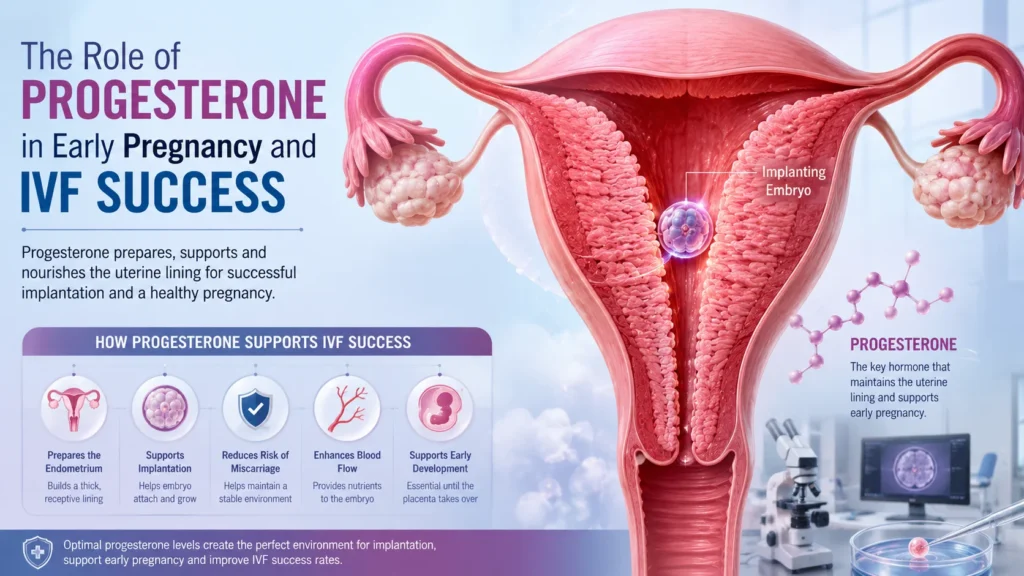
Progesterone is a hormone naturally produced by the ovaries after ovulation. Its primary function is to prepare the endometrium (uterine lining) for implantation of a fertilized egg. If pregnancy occurs, progesterone continues to support the pregnancy until the placenta takes over hormone production, usually around the 10th to 12th week.
Without sufficient progesterone, the uterine lining may not be able to support implantation or sustain an early pregnancy.
Role of Progesterone in Early Pregnancy and IVF Success
The role of progesterone in early pregnancy and IVF success extends beyond implantation. It helps create an environment where the embryo can attach, grow, and develop properly.
- Prepares the uterine lining for embryo implantation
- Supports embryo attachment to the endometrium
- Reduces uterine contractions that may interfere with implantation
- Promotes blood flow and nutrient supply to the developing embryo
- Supports placental development during the first trimester
- Helps reduce the risk of early pregnancy loss associated with hormonal deficiencies
These functions make progesterone one of the most critical hormones during the early stages of pregnancy and assisted reproductive treatments.
Why Progesterone Support Is Necessary During IVF?
During IVF treatment, medications used for ovarian stimulation can interfere with the body’s natural progesterone production. As a result, fertility specialists often prescribe progesterone supplementation to support implantation and pregnancy maintenance.
Progesterone support during IVF helps:
- Improve endometrial receptivity
- Support the implantation window
- Provide luteal phase support
- Increase the chances of embryo implantation
- Improve clinical pregnancy rates
Women preparing for treatment can also benefit from understanding how to prepare for IVF treatment and the factors that influence successful outcomes.
Progesterone Before and After Embryo Transfer
Before Embryo Transfer
Progesterone is administered before embryo transfer to ensure the endometrium reaches the ideal stage for implantation. Proper synchronization between embryo development and endometrial receptivity is crucial for IVF success.
After Embryo Transfer
Following embryo transfer, progesterone supplementation continues to support implantation and early pregnancy development. In most cases, treatment is continued until the placenta can independently produce sufficient progesterone.
Patients can learn more about implantation during IVF and its role in successful conception.
Types of Progesterone Used in IVF Treatment
Progesterone supplementation is available in different forms:
- Intramuscular Injections: Provide consistent hormone levels but may cause injection-site discomfort.
- Vaginal Suppositories: Commonly used due to targeted delivery to the uterus.
- Vaginal Gel: Convenient and effective for many patients.
- Oral Tablets: Less commonly used because absorption can be variable.
The most suitable option depends on the patient’s medical history, IVF protocol, and physician recommendations.
Can Low Progesterone Affect IVF Success?
Yes. Low progesterone levels may negatively affect implantation and increase the risk of early pregnancy complications.
Common signs associated with inadequate progesterone levels include:
- Thin endometrial lining
- Implantation failure
- Early pregnancy bleeding
- Spotting before pregnancy testing
- Recurrent miscarriage in some cases
For women experiencing repeated IVF failures, further investigation into hormonal balance, endometrial receptivity, and underlying fertility conditions may be necessary.
Silent Endometriosis and Progesterone Resistance
An often-overlooked factor affecting fertility is Silent Endometriosis and Its Impact on IVF Success Rates. Some women with silent endometriosis may not experience significant symptoms but can still face implantation challenges.
Research suggests that endometriosis may contribute to progesterone resistance, a condition in which the endometrium does not respond adequately to progesterone signals. This can affect implantation and reduce IVF success rates despite the transfer of healthy embryos.
Early diagnosis and personalized fertility treatment planning can help improve reproductive outcomes in such cases.
What Happens If Progesterone Is Stopped Too Early?
Stopping progesterone supplementation without medical guidance can compromise the uterine environment needed to support early pregnancy. This is why fertility specialists carefully determine when progesterone can be safely discontinued.
Most IVF patients continue progesterone support until approximately 10–12 weeks of pregnancy, when placental hormone production becomes sufficient.
Tips for Supporting Healthy Progesterone Levels
- Take medications exactly as prescribed
- Attend all fertility monitoring appointments
- Maintain a balanced fertility-friendly diet
- Manage stress effectively
- Prioritize adequate sleep
- Follow all post-transfer instructions from your fertility specialist
Couples can also explore foods that support IVF success and other lifestyle strategies that promote reproductive health.
Conclusion
The role of progesterone in early pregnancy and IVF success cannot be overstated. From preparing the uterine lining for implantation to supporting the embryo during the first trimester, progesterone plays a central role in achieving and maintaining pregnancy. Proper progesterone supplementation, individualized IVF protocols, and timely monitoring can significantly improve reproductive outcomes.
Dr. Aprajita Srivastava, a highly experienced IVF Specialist, Gynecologist, and Laparoscopic Surgeon in Noida, provides personalized fertility treatment plans for couples facing infertility challenges. Her expertise in IVF, IUI, recurrent implantation failure, endometriosis management, and advanced reproductive medicine helps patients receive evidence-based fertility care tailored to their unique needs.
About Dr. Aprajita Srivastava
Dr. Aprajita Srivastava is a renowned IVF Specialist, Gynecologist, and Laparoscopic Surgeon practicing at Qure Clinic, Sector 121, Noida. She specializes in infertility treatment, IVF, IUI, egg freezing, recurrent pregnancy loss, and high-risk pregnancy management.
Address: Office No. 143, 1st Floor, Qure Clinic, Cleo Street, Sector 121, Noida, Uttar Pradesh 201301 Phone: +91 95992 44575
Frequently Asked Questions
Why is progesterone important after embryo transfer?
Progesterone supports the uterine lining and helps maintain optimal conditions for embryo implantation and early pregnancy development.
How long should progesterone be taken after IVF?
Most patients continue progesterone supplementation until approximately 10–12 weeks of pregnancy, depending on medical recommendations.
Can low progesterone cause implantation failure?
Low progesterone levels can reduce endometrial receptivity and may negatively impact embryo implantation.
Is vaginal progesterone as effective as injections?
Both methods can be effective. The choice depends on individual treatment protocols and physician recommendations.
Can progesterone reduce the risk of miscarriage?
Progesterone helps maintain a supportive uterine environment during early pregnancy and may reduce miscarriage risk in selected patients with progesterone deficiency.