
Ovarian cysts are fluid-filled sacs that develop on or inside the ovaries and are particularly common among women of reproductive age. In many cases, these cysts are harmless, cause no noticeable symptoms, and disappear naturally without treatment. However, some ovarian cysts can interfere with ovulation, affect hormone production, or impact the reproductive organs, making conception more difficult.
If you’re planning a pregnancy, understanding the connection between ovarian cysts and fertility is important. While most ovarian cysts do not cause infertility, certain types are more likely to affect a woman’s ability to conceive.
Dr. Aprajita Srivastava, a highly skilled gynecologist, IVF specialist, and laparoscopic surgeon in Noida. With extensive expertise in reproductive medicine, infertility treatments, IVF, IUI, egg freezing, and advanced laparoscopic procedures, Dr. Srivastava is known for managing complex fertility conditions, endometriosis, PCOS, recurrent IVF failures, and high-risk pregnancies.
Do Ovarian Cysts Cause Infertility?
The answer depends on the type of ovarian cyst. Most ovarian cysts do not directly cause infertility and many women with ovarian cysts conceive naturally. However, some cysts can affect fertility by disrupting ovulation, damaging ovarian tissue, creating inflammation, or interfering with the normal function of the reproductive organs.
Several factors determine whether an ovarian cyst may affect fertility, including:
- The type of cyst
- The size of the cyst
- Its location within the reproductive system
- Its effect on ovulation
- The woman’s overall reproductive health
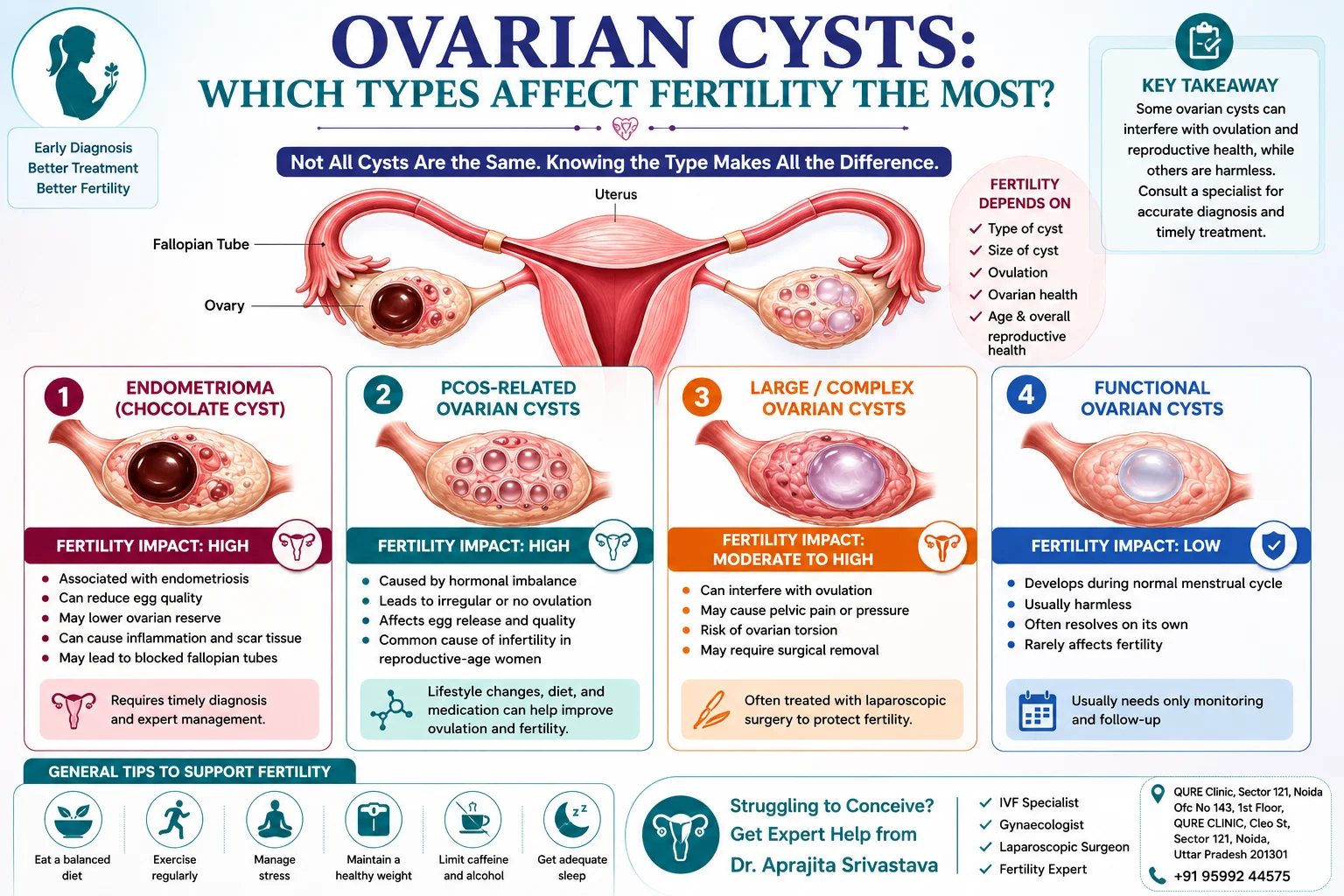
Which Types of Ovarian Cysts Affect Fertility the Most?
1. Endometriomas (Chocolate Cysts)
Endometriomas are among the ovarian cysts most strongly linked to infertility. These cysts develop when tissue similar to the uterine lining grows outside the uterus and attaches to the ovaries. Because they contain old blood, they are often called chocolate cysts.
Women with endometriomas may experience painful periods, pelvic discomfort, pain during intercourse, and difficulty becoming pregnant. These cysts can reduce egg quality, damage healthy ovarian tissue, and lower ovarian reserve over time.
Endometriomas are commonly associated with endometriosis, a condition that can significantly affect fertility by causing inflammation, scar tissue formation, and reproductive organ dysfunction.
In severe cases, endometriosis may contribute to blocked fallopian tubes, further reducing the chances of natural conception.
2. PCOS-Related Ovarian Cysts
Polycystic Ovary Syndrome (PCOS) is one of the leading causes of female infertility worldwide. Women with PCOS often develop multiple small ovarian cysts due to hormonal imbalances that prevent regular ovulation.
Common symptoms of PCOS include:
- Irregular menstrual cycles
- Missed ovulation
- Weight gain
- Acne and excess facial hair
- Difficulty conceiving
Women with PCOS frequently struggle with fertility because ovulation may occur irregularly or not at all. Understanding the effects of PCOS on female fertility can help women seek early intervention and improve reproductive outcomes.
Additionally, following a healthy lifestyle and a structured PCOS diet plan to boost fertility naturally may help improve hormonal balance and ovulation.
3. Large or Complex Ovarian Cysts
Large ovarian cysts or cysts containing solid components may also affect fertility. These cysts can interfere with normal ovarian function, affect egg release, and increase the risk of ovarian torsion or damage to surrounding reproductive tissues.
Potential fertility-related complications include:
- Disrupted ovulation
- Pelvic inflammation
- Pressure on reproductive organs
- Damage to healthy ovarian tissue
- Need for surgical intervention
Which Ovarian Cysts Usually Do Not Affect Fertility?
Fortunately, several common ovarian cysts have little or no impact on fertility.
Functional Ovarian Cysts
Functional cysts develop as part of the normal menstrual cycle and often disappear without treatment. They rarely interfere with conception.
Dermoid Cysts
Dermoid cysts contain tissues such as hair, skin, or teeth. Although they may require removal if they become large, they generally do not affect fertility.
Cystadenomas
These benign growths arise from ovarian tissue and typically do not interfere with ovulation or pregnancy.
Hemorrhagic Cysts
Hemorrhagic cysts occur when bleeding develops inside a functional cyst. Most resolve naturally and rarely affect reproductive health.
Can You Get Pregnant Naturally with Ovarian Cysts?
Yes, many women with ovarian cysts successfully conceive naturally. The likelihood depends on whether the cyst affects ovulation, egg quality, or reproductive organs.
Women with functional cysts, dermoid cysts, or small uncomplicated cysts often have normal fertility. However, women diagnosed with endometriosis, PCOS, or large ovarian cysts may benefit from consulting an experienced infertility specialist in Noida for a detailed fertility evaluation.
Silent Endometriosis and Its Impact on IVF Success Rates
One of the most overlooked causes of infertility is Silent Endometriosis. Unlike traditional endometriosis, this condition may not produce noticeable symptoms, allowing it to progress undetected for years.
According to Dr. Aprajita Srivastava, many women undergoing fertility investigations discover previously undiagnosed endometriosis only after struggling to conceive.
Silent Endometriosis may:
- Reduce egg quality
- Lower ovarian reserve
- Affect embryo implantation
- Create chronic pelvic inflammation
- Reduce IVF success rates
Women considering fertility treatment should understand Silent Endometriosis and its impact on IVF success rates before beginning treatment.
Patients diagnosed with endometriosis may also benefit from learning about IVF for endometriosis patients and how treatment strategies can improve outcomes.
How Are Fertility-Affecting Ovarian Cysts Diagnosed?
Proper diagnosis helps determine whether an ovarian cyst is affecting fertility.
Common diagnostic methods include:
- Pelvic ultrasound
- Transvaginal ultrasound
- Hormone testing
- AMH (Anti-Müllerian Hormone) testing
- MRI scans
- Diagnostic laparoscopy
These investigations help evaluate ovarian reserve, ovulation patterns, and the potential impact of ovarian cysts on reproductive health.
Treatment Options for Women Trying to Conceive
Monitoring and Observation
Many ovarian cysts require only regular ultrasound monitoring to ensure they do not increase in size or develop complications.
Lifestyle Changes
Maintaining a healthy weight, exercising regularly, and following a fertility-focused diet can improve reproductive health. Understanding the role of nutrition in boosting fertility can support hormonal balance and improve conception chances.
Improving Egg Quality
Women planning pregnancy should also focus on ovarian health and egg quality. These natural ways to improve egg quality before IVF may support fertility and reproductive wellness.
Laparoscopic Surgery
Some women may benefit from gynae laparoscopic surgery when ovarian cysts are large, painful, or affecting fertility.
In selected cases, laparoscopic ovarian cyst removal can help preserve healthy ovarian tissue while improving reproductive outcomes.
IVF Treatment
When natural conception is difficult, IVF treatment may provide an effective solution for achieving pregnancy.
Patients should also understand factors affecting IVF success rates before beginning treatment.
For couples considering IVF, knowing what to expect during the first IVF consultation can help reduce anxiety and improve preparation.
When Should You See a Fertility Specialist?
You should seek professional evaluation if:
- You have been trying to conceive for over 12 months
- You have PCOS or endometriosis
- Your ovarian cyst continues to grow
- You experience severe pelvic pain
- You have irregular menstrual cycles
- You have experienced recurrent miscarriages
Conclusion
While most ovarian cysts do not affect fertility, certain types—including endometriomas, PCOS-related cysts, and large complex ovarian cysts—can significantly reduce the chances of conception. Early diagnosis, appropriate treatment, and ongoing fertility monitoring are essential for protecting reproductive health.
Dr. Aprajita Srivastava, IVF Specialist and Laparoscopic Surgeon in Noida, emphasizes that every woman’s fertility journey is unique. With modern diagnostic tools, personalized fertility treatment plans, and advanced reproductive technologies, many women with ovarian cysts can successfully achieve healthy pregnancies and fulfill their dream of parenthood.