Male Factor Infertility Beyond Semen Analysis is an important topic for couples facing unexplained fertility issues. Many people believe that a normal semen report means there is no problem. However, this assumption is not always correct.
In many cases, couples continue to struggle even after normal reports. This creates a diagnostic gap. As a result, valuable time may be lost before identifying the real cause.
Understanding this gap helps in choosing the right treatment and improving success rates.
What is Male Factor Infertility?
Male factor infertility refers to problems related to sperm production, quality, or delivery.
It can affect men of any age. Even those who appear healthy may face fertility challenges. In some cases, men who have fathered children earlier may develop infertility later in life.
Therefore, evaluating both partners is essential during fertility assessment.
Why Semen Analysis is Not Always Enough?
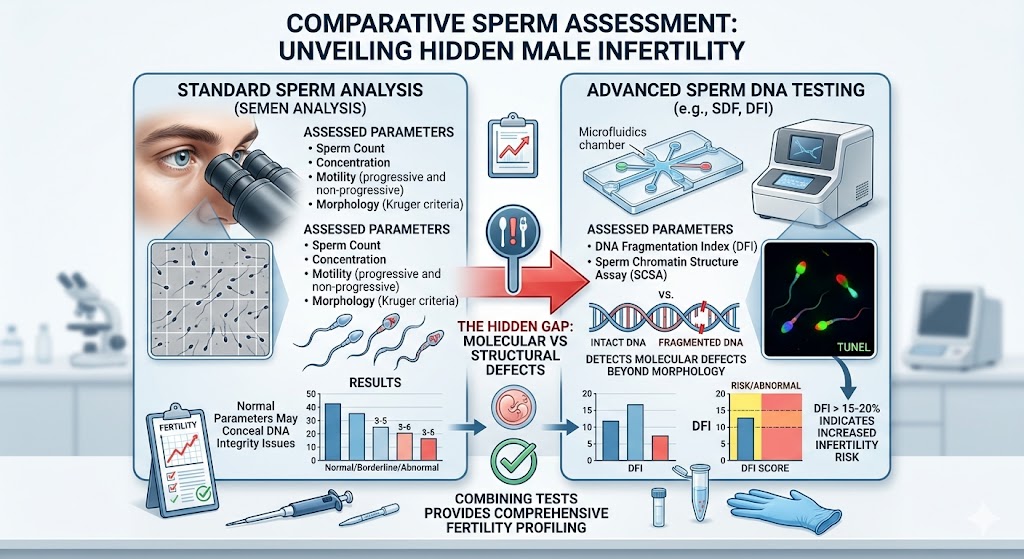
Semen analysis is the first and most basic test for male fertility. It evaluates sperm count, motility, morphology, and other parameters.
However, it has limitations.
It does not assess sperm DNA quality. It also cannot fully measure the sperm’s ability to fertilize an egg.
Because of this, many men with normal reports may still experience infertility.
This is where advanced diagnostic testing becomes important.
Male Factor Infertility Beyond Semen Analysis: Understanding the Diagnostic Gap
Male Factor Infertility Beyond Semen Analysis highlights the difference between basic testing and actual reproductive potential.
Many couples are diagnosed with unexplained infertility. In reality, hidden male factors may be responsible.
These include:
- Sperm DNA damage
- Hormonal imbalance
- Structural abnormalities
- Functional defects in sperm
Without advanced testing, these issues often remain undetected.
Advanced Tests for Male Infertility Diagnosis
Advanced tests provide deeper insights into male reproductive health. They help identify hidden causes that basic tests may miss.
Physical Examination and Varicocele Detection
A physical examination is often the first step.
Varicocele is a common condition. It involves enlarged veins in the scrotum. It can affect sperm quality and reduce fertility.
Early treatment can improve outcomes significantly.
Hormonal Testing
Hormones play a key role in sperm production.
Tests measure testosterone, FSH, LH, and thyroid levels.
Any imbalance can disrupt normal sperm formation.
Genetic Testing
Genetic testing helps detect chromosomal abnormalities.
It is recommended in cases of very low sperm count or absence of sperm.
It also helps identify causes of recurrent pregnancy loss.
Sperm DNA Fragmentation Test
This test evaluates sperm DNA integrity.
High DNA fragmentation can reduce fertilization chances.
It can also affect embryo quality and implantation success.
Even men with normal semen reports may have high DNA damage.
Ultrasound and Imaging
Ultrasound helps identify structural problems.
It can detect blockages or abnormalities in reproductive organs.
This includes issues in ducts, prostate, and seminal vesicles.
Testicular Biopsy
Testicular biopsy determines whether sperm production is happening inside the testicles.
It is useful in cases where sperm is absent in semen.
Advanced Sperm Function Tests
These tests evaluate sperm performance.
They check the ability of sperm to move, survive, and fertilize the egg.
Such tests are useful in complex infertility cases.
When Should You Go Beyond Semen Analysis?
You should consider advanced testing in specific situations.
These include:
- Unexplained infertility
- Repeated IVF failures
- Poor embryo quality
- Recurrent miscarriages
- Low fertilization rates
In such cases, consulting an experienced infertility specialist in Noida can help identify hidden causes early.
How Advanced Diagnosis Improves Treatment Outcomes?
Accurate diagnosis leads to better treatment planning.
Doctors can select the right treatment based on the root cause.
For example:
- ICSI helps in sperm function issues
- Surgery can correct varicocele
- Hormonal therapy restores balance
Couples seeking treatment at a trusted IVF center in Noida benefit from advanced technology and personalized care.
Early diagnosis also reduces emotional stress and unnecessary delays.
Conclusion
Male Factor Infertility Beyond Semen Analysis is a key concept in modern fertility treatment.
Basic testing alone may not reveal the full picture.
Advanced diagnostic methods help uncover hidden issues.
With the right approach, many couples can achieve successful outcomes.
Dr. Aprajita Srivastava is an experienced fertility expert known for diagnosing complex infertility cases with precision.
She focuses on advanced diagnostic techniques and personalized treatment plans to improve success rates.
Her expertise includes IVF, ICSI, and comprehensive fertility care.
Address: Ofc No 143, 1st Floor, QURE CLINIC, Cleo St, Sector 121, Noida, Uttar Pradesh 201301
https://maps.app.goo.gl/xKC5rTW5NfitCmBF6
Phone: +91 95992 44575