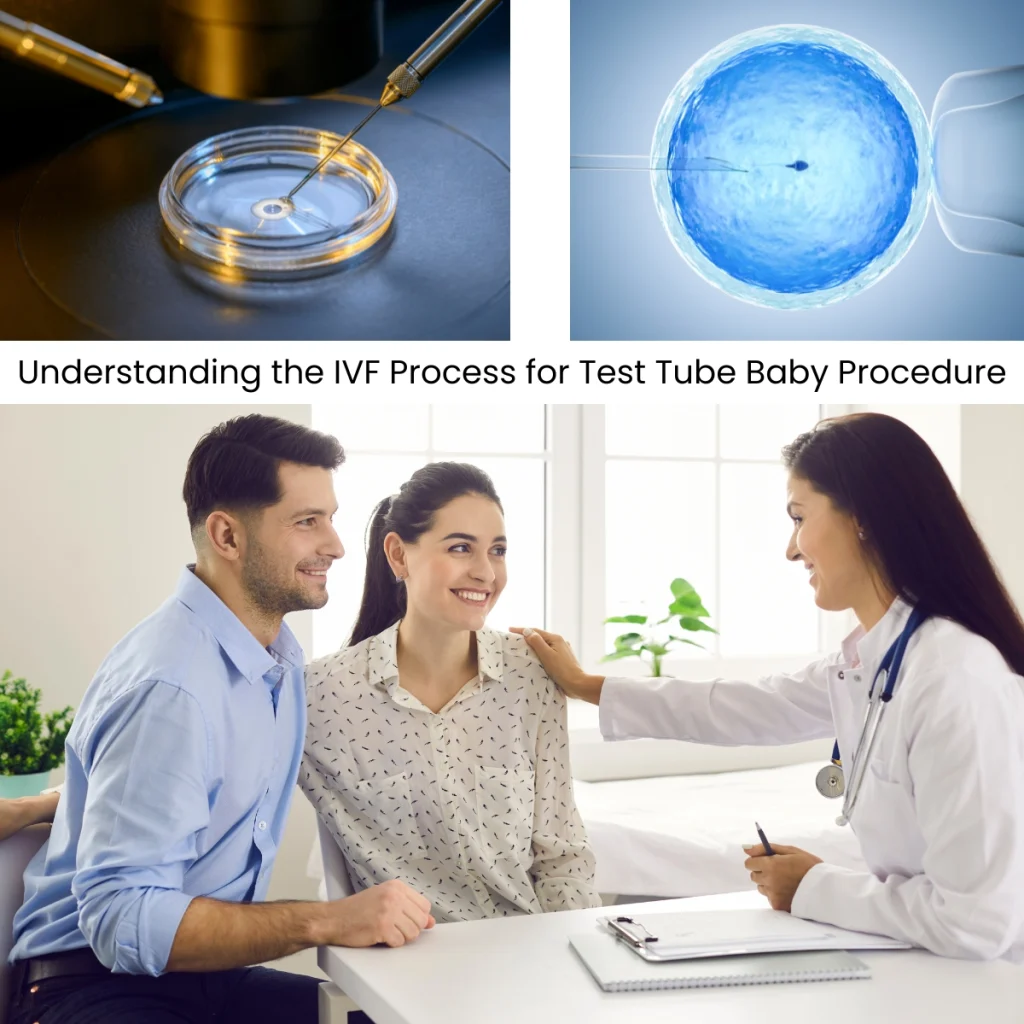
Test Tube Baby vs IVF: Understanding the Differences
When it comes to assisted reproductive technologies, two terms often used interchangeably are Test Tube Baby and IVF.
However, understanding the subtle differences, treatment process, cost, and success rates is essential for individuals or couples looking to start their fertility treatment journey.
In this blog, we will explore what each treatment entails, the distinctions between them, and help you make an informed decision on which option is best for you.
What is IVF?
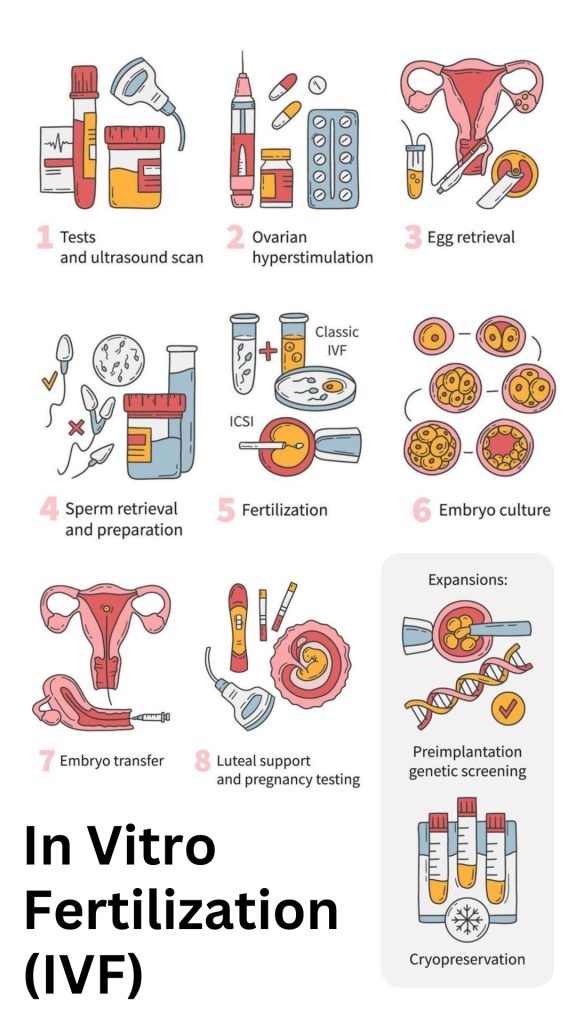
In vitro fertilization (IVF) is an advanced assisted reproductive technology (ART) that helps individuals overcome various fertility challenges.
The process involves fertilizing an egg with sperm outside the body in a laboratory.
The resulting embryo is then transferred to the uterus, where it can develop into a healthy pregnancy.
IVF is commonly used to address:
- Blocked or damaged fallopian tubes.
- Low sperm count or motility.
- Unexplained infertility.
- Fertility issues among LGBTQ+ couples and single parents.
The process includes ovarian stimulation, egg retrieval, fertilization, and embryo transfer, with adjustments tailored to individual medical needs.
What is a Test Tube Baby?
A Test Tube Baby and an IVF baby are essentially the same. The term “Test Tube Baby” is a simpler way to describe babies conceived through In Vitro Fertilization (IVF).
This term became popular in the early days of IVF because fertilization happens outside the body in a laboratory setting, leading people to imagine it occurring in a “test tube.”
The phrase gained global attention in 1978 with the birth of Louise Brown, the world’s first baby born using IVF technology.
While “Test Tube Baby” sounds like a unique process, it’s simply another way of describing IVF, which involves:
- Stimulating the ovaries to produce eggs.
- Retrieving the eggs.
- Fertilizing the eggs in a lab under controlled conditions.
- Transferring the embryo into the uterus.
Today, “Test Tube Baby” is more of a casual term, while IVF is the accurate medical name.
Regardless of the term used, the process and the outcome remain the same—a pathway to parenthood for people facing fertility challenges.
Key Differences Between IVF and Test Tube Baby
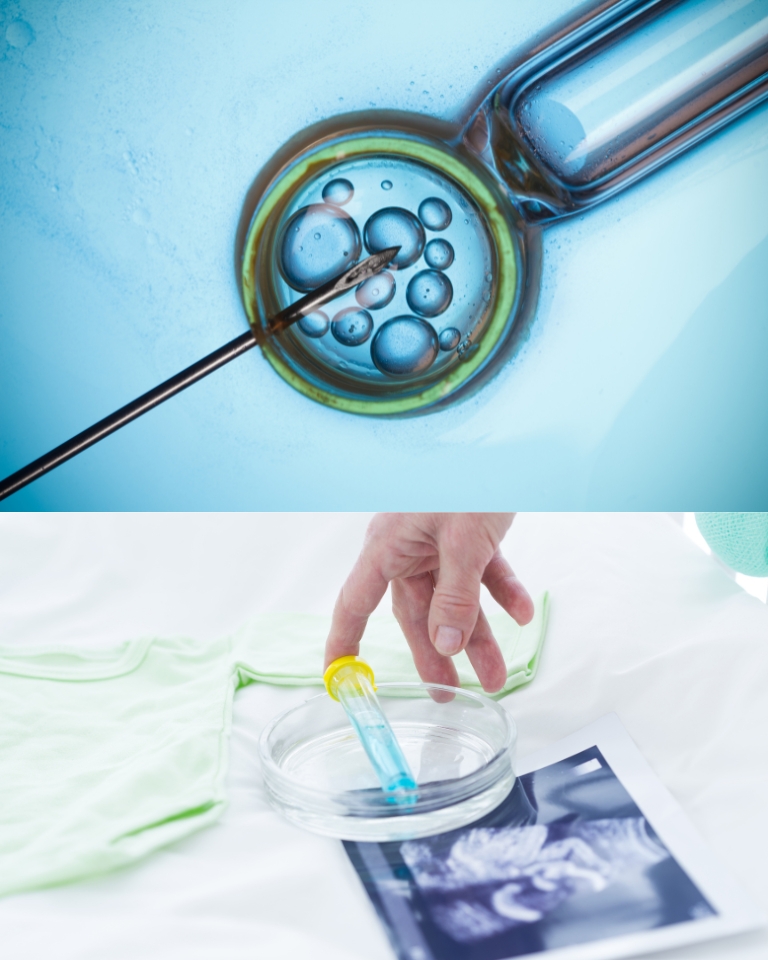
While both IVF and Test Tube Baby treatments aim to address infertility through external fertilization, the distinction between them primarily lies in the terminology and slight misunderstandings around the process.
Process Comparison
- IVF Treatment involves controlled ovarian stimulation, egg retrieval, fertilization, and embryo transfer.
- Test Tube Baby refers to a similar process but emphasizes the outside-the-body conception, sometimes without stressing the more scientific aspects of IVF.
Essentially, the process for both IVF and Test Tube Baby is identical; there is no difference in the steps involved.
The key distinction is the use of terms.
Success Rates Comparison for IVF and Test Tube Baby
The success rates for IVF and Test Tube Baby are largely identical, as they stem from the same medical procedure.
These rates are influenced by various factors, including the patient’s age, the underlying cause of infertility, and the quality of embryos.
- For women under 35, the general success rate of IVF is approximately 40-45%. However, this rate decreases as women age.
- Advanced techniques like genetic screening and improved laboratory practices can significantly enhance success rates.
- Individual health circumstances and the expertise of the fertility specialist also play a crucial role in determining outcomes.
Whether referred to as IVF or Test Tube Baby, the likelihood of success remains equivalent, offering hope to individuals and couples seeking to overcome fertility challenges.
Cost of IVF Treatment in Noida
The cost of IVF treatment in Noida varies depending on the clinic, the complexity of the case, and additional treatments required (e.g., ICSI, egg freezing).
On average, IVF costs in Noida can range from ₹1.5 lakh to ₹2.5 lakh per cycle, but this cost may increase if more advanced treatments are required.
Several factors influence the cost of IVF in Noida:
- Location and Clinic: The cost at well-established clinics might be higher.
- Treatment Complexity: Additional procedures like genetic testing, sperm donation, or egg freezing can raise the cost.
- Number of Cycles: Multiple IVF cycles may be required to achieve success, increasing overall costs.
It’s essential to consult with a Best IVF Specialist in Noida to get an accurate cost estimate based on your individual treatment plan.
Success Rate for IVF and Test Tube Baby
Both IVF and Test Tube Baby treatments share similar success rates, with outcomes influenced by several critical factors.
Understanding these elements can help individuals make informed decisions when seeking fertility treatments.
Factors Influencing Success Rates
1. Age of the Patient
- Younger women typically experience higher success rates. Women under 35 have a success rate of approximately 40-50%, which declines with age.
2. Health Conditions
- Certain conditions like polycystic ovary syndrome (PCOS) or endometriosis may lower success rates.
- Overall health plays a significant role in determining the likelihood of conception.
3. Egg and Sperm Quality
- The health and quality of the eggs and sperm used directly impact the procedure’s outcome.
4. Number of Embryos Transferred
- Transferring more embryos can increase the chances of success, though it may also heighten the risk of multiple pregnancies.
5. Expertise of the Specialist
- The experience of the Best IVF Specialist in Noida is crucial in ensuring higher success rates. Clinics like Qure Clinic prioritize personalized care and state-of-the-art technology to optimize results.
Who Should Consider IVF or Test Tube Baby?
Both IVF and Test Tube Baby treatments are suitable for individuals or couples facing infertility. They are commonly recommended for:
- Women with blocked fallopian tubes or pelvic adhesions.
- Couples with male infertility, such as low sperm count or poor sperm quality.
- Women over 35, who may face difficulty conceiving naturally.
- Couples experiencing unexplained infertility.
If you have struggled with infertility for over a year or have been diagnosed with a fertility condition, it’s time to consider IVF Treatment in Noida.
A Best IVF Specialist in Noida can help assess your situation and recommend the most appropriate treatment.
IVF Treatment Success in Noida
In Noida, several reputed fertility centers and IVF specialists offer treatments that align with global standards.
Clinics like Qure Clinic are well-regarded for their personalized care and high success rates for IVF and Test Tube Baby treatments.
Consulting a specialist in Noida ensures that you have access to the latest fertility technologies and expert care, helping you improve your chances of a successful pregnancy.
Benefits of IVF and Test Tube Baby Treatments
Both IVF and Test Tube Baby treatments provide several benefits to couples struggling with infertility, including:
- Enables couples with fertility challenges to conceive.
- Provides solutions for genetic screening and embryo freezing.
- Offers hope to LGBTQ+ families and single parents.
- Allows for planned pregnancies by preserving embryos for later use.
Choosing the Right Specialist for IVF or Test Tube Baby in Noida
Choosing the right fertility specialist is a crucial step in ensuring the success of your IVF or Test Tube Baby treatment. Look for an IVF Specialist in Noida who is:
- Experienced in performing IVF and Test Tube Baby procedures.
- Accredited by recognized fertility boards and clinics.
- Patient-Centric, with a track record of compassionate care.
- Transparent about the process, costs, and success rates.
Dr. Aprajita Srivastava is a leading gynecologist and fertility expert based in Noida.
With a focus on advanced reproductive technologies, she has helped numerous couples achieve their dream of parenthood.
Qure Clinic is equipped with cutting-edge facilities, ensuring world-class care for IVF and Test Tube Baby treatments.
If you’re considering IVF Treatment in Noida, connect with Dr. Aprajita Srivastava at Qure Clinic to explore your options and take the first step toward parenthood.
Common Questions on IVF Treatment and Test Tube Baby
In IVF treatments, sperm is typically provided by the male partner or a sperm donor. The sperm is used to fertilize the egg, resulting in a test tube baby.
Gender selection in test tube baby procedures, also known as IVF, is possible using techniques like preimplantation genetic testing (PGT). However, it’s generally limited to medical reasons and not for non-medical preferences.
IVF itself is not as painful as HSG (hysterosalpingography), though there can be some discomfort during egg retrieval. Most patients find the procedure manageable.
The age limit for IVF treatment is typically 42 years, but this may vary depending on health and fertility factors. IVF specialists in Noida can advise on individual eligibility for treatment based on age and health status.
IVF can be attempted multiple times, with success rates improving after each attempt for some individuals. However, doctors evaluate health, age, and response to treatment.
Test tube babies do not generally have more health problems than naturally conceived children. However, some studies suggest a slightly higher risk for specific conditions.
IVF babies inherit their physical traits from both parents, just like naturally conceived children. The appearance may resemble the father or mother, depending on genetic inheritance.
Sperm used in IVF can come from the male partner or a sperm donor. The choice depends on the couple’s situation, with careful screening of donors.