Choosing between frozen vs fresh embryo transfer can feel confusing. Many couples face this during IVF.
Before making a decision, it helps to understand the IVF treatment process. This gives clarity from the start.
At the same time, every case is different. So, one method may not suit everyone.
Experts like Dr. Aprajita Srivastava handle such cases daily. She focuses on complex infertility and high-risk pregnancies.
In this guide, you will understand both options. You will also learn what works better in real cases.
What Is Frozen vs Fresh Embryo Transfer in IVF?
First, let’s understand the basics.
What Is a Fresh Embryo Transfer?
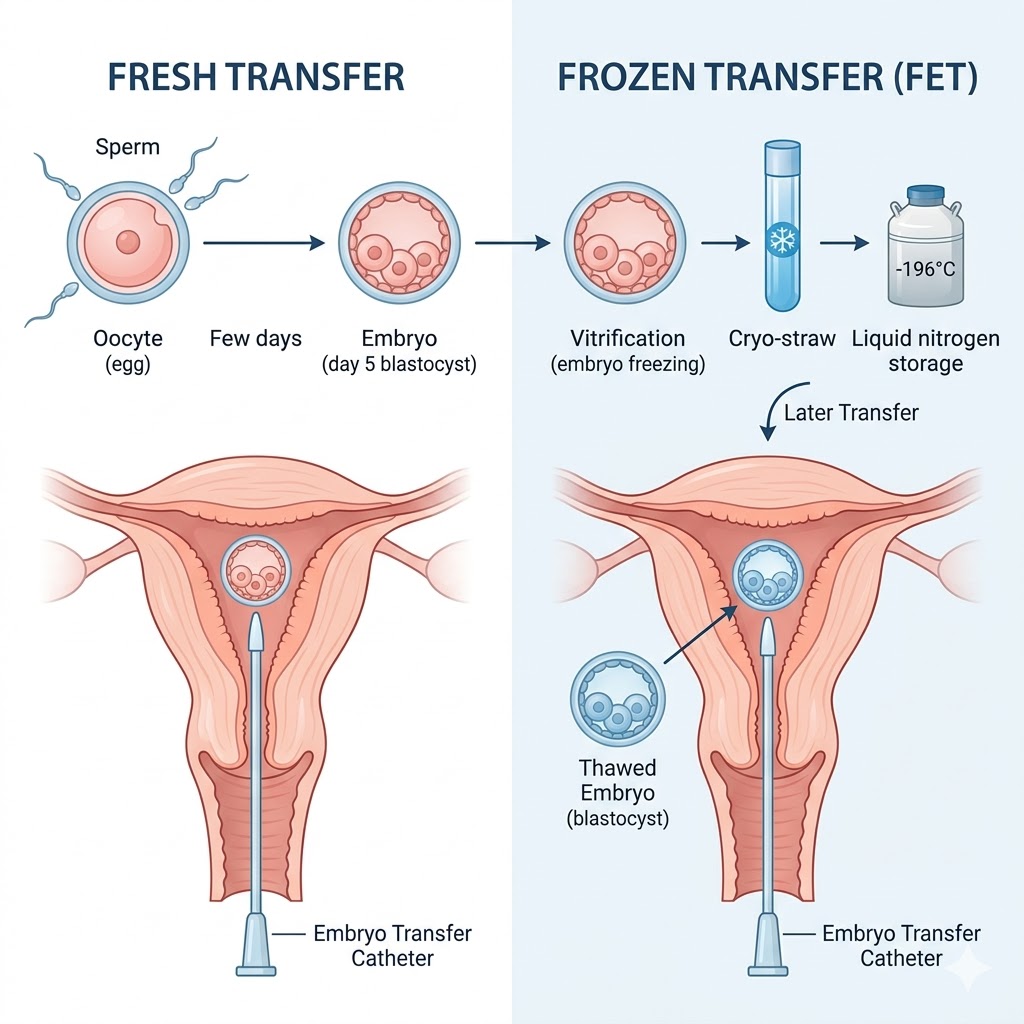
A fresh embryo transfer happens in the same IVF cycle. Doctors place the embryo soon after fertilization.
So, there is no freezing step. This makes the process faster.
What Is a Frozen Embryo Transfer (FET)?
A frozen embryo transfer happens later. Doctors freeze the embryo first.
Then, they transfer it in another cycle. This allows the body to recover.
Key Difference Between Fresh and Frozen Embryo Transfer
Here is a simple comparison:
- Fresh transfer happens quickly
- Frozen transfer takes more time
- Hormones stay high in fresh cycles
- Hormones stay stable in frozen cycles
- Frozen allows better planning
- Fresh has limited flexibility
Because of this, outcomes may differ.
Frozen vs Fresh Embryo Transfer Success Rate in IVF
This is a common concern.
Frozen embryo transfer often shows slightly better results. The uterus stays more stable in this case.
However, fresh transfer also works well. This is true when hormones are balanced.
An experienced infertility specialist in Noida can guide this decision. They assess reports before suggesting the right option.
In fact, a study published in the New England Journal of Medicine found that frozen embryo transfer may offer better outcomes in certain patient groups.
Which Works Better in Complex Infertility Cases?
Now, let’s look at real conditions.
Best Embryo Transfer for PCOS Patients
PCOS affects hormone balance. So, frozen transfer often works better.
It gives the body time to stabilize.
IVF Success in Endometriosis Cases
Endometriosis impacts the uterus. So, timing becomes important.
Frozen transfer offers better control.
Frozen vs Fresh Transfer After Failed IVF
Failure can happen in fresh cycles. However, switching to frozen transfer may help.
Many patients see improvement.
Low AMH and Poor Response Cases
Low AMH needs careful planning. Doctors decide based on reports.
Both methods may work in different cases.
OHSS Risk and IVF Safety
High hormone levels increase OHSS risk. So, frozen transfer is safer.
Doctors often avoid fresh transfer here.
When Do Doctors Recommend Fresh Embryo Transfer?
Doctors suggest fresh transfer when conditions are stable.
For example:
- Hormone levels are normal
- Uterine lining looks healthy
- No OHSS risk
- No genetic testing needed
In such cases, fresh transfer saves time.
When Is Frozen Embryo Transfer Recommended?
Frozen transfer is common in complex cases.
For example:
- High estrogen levels
- Risk of OHSS
- Need for genetic testing
- Previous IVF failure
- Uterine issues
Experts like Dr. Aprajita Srivastava often prefer this method. It improves timing and control.
Pros and Cons of Frozen vs Fresh Embryo Transfer
Advantages of Fresh Embryo Transfer
Fresh transfer is fast. It reduces waiting time.
Also, it needs fewer cycles.
Disadvantages of Fresh Transfer
Hormones remain high. This may affect implantation.
There is also OHSS risk.
Advantages of Frozen Embryo Transfer
The body gets recovery time. Hormones become stable.
Doctors can plan better.
Disadvantages of Frozen Transfer
It takes more time. Waiting can feel stressful.
Still, results are often better in complex cases.
Quick Comparison: Frozen vs Fresh Embryo Transfer
- Fresh = fast process
- Frozen = better control
- Fresh = less flexible
- Frozen = more planned
- Fresh = higher hormone levels
- Frozen = stable environment
So, both options have value.
Which Embryo Transfer Is Better for You?
There is no single answer.
The right choice depends on:
- Hormone levels
- Uterine health
- Medical history
Choosing the right IVF center in Noida also matters. Good facilities improve outcomes.
Dr. Aprajita Srivastava reviews each case carefully. She helps patients choose wisely.
Questions to Ask Before Choosing IVF Transfer Type
Before deciding, ask:
- Is my uterus ready?
- Are my hormone levels stable?
- Do I need testing?
- Which option suits me best?
This gives better clarity.
Final Thoughts: Frozen vs Fresh Embryo Transfer
Fresh transfer is faster. Frozen transfer is more controlled.
So, the best option depends on your condition.
In complex infertility cases, frozen transfer often works better. But not always.
It is always better to consult a gynecologist in Noida before deciding. Expert guidance improves success chances.
FAQs – Frozen vs Fresh Embryo Transfer
Is frozen embryo transfer better than fresh?
Often yes. However, it depends on your condition.
Which has higher success rate in IVF?
Frozen transfer may have a slight edge.
Does freezing damage embryos?
No. Modern techniques are safe.
Can I choose between fresh and frozen transfer?
You can discuss it. Doctors guide the final choice.
What after a failed fresh transfer?
Doctors often suggest frozen transfer next.