
Pregnancy is an exciting journey. However, some conditions need close monitoring to ensure the safety of both the mother and baby. One such condition is Placenta Previa During Pregnancy. It can cause unexpected bleeding and may affect the mode of delivery.
Placenta Previa During Pregnancy occurs when the placenta lies low in the uterus and partially or completely covers the cervix. Early diagnosis and proper medical care can help many women deliver healthy babies.
Women experiencing vaginal bleeding, especially during the second or third trimester, should seek medical advice immediately. Timely monitoring is essential for managing placenta previa during pregnancy.
For expert pregnancy care, consult Dr. Aprajita Srivastava, Best Gynecologist in Noida. She has extensive experience in managing high-risk pregnancies and complex obstetric conditions.
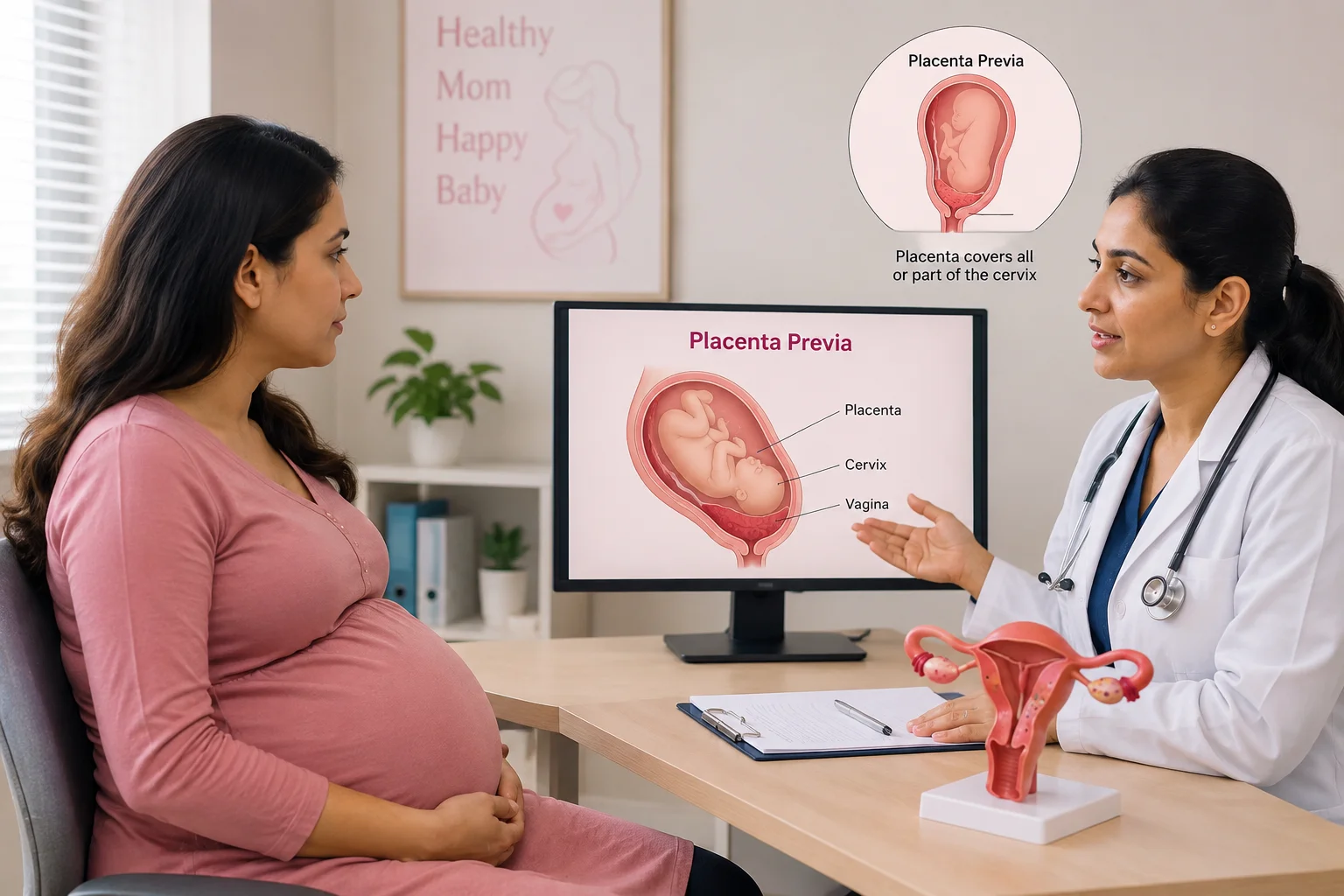
What is Placenta Previa During Pregnancy?
Placenta Previa During Pregnancy is a condition in which the placenta implants in the lower part of the uterus and blocks all or part of the cervix.
The placenta is an organ that develops during pregnancy. It supplies oxygen and nutrients to the growing baby through the umbilical cord.
In early pregnancy, a low-lying placenta is quite common. As the uterus expands, the placenta usually moves upward. In placenta previa during pregnancy, the placenta remains near the cervix instead of shifting toward the upper uterus.
This can create difficulties during labor because the cervix serves as the baby’s passage during vaginal delivery.
| Condition | Details |
|---|---|
| Occurrence | Approximately 1 in 200 pregnancies |
| Common Detection Period | Second trimester ultrasound |
| Main Symptom | Painless vaginal bleeding |
| Delivery Method | Mostly Caesarean Section |
| Can It Resolve Naturally? | Yes, in many cases diagnosed early |
Types of Placenta Previa During Pregnancy
Doctors classify placenta previa based on how much of the cervix is covered by the placenta.
1. Marginal Placenta Previa
The placenta reaches the edge of the cervix but does not cover it.
This type has a higher chance of resolving naturally before delivery.
2. Partial Placenta Previa
The placenta covers only a portion of the cervical opening.
Women with partial placenta previa during pregnancy require regular ultrasound examinations.
3. Complete Placenta Previa
The placenta completely blocks the cervix.
This is considered the most serious type of placenta previa during pregnancy.
A planned Caesarean delivery is usually required.
Placenta Previa vs Low-Lying Placenta vs Placental Abruption
| Feature | Placenta Previa | Low-Lying Placenta | Placental Abruption |
|---|---|---|---|
| Placenta Position | Covers cervix | Close to cervix | Normally placed |
| Bleeding | Painless | Mild | Usually painful |
| Pain | Often absent | Usually absent | Severe abdominal pain |
| Delivery | Mostly C-section | Depends on movement | Emergency delivery may be needed |
Symptoms of Placenta Previa During Pregnancy
The most common symptom of Placenta Previa During Pregnancy is sudden, painless vaginal bleeding.
Bleeding usually develops after 20 weeks of pregnancy.
It may stop and start again after a few days.
Some women may not experience bleeding initially.
Other symptoms include:
- Bright red vaginal bleeding
- Mild abdominal cramps
- Back pain
- Pelvic pressure
- Occasional uterine contractions
Even a small amount of bleeding should never be ignored.
Women diagnosed with placenta previa during pregnancy should immediately inform their doctor if symptoms worsen.
If you are experiencing unusual pregnancy symptoms, seeking timely Pregnancy Care in Noida can help prevent serious complications.
Causes of Placenta Previa During Pregnancy
The exact cause of placenta previa during pregnancy is not completely understood.
Researchers believe that abnormal implantation of the fertilized egg may contribute to this condition.
Several factors may increase the possibility of developing placenta previa.
- Previous Caesarean delivery
- History of uterine surgery
- Multiple pregnancies
- Twin or triplet pregnancy
- Maternal age above 35 years
- Smoking during pregnancy
- History of uterine fibroids
Women undergoing fertility treatments may also have a slightly increased risk.
Dr. Aprajita Srivastava is an experienced gynecologist and IVF specialist who frequently manages complicated pregnancies resulting from assisted reproductive techniques.
She provides personalized care for women receiving treatment at her IVF Center in Noida.
Risk Factors for Placenta Previa During Pregnancy
Some women are more likely to develop placenta previa during pregnancy.
Common risk factors include:
- Age above 35 years
- Previous placenta previa
- Repeated pregnancies
- Previous miscarriage procedures
- Previous C-section delivery
- Assisted reproductive treatments such as IVF
- Smoking and substance abuse
Studies also suggest that women with severe endometriosis may have an increased chance of pregnancy-related complications.
Patients dealing with fertility issues can learn more through this article on Silent Endometriosis and Its Impact on IVF Success Rates.
Placenta Previa During Pregnancy at Different Weeks
Placenta Previa at 20 Weeks
Most cases are detected during the anomaly scan.
Many placentas shift upward as pregnancy progresses.
Placenta Previa at 28 Weeks
Doctors usually recommend repeat ultrasounds.
Bleeding episodes may begin during this stage.
Placenta Previa at 32–34 Weeks
The risk of bleeding increases significantly.
Women may require restricted physical activity.
Placenta Previa at 36 Weeks
Delivery planning generally starts at this stage.
If complete placenta previa persists, a scheduled Caesarean section is often recommended.
Women with placenta previa during pregnancy should remain under the supervision of an experienced obstetrician throughout the third trimester.
How Placenta Previa During Pregnancy Affects the Mother and Baby
Placenta Previa During Pregnancy can increase certain risks for both the mother and the baby. The severity of complications depends on the amount of bleeding, the position of the placenta, and the stage of pregnancy.
Complications for the Mother
- Heavy vaginal bleeding during pregnancy
- Anemia due to blood loss
- Need for blood transfusion
- Emergency Caesarean section
- Placenta accreta spectrum disorders
- Placental abruption in rare cases
Complications for the Baby
- Premature birth
- Low birth weight
- Breathing difficulties after birth
- NICU admission
- Reduced fetal growth in severe cases
Regular antenatal visits and timely ultrasounds can significantly reduce these risks.
Women with complicated pregnancies may benefit from specialized High Risk Pregnancy Care in Noida.
How is Placenta Previa During Pregnancy Diagnosed?
Placenta previa during pregnancy is usually diagnosed during a routine ultrasound examination.
Most cases are identified during the anomaly scan performed between 18 and 22 weeks of pregnancy.
Abdominal Ultrasound
An ultrasound probe is moved over the abdomen to determine the location of the placenta.
Transvaginal Ultrasound
This scan provides a more accurate assessment of the placenta and cervix.
It is considered safe during pregnancy and helps doctors decide the best management plan.
Women diagnosed with placenta previa during pregnancy often require repeat ultrasounds in the third trimester.
Treatment for Placenta Previa During Pregnancy
Treatment depends on several factors.
- Gestational age of the baby
- Amount of vaginal bleeding
- Type of placenta previa
- Mother’s overall health
- Baby’s condition
Mild Cases
If bleeding is absent or minimal, doctors may suggest:
- Avoiding strenuous activities
- Limiting heavy lifting
- Pelvic rest
- Frequent follow-up visits
- Repeat ultrasounds
Moderate to Severe Cases
Women experiencing repeated bleeding episodes may require hospitalization.
Treatment options may include:
- Bed rest under supervision
- Medicines to prevent preterm labor
- Steroid injections for fetal lung maturity
- Blood transfusion if necessary
- Emergency Caesarean section
Can Placenta Previa During Pregnancy Resolve on Its Own?
Yes.
Many cases diagnosed during the second trimester improve naturally.
As the uterus grows, the placenta may move upward.
The chances of spontaneous resolution decrease as pregnancy advances.
| Diagnosis Time | Chance of Resolution |
|---|---|
| 20 Weeks | High |
| 28 Weeks | Moderate |
| 32 Weeks | Lower |
| 36 Weeks | Unlikely |
Lifestyle Changes and Precautions for Placenta Previa During Pregnancy
Simple lifestyle changes may help reduce the risk of bleeding.
- Avoid long-distance travel
- Do not lift heavy objects
- Avoid squatting exercises
- Refrain from sexual intercourse
- Do not use tampons
- Drink adequate water
- Attend all prenatal appointments
- Keep emergency contact numbers handy
Women should also follow general Healthy Pregnancy Tips for a safer pregnancy journey.
Diet Tips for Placenta Previa During Pregnancy
Diet cannot correct placenta previa. However, proper nutrition can help prevent anemia caused by blood loss.
Include iron-rich foods in your daily meals.
- Spinach
- Pomegranate
- Dates
- Beans
- Lean meat
- Milk and dairy products
- Vitamin C-rich fruits
Placenta Previa During Pregnancy and IVF
Women who conceive through IVF may have a slightly increased risk of placenta previa during pregnancy.
Advanced maternal age and previous uterine procedures may contribute to this risk.
Dr. Aprajita Srivastava is a highly skilled gynecologist, IVF specialist, and laparoscopic surgeon based in Sector 121, Noida. She has extensive expertise in reproductive medicine, infertility treatments, IVF, IUI, egg freezing, and the management of high-risk pregnancies.
She frequently evaluates women with repeated implantation failure, recurrent pregnancy loss, and complex fertility conditions.
Certain conditions such as endometriosis can also influence pregnancy outcomes. Patients can read more about this topic in Silent Endometriosis and Its Impact on IVF Success Rates.
Warning Signs That Require Immediate Medical Attention
Seek emergency medical help if you experience:
- Heavy vaginal bleeding
- Passing blood clots
- Severe dizziness
- Fainting episodes
- Persistent contractions
- Reduced fetal movements
- Sudden weakness or breathlessness
Emotional Impact and Coping Strategies
Receiving a diagnosis of placenta previa during pregnancy can be emotionally overwhelming.
Many women worry about bleeding episodes, premature delivery, and the baby’s health.
Talking openly with your obstetrician can help reduce anxiety.
Support from family members and prenatal counseling may also improve emotional well-being.
Frequently Asked Questions
Can placenta previa disappear before delivery?
Yes. Many low-lying placentas diagnosed early move upward as pregnancy progresses.
Can walking worsen placenta previa?
Heavy exercise and prolonged walking may increase the risk of bleeding in some women. Always follow your doctor’s advice.
Is placenta previa dangerous for the mother?
It can become serious if heavy bleeding occurs. Timely treatment greatly improves outcomes.
Will I always need a C-section?
Women with complete placenta previa usually require a planned Caesarean delivery. Marginal placenta previa may allow vaginal birth in selected cases.
Can placenta previa affect future pregnancies?
There is a small chance of recurrence in future pregnancies, especially if you have had placenta previa before.
Consult Dr. Aprajita Srivastava for Pregnancy Care in Noida
If you have been diagnosed with placenta previa during pregnancy or are experiencing unusual bleeding, timely medical evaluation is essential.
Dr. Aprajita Srivastava is an experienced IVF Specialist in Noida, gynecologist, and laparoscopic surgeon. She provides personalized care for women with placenta previa, infertility, and other high-risk pregnancy conditions.
Clinic Address:
Ofc No 143, 1st Floor, QURE CLINIC,
Cleo St, Sector 121,
Noida, Uttar Pradesh – 201301
Phone: +91 95992 44575
Google Maps:
Get Directions to QURE Clinic
To schedule a consultation, visit Dr. Aprajita Srivastava’s Clinic.