
IVF treatment has helped many couples achieve pregnancy. One of the most important stages of an IVF cycle is ovarian stimulation. During this phase, hormonal injections are used to stimulate the ovaries and help them produce multiple mature eggs.
These medicines play a major role in improving fertilization and embryo development. However, some women may experience IVF injection side effects during treatment. Most of these symptoms are mild and temporary. They usually improve once the stimulation phase ends.
Understanding IVF injection side effects before starting treatment can make the journey less stressful. Knowing what is normal and what requires medical attention also helps patients feel more confident.
Dr. Aprajita Srivastava, IVF Specialist in Noida and Best Gynaecologist in Noida, believes that educating patients about every step of IVF is essential. She follows individualized stimulation protocols to reduce complications and improve treatment outcomes.
If you are planning an IVF cycle, reading about Prepare for IVF Treatment can help you understand the process better.
What Are IVF Injections and Why Are They Used?
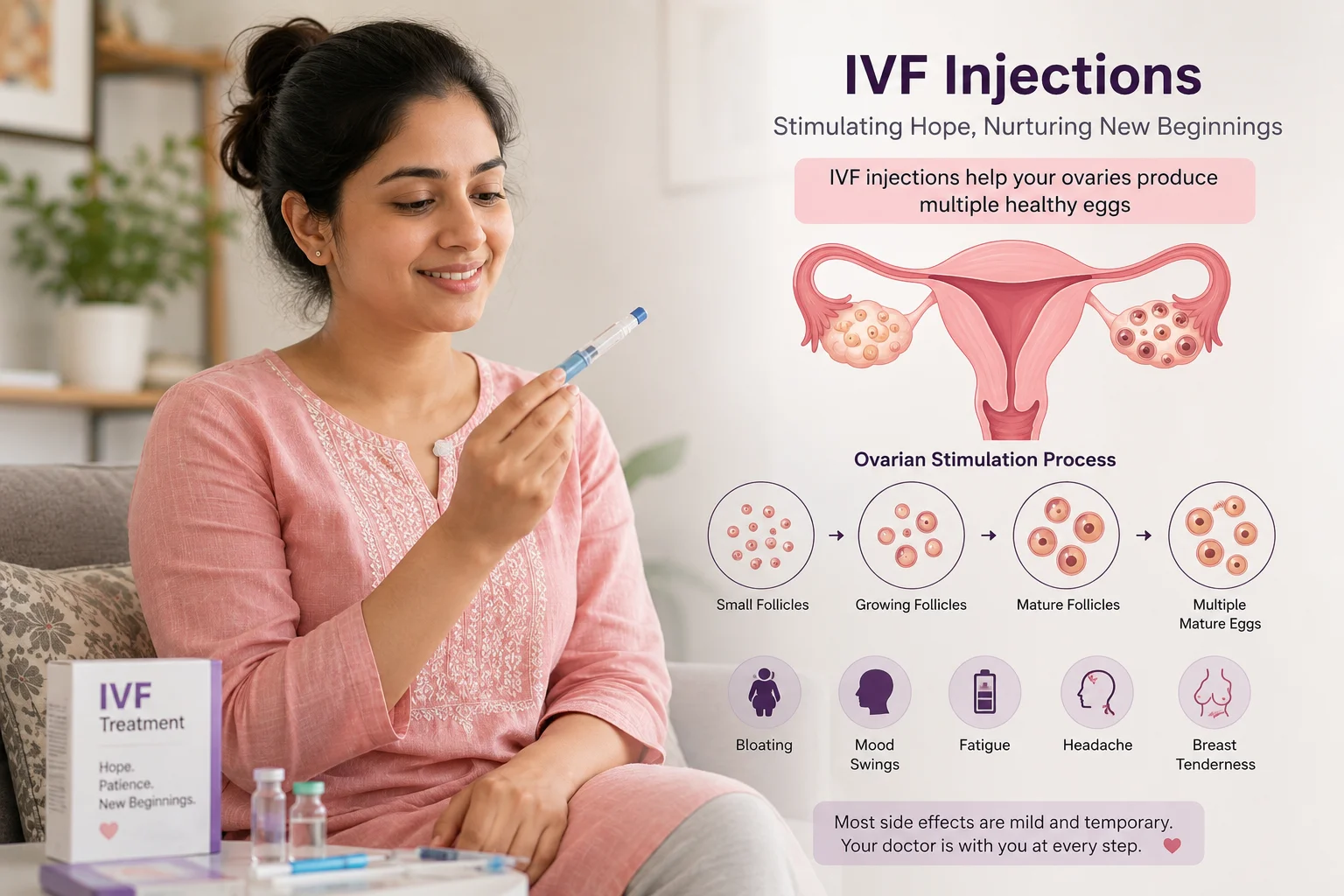
IVF injections are hormonal medicines that encourage the ovaries to produce several eggs in one menstrual cycle. In a natural cycle, only one egg usually matures and gets released.
During IVF, doctors aim to retrieve multiple eggs. This increases the number of embryos available for transfer. More healthy embryos can improve pregnancy rates.
The medicines used during stimulation contain hormones that naturally occur in the body. These hormones support follicle growth and egg maturation.
Women undergoing IVF treatment receive these injections under close medical supervision. Ultrasound scans and blood tests help specialists monitor ovarian response.
Types of IVF Injections Used During Treatment
Different medications are prescribed during an IVF cycle. Each injection has a specific role.
| Injection Type | Examples | Purpose |
|---|---|---|
| FSH Injections | Gonal-F, Follistim | Stimulate egg growth |
| Combination FSH and LH | Menopur | Support follicular development |
| GnRH Antagonists | Cetrotide, Ganirelix | Prevent early ovulation |
| Trigger Injection | Ovitrelle, hCG | Promote final egg maturation |
| Progesterone Injections | Progesterone in oil | Support implantation |
Doctors decide the dosage after evaluating age, hormone levels, ovarian reserve, and previous fertility history.
Women with poor ovarian reserve or hormonal imbalance may require customized stimulation plans.
Common IVF Injection Side Effects
Most IVF injection side effects occur because hormone levels rise quickly. These changes are expected and generally resolve after egg retrieval.
Bloating and Abdominal Fullness
The ovaries enlarge as multiple follicles develop. This may create pressure in the lower abdomen. Some women feel heaviness while sitting or walking.
Mood Swings
Hormonal fluctuations can affect emotional wellbeing. Feeling anxious, emotional, or irritable is common during stimulation.
Fatigue
The body works harder to support egg development. Many women notice lower energy levels during treatment.
Headache
Changes in estrogen levels may trigger mild headaches. Adequate hydration and proper sleep can help reduce discomfort.
Breast Tenderness
Progesterone and estrogen can make the breasts feel swollen or sensitive.
Nausea and Dizziness
Some women experience temporary nausea after trigger injections. This symptom usually improves within a short period.
Injection Site Redness
Minor swelling, bruising, or itching around the injection area is common. It generally disappears within a few hours.
Although these IVF injection side effects can be uncomfortable, they rarely interfere with routine activities.
IVF Injection Side Effects by Medication Type
Each medicine used during ovarian stimulation has its own side effect profile.
FSH Injections
- Abdominal bloating
- Mild pelvic discomfort
- Headache
- Tiredness
Menopur Side Effects
- Injection site pain
- Nausea
- Breast tenderness
- Mood changes
GnRH Antagonist Side Effects
- Skin irritation
- Temporary itching
- Localized redness
Progesterone Injection Side Effects
- Drowsiness
- Breast soreness
- Pain at the injection site
- Mild swelling
Trigger Shot Side Effects
- Pelvic heaviness
- Temporary cramping
- Light nausea
Discussing symptoms with your fertility specialist can help distinguish expected IVF injection side effects from complications.
Week-by-Week Changes During IVF Stimulation
Symptoms may vary as the treatment progresses.
Days 1–5
- Headache
- Mild fatigue
- Injection site soreness
- Emotional sensitivity
Days 6–10
- Increasing bloating
- Breast tenderness
- Mood swings
- Abdominal pressure
Trigger Injection Phase
- Pelvic heaviness
- Light cramps
- Nausea
- Reduced appetite
Women with conditions such as Silent Endometriosis and Its Impact on IVF Success Rates may require additional monitoring during stimulation.
What Is Ovarian Hyperstimulation Syndrome (OHSS)?
OHSS is one of the uncommon but significant IVF injection side effects. It develops when the ovaries overreact to fertility medications.
In this condition, the ovaries become enlarged. Fluid may leak into the abdominal cavity. Most cases are mild. Severe OHSS is uncommon but needs immediate medical care.
Symptoms of OHSS
- Rapid weight gain
- Severe abdominal bloating
- Persistent nausea and vomiting
- Difficulty breathing
- Reduced urine output
- Severe pelvic pain
Who Is at Higher Risk?
- Women with PCOS
- Patients with high AMH levels
- Younger women
- Women who previously developed OHSS
Regular ultrasound examinations and hormone monitoring help fertility specialists detect early warning signs and prevent severe complications.
“`html id=”s9u3xa”
How to Manage IVF Injection Side Effects at Home
Most IVF injection side effects can be managed with simple lifestyle changes. Following healthy habits during stimulation can make the treatment experience more comfortable.
Stay Hydrated
Drink at least 2–3 liters of water every day. Proper hydration may help reduce bloating and improve circulation.
Eat a Balanced Diet
Choose foods rich in protein, fiber, vitamins, and minerals. Fresh fruits, vegetables, nuts, eggs, and dairy products are good options.
Including an IVF-friendly diet can support ovarian function and overall health. You can also read about Food for IVF Success With Right Diet to learn more.
Avoid Strenuous Activities
Heavy workouts and high-impact exercises should be avoided during ovarian stimulation. Enlarged ovaries are more sensitive to sudden movements.
Light walking, stretching, and yoga can help maintain flexibility and reduce stress.
Get Enough Rest
Sleep plays an important role in hormonal regulation. Aim for seven to eight hours of sleep each night.
Follow the Medication Schedule
Take injections at the same time every day. Missing doses or delaying medications may affect follicle development.
Most women notice improvement in IVF injection side effects soon after egg retrieval.
Tips to Reduce Injection Site Pain
Some women feel discomfort while taking daily injections. These simple tips can help.
- Apply an ice pack for a few minutes before giving the injection.
- Allow refrigerated medicines to reach room temperature.
- Change the injection site regularly.
- Do not massage the skin immediately after the injection.
- Wear loose-fitting clothing to avoid irritation.
These methods can minimize bruising and soreness.
Emotional and Mental Side Effects During IVF
IVF treatment can affect emotional wellbeing. Hormonal changes, frequent clinic visits, and uncertainty about treatment outcomes may create additional stress.
Women undergoing repeated IVF cycles may experience anxiety, frustration, or sleep disturbances.
Patients diagnosed with conditions such as endometriosis, diminished ovarian reserve, or unexplained infertility often need extra emotional support.
Practicing mindfulness, meditation, and deep breathing exercises may help improve mental wellbeing.
Talking openly with family members or joining support groups can also make the journey easier.
Reading articles like Questions to Ask Your IVF Specialist Before Treatment can help patients feel more prepared and informed.
When Should You Contact Your Fertility Specialist?
Although most IVF injection side effects are mild, some symptoms should never be ignored.
Seek medical attention immediately if you notice:
- Sudden weight gain
- Severe abdominal swelling
- Persistent vomiting
- Difficulty breathing
- Sharp pelvic pain
- Reduced urination
- Dizziness that does not improve
Early diagnosis and treatment can prevent serious complications.
Expert Advice from Dr. Aprajita Srivastava
Dr. Aprajita Srivastava is a highly skilled gynecologist, IVF specialist, and laparoscopic surgeon based in Sector 121, Noida. She has extensive expertise in reproductive medicine, infertility treatments, IUI, egg freezing, and advanced IVF procedures.
She is known for managing complex fertility concerns, recurrent implantation failure, Silent Endometriosis, and high-risk pregnancies.
According to Dr. Aprajita Srivastava, most IVF injection side effects are temporary and manageable. However, symptoms such as severe bloating, breathing difficulty, and rapid weight gain should be evaluated immediately.
She believes that individualized stimulation protocols, close monitoring, and timely intervention significantly reduce treatment-related complications.
Phone: +91 95992 44575
Address: Ofc No 143, 1st Floor, QURE CLINIC, Cleo St, Sector 121, Noida, Uttar Pradesh 201301
Couples seeking fertility treatment may also benefit from understanding IVF Success Rates in Noida before starting their treatment journey.
Frequently Asked Questions About IVF Injection Side Effects
Do IVF injections cause weight gain?
Temporary water retention can lead to mild weight gain. This usually resolves after treatment.
How long do IVF injection side effects last?
Most symptoms improve within a few days after egg retrieval. Some women may notice mild discomfort for one to two weeks.
Are IVF injections painful?
Most women experience only mild discomfort. Applying ice before injections can reduce pain.
Can IVF injections affect future fertility?
No. Fertility medications do not reduce ovarian reserve or affect future fertility potential.
Can I continue working during IVF stimulation?
Yes. Many women continue their regular work schedule. Heavy physical activities should be avoided.
Can IVF injections cause mood swings?
Yes. Hormonal fluctuations during ovarian stimulation can temporarily affect emotions and energy levels.
Conclusion
IVF injections are an essential part of assisted reproductive treatment. They help increase the number of mature eggs available for fertilization and improve embryo selection.
Most IVF injection side effects are mild, short-lived, and easy to manage. Staying hydrated, eating nutritious meals, following medication schedules, and attending regular monitoring appointments can make the process smoother.
Patients should maintain open communication with their fertility specialist throughout treatment. Early attention to unusual symptoms helps ensure a safer and more comfortable IVF experience.
Women experiencing persistent symptoms or planning fertility treatment should consult Dr. Aprajita Srivastava, IVF Specialist in Noida and Best Gynaecologist in Noida, for personalized guidance and evidence-based fertility care.