
Polycystic Ovary Syndrome (PCOS) is a common hormonal disorder. It affects many women in their reproductive years. It is often linked with irregular periods, acne, and weight gain. But one important concern is its connection with recurrent miscarriage.
PCOS recurrent miscarriage is a real clinical issue. Some women conceive easily but struggle to maintain pregnancy. Others face both infertility and pregnancy loss. Understanding the reasons behind this helps in proper treatment.
Dr. Aprajita Srivastava is a highly skilled gynecologist, IVF specialist, and laparoscopic surgeon based in Sector 121, Noida. She has strong experience in managing infertility, PCOS, and high-risk pregnancy cases. Her approach focuses on identifying the root cause and giving personalized care.
What is Recurrent Pregnancy Loss?
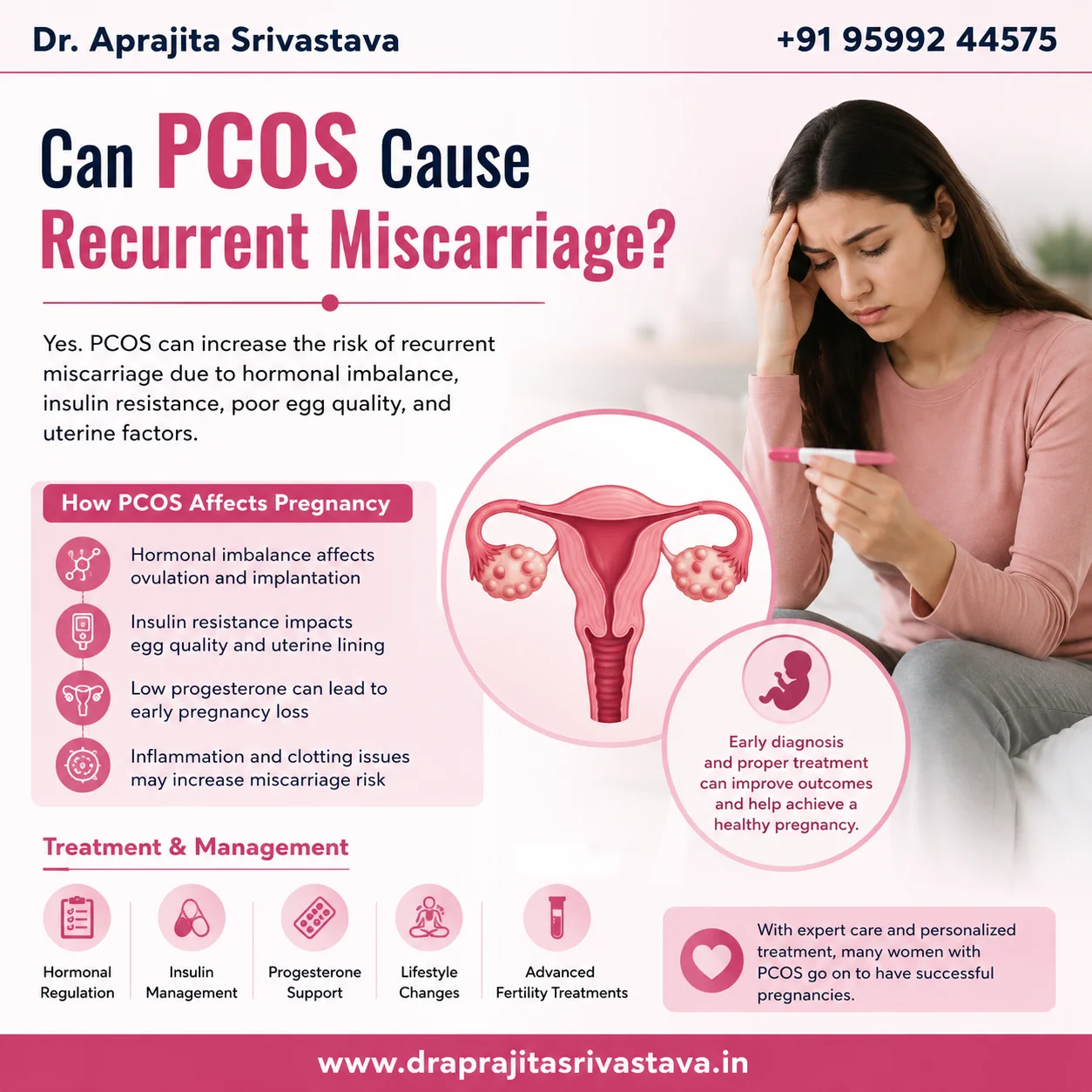
Recurrent pregnancy loss means losing two or more pregnancies. It usually happens in the early weeks. Many medical factors can cause it. In women with PCOS, hormonal imbalance is one of the main reasons.
You can read more about causes in detail here: causes of recurrent miscarriage.
How PCOS Affects Pregnancy
PCOS affects hormone levels. It disturbs ovulation. It also impacts egg quality and the uterine lining. These changes make it harder for pregnancy to continue normally.
Women with PCOS often have:
- Irregular ovulation
- High androgen levels
- Insulin resistance
- Low progesterone levels
All these factors together increase miscarriage risk.
Main Causes of PCOS Recurrent Miscarriage
Hormonal Imbalance
Hormones control ovulation and implantation. In PCOS, androgen levels are high. Progesterone may be low after ovulation. This creates a weak environment for embryo implantation.
Insulin Resistance
Insulin resistance is common in PCOS. High insulin affects egg quality. It also impacts the uterine lining. This reduces the chances of a stable pregnancy.
Poor Egg Quality
Egg quality plays a major role in pregnancy success. Hormonal imbalance can affect how eggs develop. Poor quality embryos may not grow properly.
Endometrial Issues
The uterus lining may not be prepared for implantation. This leads to early pregnancy failure.
Inflammation
Chronic inflammation is often present in PCOS. It interferes with implantation and embryo growth.
Blood Clotting Problems
Some women may have clotting disorders. These affect blood flow to the placenta. This may result in miscarriage.
Common Hormonal Problems Seen in PCOS
Hormonal imbalance is the core issue. The most common problems include:
- High LH/FSH ratio
- Elevated male hormones
- Low progesterone
- High insulin levels
- Imbalance in estrogen
These imbalances affect ovulation, fertilization, and implantation.
Symptoms That May Indicate Risk
Some symptoms may suggest higher miscarriage risk in PCOS:
- Irregular or missed periods
- Excess facial hair or acne
- Weight gain
- Difficulty in conceiving
- Previous pregnancy loss
If these signs are present, early consultation is important.
How PCOS Recurrent Miscarriage is Diagnosed?
Diagnosis involves multiple steps. It helps find the exact cause.
- Hormone level testing
- Ultrasound for ovaries
- Blood sugar and insulin tests
- Thyroid function tests
- Genetic or clotting tests if needed
Each test gives important information. It helps in planning treatment.
Treatment Options for PCOS Recurrent Miscarriage
Treatment depends on the underlying cause. A personalized plan is required.
Hormonal Treatment
Medicines help balance hormones. Ovulation induction helps release healthy eggs.
Insulin Management
Drugs like metformin improve insulin sensitivity. This improves egg quality.
Progesterone Support
Progesterone is important after ovulation. Supplementation supports implantation.
Lifestyle Changes
Weight control is very important. Even small weight loss improves fertility.
Learn more about diet here: PCOS diet plan.
Advanced Fertility Treatments
If natural conception is difficult, assisted methods may be used.
- IUI or IVF
- ICSI for fertilization support
- Genetic testing of embryos
You can explore IVF treatment options for detailed understanding.
Managing Inflammation
Healthy diet and lifestyle reduce inflammation. This improves pregnancy chances.
Clotting Disorder Treatment
If needed, blood thinners may be prescribed under supervision.
Role of Lifestyle in Reducing Miscarriage Risk
Lifestyle plays a big role in managing PCOS.
- Eat a balanced diet
- Avoid processed foods
- Exercise regularly
- Maintain healthy weight
- Reduce stress levels
These changes improve hormone balance and fertility.
When to Consult a Specialist
You should consult a doctor if:
- You have repeated miscarriages
- You have irregular periods
- You are trying to conceive for long
Early consultation improves success rates. You can connect with an infertility specialist in Noida for proper evaluation.
Can Women with PCOS Have a Healthy Pregnancy?
Yes. Many women with PCOS have successful pregnancies. The key is early diagnosis and proper care.
With the right treatment plan, hormone levels can be managed. Egg quality can improve. The uterine environment can be supported.
Expert care also helps in managing high-risk pregnancy situations.
Conclusion
PCOS recurrent miscarriage can be challenging. But it is manageable. The main causes include hormonal imbalance, insulin resistance, and inflammation.
Proper diagnosis is the first step. Treatment should be personalized. Lifestyle changes also play an important role.
With expert guidance and timely care, many women overcome this condition. They achieve healthy pregnancies.
For more guidance and fertility-related information, visit the blog section.
Frequently Asked Questions (FAQs)
1. Can PCOS cause recurrent miscarriage?
Yes. Hormonal imbalance and poor egg quality increase the risk.
2. How can miscarriage risk be reduced?
Managing weight, balancing hormones, and proper medical care help reduce risk.
3. Is IVF helpful in PCOS cases?
Yes. IVF can help in selected cases where natural conception is difficult.
4. Can PCOS be treated completely?
PCOS cannot be cured but can be managed effectively.
5. When should I seek medical help?
If you have repeated pregnancy loss or difficulty conceiving, consult a specialist early.