The days after an embryo transfer can feel longer than the IVF treatment itself. Every small symptom may make you wonder if implantation has started. Some women notice mild cramps or bloating, while others have no symptoms at all. Both situations can be completely normal.
Understanding what happens after embryo transfer day by day can help reduce unnecessary stress during the two-week wait. It also helps you know what changes are expected and when you should contact your fertility specialist.
This guide explains the embryo transfer timeline, possible symptoms, implantation stages, lifestyle tips, and the right time to take a pregnancy test. It is based on current medical understanding and is intended for educational purposes. Your IVF specialist should always be your primary source of medical advice.
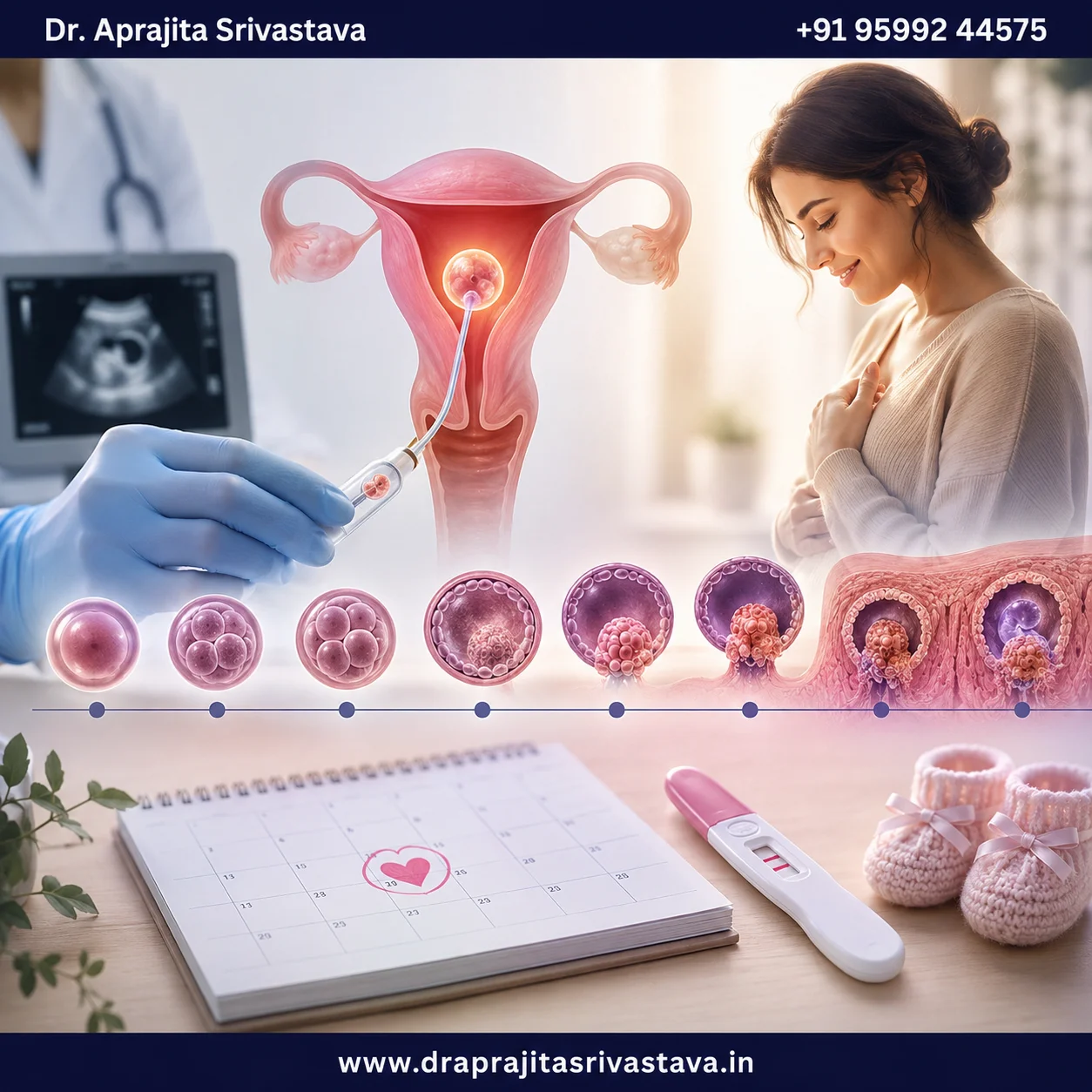
What Happens Immediately After an Embryo Transfer?
An embryo transfer is one of the final steps of an IVF cycle. During this procedure, a carefully selected embryo is placed inside the uterus using a thin catheter. The procedure usually takes only a few minutes and does not require general anesthesia.
After the transfer, the embryo is not attached immediately. It needs time to settle inside the uterus, hatch from its outer shell, and begin implantation. This process varies slightly from one person to another.
If you are new to IVF, you may also like to read our guide on IVF treatment and how the procedure works.
Fresh Embryo Transfer vs Frozen Embryo Transfer
The implantation process is almost the same in both fresh and frozen embryo transfers. The main difference is when the embryo is transferred.
- Fresh embryo transfer: The embryo is transferred a few days after egg retrieval.
- Frozen embryo transfer (FET): The embryo is frozen first and transferred in a later cycle after preparing the uterine lining.
Many couples ask if frozen embryos implant more slowly. In most cases, implantation timing is similar because the embryo continues its development from the same stage after transfer.
You can also learn more about Frozen Embryo Transfer (FET).
Day-3 Embryo vs Day-5 Blastocyst
| Day-3 Embryo | Day-5 Blastocyst |
|---|---|
| Transferred earlier in development. | Transferred after reaching the blastocyst stage. |
| May take slightly longer before implantation begins. | Usually begins implantation sooner after transfer. |
| Requires additional development inside the uterus. | Already developed further before transfer. |
Embryo Transfer Day by Day Timeline
Transfer Day (Day 0)
The embryo is placed inside the uterus. It floats freely within the uterine cavity. Implantation has not started yet. Most women can return home shortly after the procedure and continue light daily activities.
Day 1 After Embryo Transfer
The embryo begins adjusting to its new environment. A blastocyst may start hatching from its protective outer shell. Some women notice no symptoms, while others experience mild cramping caused by the procedure or hormonal medicines.
Day 2 After Embryo Transfer
The embryo continues hatching. It moves closer to the uterine lining where implantation will begin. Mild bloating, breast tenderness, or no symptoms are all considered normal.
Day 3 After Embryo Transfer
Implantation may begin. The embryo starts making contact with the endometrium. Some women experience light cramps or very mild spotting. Others feel completely normal.
Day 4 After Embryo Transfer
The embryo attaches more firmly to the uterine lining. Early placental cells begin developing. Hormonal medicines may continue causing breast soreness, fatigue, or bloating.
Day 5 After Embryo Transfer
Implantation usually continues. The embryo becomes more securely attached. Small hormonal changes may begin, but symptoms still vary greatly between women.
Day 6 After Embryo Transfer
If implantation is progressing, the developing embryo starts producing small amounts of human chorionic gonadotropin (hCG). These levels are still too low for most home pregnancy tests.
Day 7 After Embryo Transfer
Some women notice fatigue, breast tenderness, mild cramping, or light spotting. Others continue to have no symptoms. Both situations can occur during a healthy IVF pregnancy.
Day 8 After Embryo Transfer
Implantation is generally complete. The placenta continues developing, and hCG production gradually increases.
Day 9 After Embryo Transfer
Blood hCG levels may begin rising enough to be detected in some women. Home pregnancy tests can still produce inaccurate results if taken this early.
Day 10 After Embryo Transfer
The embryo continues developing inside the uterus. Hormone levels slowly increase. Fatigue and breast tenderness may become more noticeable in some women.
Day 11 After Embryo Transfer
The pregnancy hormone continues increasing if implantation has been successful. Symptoms remain highly individual and should not be used to judge IVF success.
Day 12 After Embryo Transfer
Some clinics may advise blood testing around this stage depending on the treatment protocol. However, many specialists still recommend waiting until the scheduled beta hCG test.
Day 13 After Embryo Transfer
The two-week wait is almost complete. Continue taking all prescribed medicines exactly as directed. Avoid stopping progesterone without medical advice.
Day 14 After Embryo Transfer
This is usually the recommended time for a beta hCG blood test. It provides a much more reliable result than testing too early with a home pregnancy kit.
If you would like to understand the complete IVF journey after embryo transfer, you can also read our guide on IVF timeline from start to pregnancy.
Common Symptoms After Embryo Transfer
Every woman experiences the two-week wait differently. Some notice several symptoms, while others have none. Symptoms alone cannot confirm a successful implantation.
Symptoms That Are Usually Normal
- Mild cramping
- Light bloating
- Breast tenderness
- Fatigue
- Increased vaginal discharge
- Light spotting
- No symptoms at all
When Should You Contact Your Doctor?
Contact your fertility specialist immediately if you experience:
- Heavy bleeding similar to a menstrual period.
- Severe abdominal pain.
- Fever or chills.
- Difficulty breathing.
- Persistent vomiting.
- Severe swelling or symptoms of ovarian hyperstimulation syndrome (OHSS).
No Symptoms After Embryo Transfer: Is It Normal?
Yes. Many women who have a successful IVF pregnancy report little or no symptoms during the first two weeks. Hormonal medicines affect every person differently. The absence of symptoms does not mean the embryo has failed to implant.
The only reliable way to confirm pregnancy is the scheduled beta hCG blood test.
Foods to Eat After Embryo Transfer
A balanced diet supports your overall health during IVF. It cannot guarantee implantation, but it helps your body receive essential nutrients.
- Fresh fruits and vegetables
- Whole grains
- Lean protein
- Eggs and dairy products
- Nuts and seeds
- Healthy fats like avocado and olive oil
- Plenty of water
For more nutrition guidance, read our article on foods that support IVF treatment.
Foods and Habits to Avoid
- Alcohol
- Smoking or tobacco
- Excess caffeine
- Raw or undercooked meat and seafood
- Unpasteurized dairy products
- Recreational drugs
Activities After Embryo Transfer
Most women can return to their normal daily routine within a short time after the procedure.
You Can Usually Continue
- Light walking
- Desk work
- Driving short distances
- Climbing stairs slowly
- Normal household activities
Avoid Until Your Doctor Advises
- Heavy lifting
- High-impact exercise
- Hot tubs and steam baths
- Smoking and alcohol
Is Bed Rest Necessary After Embryo Transfer?
No. Complete bed rest is generally not recommended after embryo transfer unless your fertility specialist advises it for a specific medical reason. Gentle movement supports normal blood circulation. Follow your doctor’s instructions regarding work, exercise, and travel.
When Should You Take a Pregnancy Test?
A home pregnancy test done too early may give a false result. Most fertility specialists recommend waiting until the scheduled beta hCG blood test, usually around 12 to 14 days after embryo transfer.
Continue taking all prescribed medicines, including progesterone, until your doctor tells you otherwise.
What Can Affect Implantation Success?
- Embryo quality
- Endometrial receptivity
- Maternal age
- Hormonal balance
- Overall reproductive health
- Following the prescribed treatment plan
If you would like to understand more about implantation, read our detailed guide on implantation during IVF.
Common Myths After Embryo Transfer
| Myth | Fact |
|---|---|
| Bed rest guarantees implantation. | No scientific evidence supports this for most patients. |
| Walking can dislodge the embryo. | The embryo remains protected inside the uterus. |
| No symptoms mean IVF has failed. | Many successful pregnancies begin without noticeable symptoms. |
| Early home testing gives accurate results. | Testing too soon may produce false results. |
Expert Advice from Dr. Aprajita Srivastava
This article has been medically reviewed for educational accuracy by Dr. Aprajita Srivastava, IVF Specialist and Best Gynaecologist in Noida. She provides evaluation and treatment for infertility, IVF, ICSI, recurrent pregnancy loss, and other reproductive health conditions through QURE Clinic, Sector 121, Noida.
Clinic: QURE CLINIC, Office No. 143, 1st Floor, Cleo Street, Sector 121, Noida, Uttar Pradesh 201301
Phone: +91 95992 44575
Google Maps: View Clinic Location
If you are planning IVF treatment or have questions after embryo transfer, consult an experienced Best Gynecologist in Noida or visit our IVF Center in Noida for individualized guidance.
Frequently Asked Questions
How long does implantation take after embryo transfer?
Implantation usually begins within a few days after transfer and may complete over the following several days. The exact timing differs from person to person.
Can I walk after embryo transfer?
Yes. Light walking is generally considered safe unless your fertility specialist advises otherwise.
Is spotting always a positive sign?
No. Light spotting may occur during implantation, but some women with successful pregnancies never experience spotting.
Can stress cause implantation failure?
Feeling anxious during the two-week wait is common. Managing stress is helpful for overall well-being, but symptoms or emotions alone cannot predict IVF success.
When should I call my fertility specialist?
Seek medical advice if you develop heavy bleeding, severe pain, fever, breathing difficulty, or any symptom that feels unusual or concerning.
Conclusion
Understanding what happens after embryo transfer day by day can make the waiting period less stressful. Implantation is a gradual biological process, and every IVF journey is unique.
Some women experience symptoms, while others do not. Neither situation confirms success or failure.
Continue your prescribed medicines, follow your fertility specialist’s instructions, and wait for the scheduled beta hCG blood test for the most reliable result.
If you have questions or develop concerning symptoms, contact your IVF team without delay.