
Many women notice mild pelvic discomfort around the middle of their menstrual cycle. This condition is known as ovulation pain or Mittelschmerz. While occasional discomfort is common, some women experience painful ovulation every month. This recurring pain can raise concerns about reproductive health, fertility, and underlying gynecological conditions.
As a fertility specialist, I often meet women who ask why they experience painful ovulation every month. In most cases, the pain is harmless. However, recurring or severe symptoms should never be ignored. Understanding the causes can help you manage symptoms and seek timely medical care when needed.
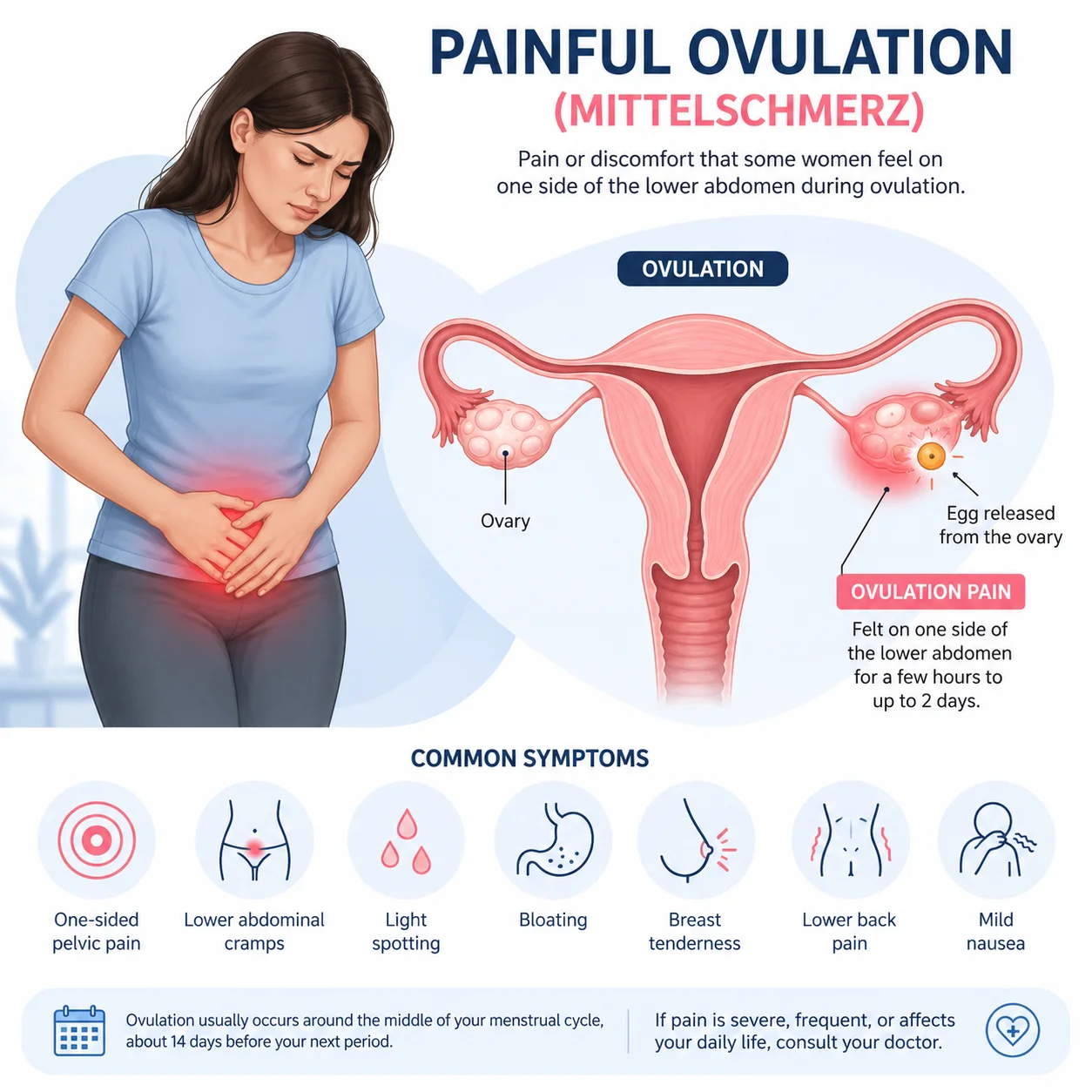
What Is Ovulation Pain?
Ovulation occurs when a mature egg is released from one of the ovaries. This usually happens around the middle of the menstrual cycle. During this process, some women experience mild cramping, pressure, or pain in the lower abdomen.
Ovulation pain often affects one side of the pelvis because only one ovary releases an egg during a cycle. The discomfort may last from a few minutes to two days.
If you want to understand more about ovulation and fertility, read our guide on which day of the menstrual cycle is best for pregnancy.
Why Some Women Experience Painful Ovulation Every Month?
There are several reasons why some women experience painful ovulation every month.
1. Follicle Growth and Ovarian Stretching
Before ovulation, the follicle containing the egg grows larger. As it expands, it stretches the ovarian surface. This stretching can cause discomfort and pain.
2. Follicle Rupture During Ovulation
When the egg is released, the follicle ruptures. This process may trigger temporary pelvic pain. Some women are more sensitive to this event and feel pain every cycle.
3. Hormonal Changes
Hormonal fluctuations play a major role. Changes in estrogen and luteinizing hormone levels can trigger uterine contractions and pelvic cramping.
Women experiencing recurring symptoms may also benefit from understanding hormonal imbalance and reproductive health.
4. Fluid and Blood Irritation
When the follicle breaks, a small amount of fluid or blood may enter the pelvic cavity. This can irritate nearby tissues and lead to pain.
5. Increased Pain Sensitivity
Some women naturally have a lower pain threshold. Even normal ovulation processes may feel more intense.
What Does Painful Ovulation Feel Like?
The symptoms can vary from one woman to another.
- Dull pelvic ache
- Sharp pain on one side
- Lower abdominal cramps
- Pelvic pressure
- Lower back pain
- Bloating
- Mild spotting
- Breast tenderness
Most women experience symptoms for a few hours. In some cases, the discomfort may last up to 48 hours.
Why Does Ovulation Pain Occur on One Side?
Many women notice pain only on the left or right side.
This happens because ovulation occurs from one ovary at a time. If the right ovary releases the egg, pain may be felt on the right side. If the left ovary ovulates, discomfort may occur on the left side.
The side can change from month to month depending on which ovary becomes active.
Ovulation Pain Timeline
Before Ovulation
The follicle grows and stretches the ovary.
During Ovulation
The egg is released. Follicle rupture can trigger pain.
After Ovulation
Released fluid may irritate pelvic tissues. Hormonal changes continue, causing mild cramping in some women.
Painful Ovulation vs Implantation Pain
Many women confuse ovulation pain with implantation cramps.
| Ovulation Pain | Implantation Pain |
|---|---|
| Occurs mid-cycle | Occurs 6–12 days after ovulation |
| Usually one-sided | Often central pelvic discomfort |
| Lasts a few hours to 2 days | Usually lasts 1–3 days |
| Associated with egg release | Associated with embryo implantation |
You can also learn more about implantation and early pregnancy signs.
Conditions Linked to Painful Ovulation Every Month
Although painful ovulation every month is often normal, recurring severe pain may indicate an underlying condition.
Endometriosis
Endometriosis occurs when tissue similar to the uterine lining grows outside the uterus. It can cause severe ovulation pain and fertility challenges.
In some women, Silent Endometriosis and Its Impact on IVF Success Rates can become a major concern because symptoms may be subtle while fertility outcomes are affected.
Learn more about Silent Endometriosis and Its Impact on IVF Success Rates.
PCOS
Women with PCOS may experience irregular ovulation and pelvic discomfort.
Read about how PCOS affects fertility.
Ovarian Cysts
Large ovarian cysts can increase pressure and pain during ovulation.
Pelvic Inflammatory Disease
Pelvic infections may cause chronic pelvic pain and discomfort around ovulation.
Fibroids
Fibroids can sometimes contribute to pelvic pressure and menstrual symptoms.
Can Painful Ovulation Affect Fertility?
Mild ovulation pain does not usually affect fertility. In fact, it often indicates that ovulation is occurring.
However, conditions such as endometriosis, PCOS, pelvic infections, and ovarian cysts can affect fertility if left untreated.
If you have been trying to conceive without success, consult an infertility specialist in Noida for a detailed evaluation.
How I Diagnose Recurring Ovulation Pain
When patients visit me with painful ovulation every month, I usually recommend:
- Detailed medical history
- Pelvic examination
- Ultrasound scan
- Hormonal blood tests
- Laparoscopic evaluation when necessary
Women with persistent symptoms may require advanced assessment through gynae laparoscopic surgery.
How to Manage Painful Ovulation Every Month
- Apply a heating pad
- Stay hydrated
- Exercise regularly
- Get adequate sleep
- Manage stress levels
- Follow an anti-inflammatory diet
- Seek medical advice for persistent symptoms
Women planning pregnancy should also focus on nutrition for fertility support.
When Should You See a Doctor?
Consult a gynecologist if you experience:
- Severe pain
- Pain lasting more than two days
- Heavy bleeding
- Fever
- Nausea or vomiting
- Pain during intercourse
- Difficulty walking or performing daily activities
About Dr. Aprajita Srivastava
Dr. Aprajita Srivastava is a highly skilled gynecologist, IVF specialist, and laparoscopic surgeon based in Sector 121, Noida. She has extensive expertise in reproductive medicine, infertility treatments, IVF, IUI, egg freezing, high-risk pregnancy care, and advanced laparoscopic procedures.
If you are experiencing painful ovulation every month, fertility concerns, recurrent pregnancy loss, endometriosis, or menstrual health issues, a comprehensive evaluation can help identify the root cause and guide the right treatment plan.
Phone: +91 95992 44575
Address: Ofc No 143, 1st Floor, QURE CLINIC, Cleo St, Sector 121, Noida, Uttar Pradesh 201301
Conclusion
Why some women experience painful ovulation every month depends on several factors, including follicle growth, hormonal changes, pelvic sensitivity, and underlying gynecological conditions. Mild discomfort is usually normal. However, recurring severe pain should never be ignored.
Early diagnosis can help identify conditions such as endometriosis, PCOS, ovarian cysts, and pelvic infections. If painful ovulation every month is affecting your quality of life or fertility journey, consulting an experienced gynecologist and fertility specialist is the best step toward effective treatment and long-term reproductive health.