
When couples struggle to conceive, they often focus on age, diet, stress, or medical conditions. However, one important factor is frequently overlooked: environmental toxins. In my practice, I have seen many women with unexplained fertility issues where environmental exposure may have played a role in disrupting reproductive health.
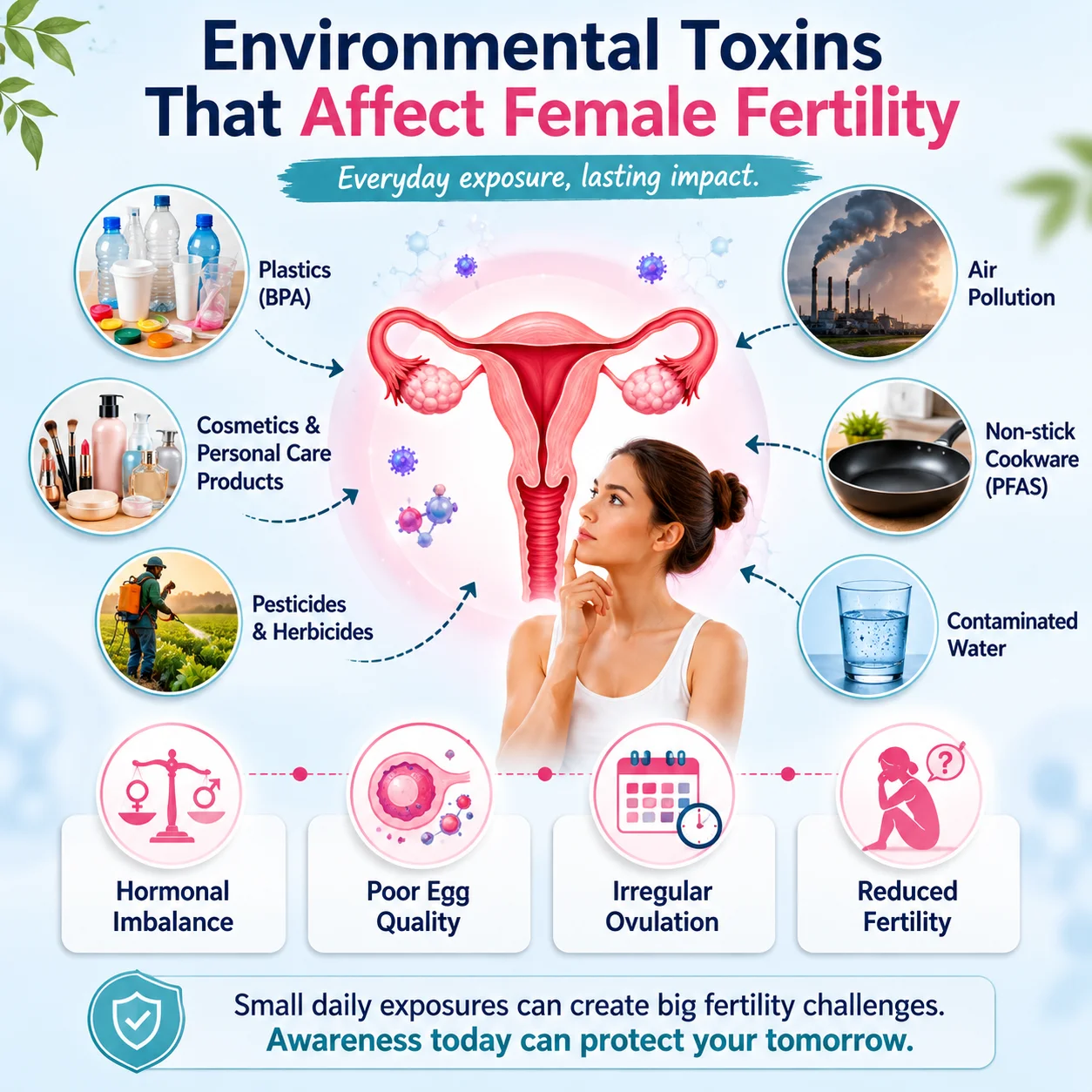
Environmental toxins are chemicals present in the air we breathe, the food we eat, the water we drink, and the products we use daily. Over time, these substances can interfere with hormones, affect egg quality, disrupt ovulation, and reduce the chances of a healthy pregnancy.
What Are Environmental Toxins?
Environmental toxins are harmful substances that enter the body through food, water, air, or skin contact. Some of the most common fertility-disrupting toxins include:
- Bisphenol A (BPA)
- Phthalates
- Pesticides
- Heavy metals such as lead and mercury
- PFAS (Forever Chemicals)
- Air pollutants
Many of these chemicals are known as endocrine disruptors. They can mimic or block natural hormones, leading to hormonal imbalance and reproductive problems.
Common Environmental Toxins That Affect Female Fertility
BPA (Bisphenol A)
BPA is commonly found in plastic bottles, food containers, and canned food packaging. Research suggests that BPA exposure may affect ovarian function, reduce egg quality, and interfere with embryo implantation.
Phthalates
Phthalates are present in cosmetics, perfumes, shampoos, and plastic products. These chemicals can disrupt estrogen production and contribute to ovulation problems.
Heavy Metals
Lead, mercury, cadmium, and arsenic can accumulate in the body over time. Exposure may affect reproductive organs and increase the risk of infertility, miscarriage, and pregnancy complications.
Pesticides
Pesticides used in agriculture may enter the body through food and water. Long-term exposure has been linked to hormonal disruption and reduced fertility.
How Environmental Toxins Affect Female Fertility?
Environmental toxins can affect fertility in several ways.
Hormonal Imbalance
The reproductive system depends on a delicate balance of hormones. Environmental toxins can interfere with estrogen, progesterone, thyroid hormones, and insulin regulation.
When hormone levels become unstable, women may experience irregular menstrual cycles, missed ovulation, and difficulty conceiving. Women experiencing persistent hormonal issues may benefit from consulting a specialist for hormonal imbalance evaluation and treatment.
Reduced Egg Quality
Healthy eggs are essential for successful conception. Studies suggest that environmental toxins may damage developing eggs through oxidative stress and inflammation.
Poor egg quality can lead to lower fertilization rates, poor embryo development, and reduced pregnancy success. Women preparing for fertility treatment should also focus on improving egg health through lifestyle changes and strategies that support egg quality before IVF.
Impact on Ovarian Reserve
Environmental toxins may accelerate ovarian aging. This can reduce ovarian reserve and affect Anti-Müllerian Hormone (AMH) levels.
Women with declining ovarian reserve may face challenges even at a younger reproductive age. Understanding ovarian reserve and fertility planning can help identify risks early.
PCOS and Endometriosis
Research suggests that endocrine-disrupting chemicals may worsen conditions such as PCOS and endometriosis.
Women with PCOS often experience hormonal imbalance and ovulation issues. Exposure to environmental toxins may aggravate these symptoms. Learn more about the relationship between PCOS and female fertility.
Similarly, chronic inflammation caused by toxins may contribute to endometriosis progression. In some cases, women may have undiagnosed or silent disease. Silent Endometriosis and Its Impact on IVF Success Rates is an important consideration during fertility evaluation.
Can Environmental Toxins Affect IVF Success?
Yes. Environmental toxins may influence every stage of fertility treatment.
Exposure to endocrine disruptors can affect:
- Egg quality
- Embryo quality
- Implantation rates
- Endometrial receptivity
- Pregnancy outcomes
Women undergoing fertility treatment should minimize toxin exposure several months before starting treatment. Understanding factors that affect IVF success rates can help improve treatment outcomes.
Air Pollution and Female Fertility
Air pollution is becoming an increasing concern, especially in urban areas.
Fine particulate matter (PM2.5), industrial emissions, and vehicle exhaust can trigger inflammation and oxidative stress throughout the body.
Several studies have linked air pollution to:
- Reduced ovarian function
- Lower conception rates
- Increased miscarriage risk
- Poor pregnancy outcomes
Women planning pregnancy should consider environmental factors alongside medical evaluations.
Signs Environmental Toxins May Be Affecting Fertility
Environmental toxin exposure may not cause obvious symptoms initially. However, some warning signs include:
- Irregular periods
- Hormonal imbalance
- Difficulty conceiving
- Repeated miscarriages
- Poor egg quality
- Low AMH levels
- Failed IVF cycles
If these symptoms are present, a comprehensive fertility assessment may be necessary.
How I Recommend Reducing Exposure to Environmental Toxins?
Simple lifestyle changes can make a significant difference.
- Use glass or stainless-steel food containers.
- Avoid heating food in plastic containers.
- Choose fragrance-free personal care products.
- Wash fruits and vegetables thoroughly.
- Use filtered drinking water.
- Reduce consumption of highly processed foods.
- Avoid smoking and second-hand smoke exposure.
- Improve indoor ventilation.
Reducing exposure before conception is particularly important because egg development begins several months before ovulation.
When to Consult a Fertility Specialist?
If you have been trying to conceive without success, environmental factors should not be ignored.
I am Dr. Aprajita Srivastava, IVF Specialist in Noida, gynecologist, and laparoscopic surgeon. I specialize in infertility treatment, IVF, IUI, egg freezing, reproductive medicine, and the management of complex fertility conditions.
At QURE Clinic, I take a comprehensive approach to fertility evaluation. This includes assessing lifestyle, hormonal health, ovarian reserve, reproductive disorders, and environmental influences that may affect conception.
Dr. Aprajita Srivastava
IVF Specialist in Noida | Best Gynaecologist in Noida | Laparoscopic Surgeon
Phone: +91 95992 44575
Address: Ofc No 143, 1st Floor, QURE CLINIC, Cleo St, Sector 121, Noida, Uttar Pradesh 201301
Conclusion
Environmental toxins are an often-overlooked factor in female fertility. These chemicals can affect hormones, egg quality, ovarian reserve, IVF outcomes, and pregnancy health. While it may not be possible to eliminate all exposures, reducing contact with harmful substances can support reproductive health and improve fertility outcomes. Early awareness and professional guidance can make a meaningful difference on the journey to parenthood.