
Sleep is one of the most important pillars of women’s health. Yet, it is often overlooked. Many women focus on diet, exercise, and supplements while ignoring the impact of sleep on hormonal balance. Understanding how sleep disorders affect female reproductive hormones is essential for maintaining healthy menstrual cycles, fertility, pregnancy outcomes, and overall reproductive well-being.
Sleep and hormones share a close relationship. Poor sleep can interfere with estrogen, progesterone, melatonin, cortisol, luteinizing hormone (LH), and follicle-stimulating hormone (FSH). These hormones regulate ovulation, menstruation, and fertility. When sleep quality declines, hormonal balance can suffer.
The Connection Between Sleep and Female Reproductive Hormones
To understand how sleep disorders affect female reproductive hormones, it is important to understand the body’s hormonal communication system.
The hypothalamic-pituitary-ovarian (HPO) axis controls reproductive hormone production. The hypothalamus sends signals to the pituitary gland. The pituitary gland releases LH and FSH. These hormones stimulate the ovaries to produce estrogen and progesterone.
Sleep disturbances can disrupt this entire process. As a result, hormone production becomes irregular. This can affect fertility, menstrual cycles, and reproductive health.
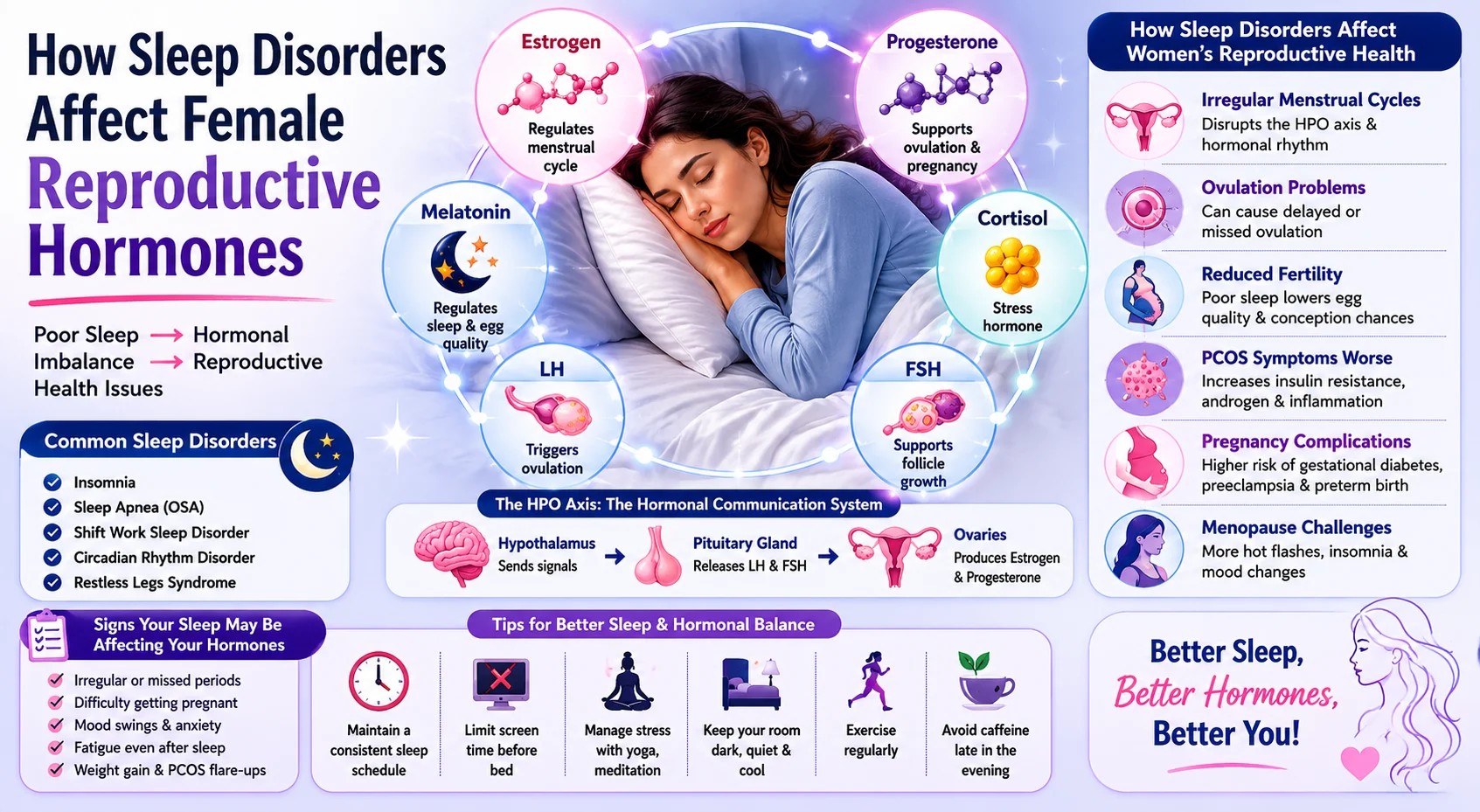
Common Sleep Disorders That Affect Hormonal Health
- Insomnia
- Obstructive Sleep Apnea (OSA)
- Shift Work Sleep Disorder
- Circadian Rhythm Disorders
- Restless Legs Syndrome
Each of these conditions can contribute to hormonal imbalance and reproductive issues. This is one reason why understanding how sleep disorders affect female reproductive hormones is becoming increasingly important.
Key Female Hormones Affected by Sleep Disorders
| Hormone | Role in Reproductive Health | Impact of Poor Sleep |
|---|---|---|
| Estrogen | Regulates menstrual cycle | Fluctuating hormone levels |
| Progesterone | Supports ovulation and pregnancy | Reduced production |
| Melatonin | Supports sleep and egg quality | Lower secretion |
| Cortisol | Stress management | Elevated levels |
| LH | Triggers ovulation | Delayed release |
| FSH | Supports follicle growth | Reduced effectiveness |
How Sleep Disorders Affect Menstrual Cycles?
One of the first signs of hormonal imbalance is menstrual irregularity. Women with chronic sleep deprivation often experience missed periods, irregular cycles, painful cramps, or abnormal bleeding patterns.
Elevated cortisol levels caused by poor sleep can suppress reproductive hormone signals. This may result in delayed ovulation and unpredictable menstrual cycles.
If you frequently experience cycle irregularities, it may be beneficial to learn more about menstrual irregularities and their causes.
How Sleep Disorders Affect Female Reproductive Hormones and Fertility?
Many couples focus on fertility treatments while overlooking sleep quality. However, how sleep disorders affect female reproductive hormones can directly influence conception.
Sleep plays a vital role in regulating LH and progesterone. Poor sleep may lead to:
- Delayed ovulation
- Anovulation (absence of ovulation)
- Reduced egg quality
- Implantation difficulties
- Lower fertility rates
Women planning pregnancy should understand how lifestyle factors influence reproductive outcomes. You can also explore how lifestyle choices impact fertility.
PCOS, Sleep Disorders, and Hormonal Imbalance
Polycystic Ovary Syndrome (PCOS) is one of the most common hormonal disorders affecting women.
Research shows that women with PCOS are more likely to experience sleep disturbances, especially sleep apnea. Poor sleep can worsen insulin resistance, increase inflammation, and elevate androgen levels.
This creates a cycle where PCOS worsens sleep and poor sleep worsens PCOS symptoms.
Women diagnosed with PCOS can benefit from understanding how PCOS affects female fertility.
Sleep Disorders During Pregnancy
Pregnancy naturally affects sleep patterns. However, chronic sleep problems can increase health risks for both mother and baby.
Poor sleep during pregnancy has been linked to:
- Gestational diabetes
- Preeclampsia
- Preterm birth
- Low birth weight
- Postpartum depression
Women seeking comprehensive pregnancy support can learn more about pregnancy care and maternal health.
Sleep Disorders and Menopause
Menopause brings significant hormonal changes. Declining estrogen and progesterone levels often lead to insomnia, night sweats, and fragmented sleep.
Poor sleep during menopause may worsen fatigue, mood swings, anxiety, and reduced quality of life. Addressing sleep concerns during this stage is essential for long-term health.
The Link Between Sleep, Stress, and Reproductive Hormones
Stress and sleep are closely connected. When sleep quality decreases, cortisol levels rise. Elevated cortisol can interfere with estrogen and progesterone production.
This hormonal imbalance may contribute to:
- Mood swings
- PMS symptoms
- Anxiety
- Depression
- Reduced fertility
Understanding how sleep disorders affect female reproductive hormones requires considering the impact of chronic stress as well.
Can Hidden Fertility Conditions Be Affected by Sleep?
Yes. Certain fertility-related conditions may become more challenging when hormonal balance is disrupted.
For example, Silent Endometriosis and Its Impact on IVF Success Rates is an important topic in reproductive medicine. Sleep disturbances can increase inflammation and stress hormones, potentially affecting fertility outcomes in women already dealing with underlying reproductive conditions.
Expert Insights from Dr. Aprajita Srivastava
Dr. Aprajita Srivastava is a highly skilled gynecologist, IVF specialist, and laparoscopic surgeon based in Sector 121, Noida. She has extensive expertise in reproductive medicine, infertility treatments, IVF, IUI, egg freezing, and high-risk pregnancy care.
As a trusted Best Gynaecologist in Noida and experienced Infertility Specialist in Noida, Dr. Aprajita emphasizes the importance of healthy sleep habits as part of overall fertility and hormonal health management.
Tips to Improve Sleep and Hormonal Balance
- Maintain a consistent sleep schedule.
- Avoid screens before bedtime.
- Limit caffeine intake in the evening.
- Exercise regularly.
- Practice relaxation techniques.
- Create a dark and comfortable sleep environment.
- Seek medical advice for chronic sleep disorders.
FAQs
Can lack of sleep affect female hormones?
Yes. Poor sleep can disrupt estrogen, progesterone, cortisol, LH, and FSH levels.
Can sleep disorders cause infertility?
Sleep disorders can contribute to ovulation problems and hormonal imbalance, which may affect fertility.
Does sleep affect egg quality?
Yes. Healthy melatonin production during quality sleep may support egg quality and reproductive health.
How many hours of sleep are ideal for hormonal balance?
Most women benefit from 7 to 9 hours of quality sleep each night.
Conclusion
Understanding how sleep disorders affect female reproductive hormones is essential for protecting fertility, menstrual health, pregnancy outcomes, and overall well-being. Sleep is not just a time for rest. It is a critical period when the body regulates hormones that influence every stage of a woman’s reproductive life.
If you are experiencing hormonal imbalance, irregular periods, fertility concerns, or sleep-related issues, professional guidance can help identify the underlying cause and create an effective treatment plan.