
Hormones play a major role in a woman’s overall health. They control metabolism, mood, sleep, fertility, menstrual cycles, and energy levels. When hormone levels become unbalanced, the body starts showing signs that something is wrong.
Many women ask, “Can lifestyle changes reverse hormonal imbalance naturally?” The answer is yes in many cases. Healthy habits can improve hormone function and reduce symptoms. However, the effectiveness depends on the underlying cause.
Understanding the root cause of hormonal imbalance is the first step toward better health and long-term wellness.
What Is Hormonal Imbalance?
Hormonal imbalance occurs when the body produces too much or too little of a specific hormone. Since hormones work together, even a small disruption can affect several body systems.
The most important hormones affecting women’s health include:
- Estrogen
- Progesterone
- Testosterone
- Insulin
- Cortisol
- Thyroid Hormones
Hormonal imbalance can occur at any age and may affect reproductive health, emotional well-being, and physical health.
Can Lifestyle Changes Reverse Hormonal Imbalance Naturally?
In many cases, lifestyle changes can improve hormonal imbalance naturally. Conditions related to stress, poor nutrition, obesity, insulin resistance, and lack of sleep often respond well to healthy habits.
However, hormonal conditions caused by thyroid disease, severe reproductive disorders, or menopause may require medical treatment alongside lifestyle improvements.
The goal is to support the body’s natural hormone production and create an environment where hormones can function properly.
Common Signs of Hormonal Imbalance
The symptoms of hormonal imbalance vary from woman to woman. Common signs include:
- Irregular periods
- Weight gain
- Difficulty losing weight
- Acne breakouts
- Hair thinning
- Fatigue
- Mood swings
- Anxiety
- Poor sleep
- Low libido
- Difficulty getting pregnant
If these symptoms continue for several months, professional evaluation is recommended.
Hormonal Imbalances That Often Improve With Lifestyle Changes
Stress-Related Hormonal Imbalance
Chronic stress increases cortisol levels. High cortisol can interfere with reproductive hormones and affect sleep, energy, and mood.
Insulin Resistance
Insulin resistance is commonly seen in women with PCOS treatment needs. Weight management and regular exercise can improve insulin sensitivity.
Mild Estrogen Imbalance
Better nutrition, exercise, and liver support may help improve estrogen metabolism and hormone regulation.
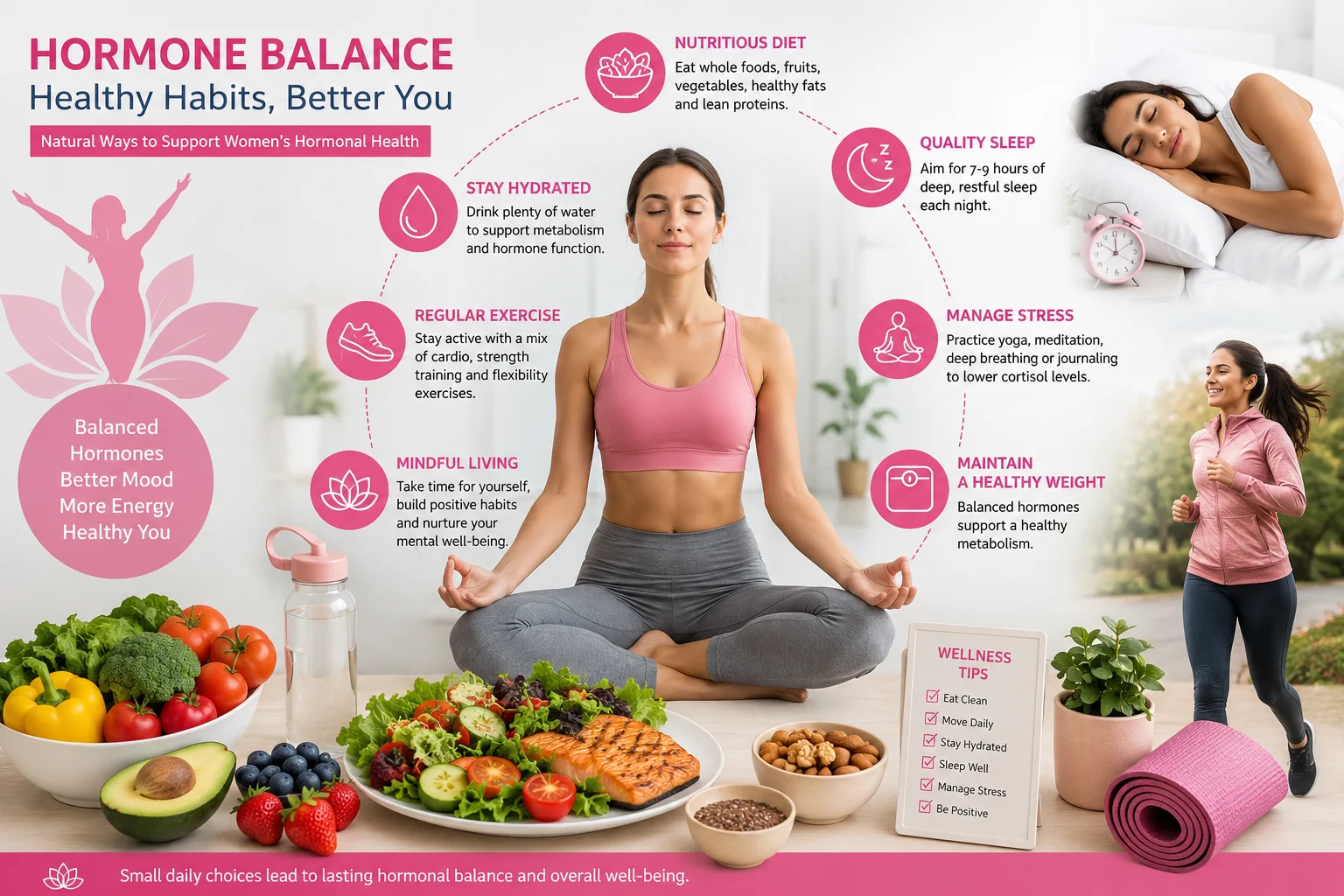
10 Lifestyle Changes That Support Hormonal Balance
1. Eat More Whole Foods
Focus on fruits, vegetables, whole grains, lean protein, and healthy fats. Whole foods provide essential nutrients needed for hormone production.
2. Increase Protein Intake
Protein helps regulate blood sugar and supports hormone synthesis. Include eggs, fish, chicken, legumes, and dairy products.
3. Choose Healthy Fats
Healthy fats are necessary for hormone production. Include avocados, olive oil, nuts, seeds, and fatty fish.
4. Reduce Sugar Intake
Excess sugar can increase insulin resistance and worsen hormonal imbalance.
5. Exercise Regularly
Exercise improves insulin sensitivity and reduces stress hormones. Walking, yoga, strength training, and cycling are excellent choices.
6. Prioritize Sleep
Sleep is essential for hormonal recovery. Aim for 7 to 9 hours of quality sleep every night.
7. Manage Stress Effectively
Meditation, breathing exercises, mindfulness, and yoga can help lower cortisol levels naturally.
8. Stay Hydrated
Water supports metabolism and helps transport hormones throughout the body.
9. Avoid Processed Foods
Processed foods can increase inflammation and negatively affect hormone balance.
10. Reduce Exposure to Endocrine Disruptors
Limit the use of plastic containers and choose natural personal care products whenever possible.
Best Foods for Hormonal Health
Certain foods support healthy hormone production and regulation.
- Broccoli
- Cauliflower
- Spinach
- Flaxseeds
- Chia Seeds
- Salmon
- Walnuts
- Berries
- Greek Yogurt
- Avocados
These foods provide fiber, antioxidants, vitamins, minerals, and healthy fats.
A Daily Routine for Hormonal Balance
Morning
- Wake up at the same time daily
- Get 10 minutes of sunlight
- Eat a protein-rich breakfast
Afternoon
- Choose balanced meals
- Take a short walk after lunch
Evening
- Complete light exercise
- Limit caffeine intake
Night
- Avoid screens before bed
- Maintain a consistent sleep schedule
How Long Does It Take to Improve Hormonal Balance?
The timeline depends on the underlying condition.
- Improved sleep: 1–2 weeks
- Better energy levels: 2–4 weeks
- Reduced cravings: 1 month
- Improved menstrual cycles: 2–3 months
- Better insulin sensitivity: 3–6 months
Consistency is the key to long-term hormonal health.
Signs Your Hormones Are Improving
- Regular periods
- Better sleep
- Improved mood
- Reduced bloating
- Clearer skin
- Stable weight
- Increased energy
- Better concentration
When Lifestyle Changes Are Not Enough?
While lifestyle changes can reverse hormonal imbalance naturally in some women, others may require medical treatment.
You should consult a specialist if you experience:
- Missing periods for several months
- Heavy menstrual bleeding
- Infertility concerns
- Severe pelvic pain
- Persistent fatigue
- Symptoms of thyroid disease
Women experiencing fertility challenges should consider consulting an infertility specialist in Noida for a detailed evaluation.
Expert Guidance From Dr. Aprajita Srivastava
Dr. Aprajita Srivastava is a highly skilled gynecologist, IVF specialist, and laparoscopic surgeon based in Sector 121, Noida. She specializes in reproductive medicine, infertility treatments, IVF, IUI, egg freezing, and high-risk pregnancy care.
Her expertise helps women manage hormonal disorders, fertility concerns, and reproductive health conditions through personalized treatment plans.
Hormonal imbalance can impact fertility and pregnancy outcomes. Conditions such as PCOS, thyroid disorders, and Silent Endometriosis may affect IVF success rates and reproductive health. Early diagnosis and proper management are important for achieving the best outcomes.
Women exploring IVF treatment in Noida or seeking advanced reproductive care can benefit from expert evaluation and treatment.
Medically Reviewed by Dr. Aprajita Srivastava
This article has been medically reviewed by Dr. Aprajita Srivastava, a leading Gynecologist, IVF Specialist, and Laparoscopic Surgeon in Noida. Her clinical expertise includes fertility treatment, reproductive medicine, advanced laparoscopic surgery, and women’s health management.
Phone: +91 95992 44575
Address: Office No. 143, 1st Floor, QURE CLINIC, Cleo Street, Sector 121, Noida, Uttar Pradesh 201301
Book a Consultation Today
If you are experiencing symptoms of hormonal imbalance, professional guidance can help identify the root cause and create a personalized treatment plan.
Consult Dr. Aprajita Srivastava to receive expert support for hormonal health, fertility concerns, reproductive disorders, and women’s wellness.
Frequently Asked Questions
Can hormonal imbalance go away naturally?
Some hormonal imbalances improve naturally through healthy lifestyle changes. Others may require medical treatment.
Can exercise help balance hormones?
Yes. Regular exercise can improve insulin sensitivity, reduce stress, and support healthy hormone production.
What foods help regulate female hormones?
Fiber-rich vegetables, healthy fats, lean proteins, and omega-3-rich foods support hormone health.
How long does it take to balance hormones naturally?
Many women notice improvements within a few weeks, while significant hormonal improvements may take several months.
Can hormonal imbalance affect fertility?
Yes. Hormonal imbalance can affect ovulation, menstrual cycles, and reproductive health, making conception more difficult.