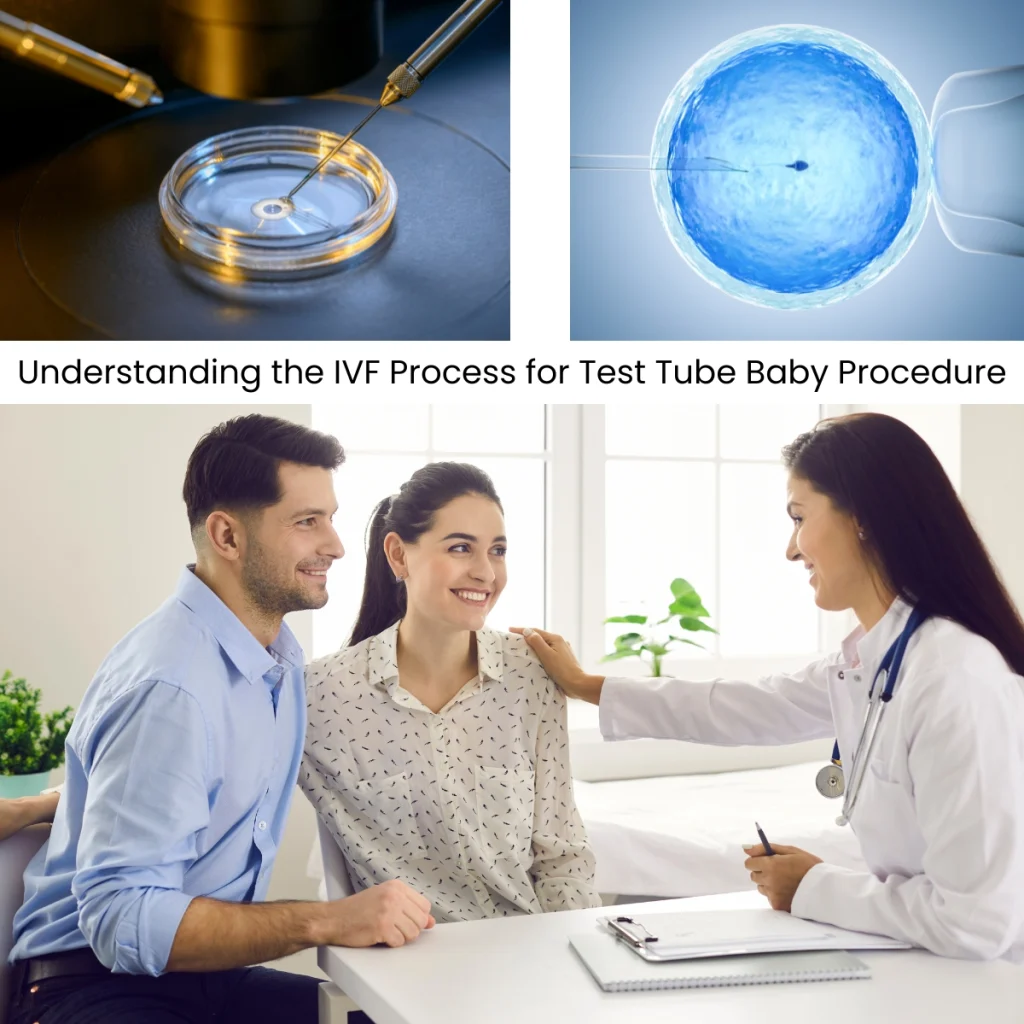
Why Some Women Produce Eggs But Never Get Pregnant in IVF is a common and emotionally challenging situation for many couples. You may go through the entire IVF process, produce multiple eggs, and still not achieve pregnancy.
At first, this feels confusing. After all, egg production is often seen as a positive sign. However, IVF success depends on more than just the number of eggs.
In reality, fertilization, embryo development, and implantation all play a role. Therefore, even with good egg retrieval, pregnancy may not happen.
Understanding the deeper reasons can help you take the right next step.
What Happens After Egg Retrieval in IVF?
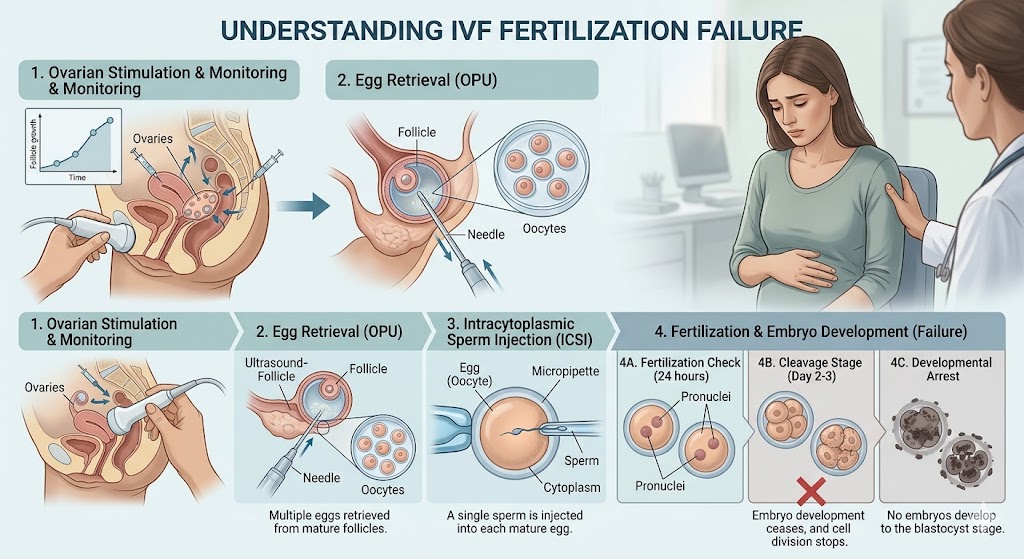
After egg retrieval, the IVF process moves to fertilization.
Doctors combine eggs and sperm in a controlled lab environment. In most cases, a good percentage of mature eggs fertilize successfully.
However, fertilization is only the beginning.
Next, embryos must develop properly over several days. Then, a healthy embryo must implant into the uterus.
If any of these steps fail, pregnancy does not occur.
This explains why egg production alone does not guarantee success.
Why Some Women Produce Eggs But Never Get Pregnant in IVF?
Why Some Women Produce Eggs But Never Get Pregnant in IVF often relates to hidden biological factors.
Eggs may be present, but their quality may not be optimal.
Similarly, sperm may appear normal but fail to function correctly.
In addition, the embryo may not develop properly or may fail to implant.
Because of this, IVF requires a complete evaluation rather than focusing on a single factor.
Common Reasons for IVF Fertilization Failure
Poor Egg Quality
Egg quality is one of the most important factors in IVF success.
Even when multiple eggs are retrieved, not all are capable of fertilization.
Some eggs may be immature. Others may be over-mature.
In certain cases, eggs may look normal under a microscope but still lack the ability to develop into healthy embryos.
Age, hormonal imbalance, and ovarian health all influence egg quality.
Therefore, quality matters more than quantity.
Sperm Function Issues
Sperm health is not just about count.
Even with normal reports, sperm may fail to bind with or penetrate the egg.
In some cases, sperm DNA remains tightly packed. As a result, fertilization cannot occur properly.
This is why advanced evaluation and treatment at a trusted IVF center in Noida becomes important.
Failed Egg Activation
Egg activation is a crucial step after sperm enters the egg.
This process triggers the beginning of embryo development.
If activation fails, fertilization does not proceed.
This issue is commonly seen in failed ICSI cycles.
In such cases, even direct sperm injection cannot guarantee success.
DNA and Genetic Problems
Genetic integrity plays a vital role in embryo development.
Sometimes, sperm DNA does not open correctly inside the egg.
As a result, the fertilization process fails.
Even if fertilization occurs, the embryo may stop developing early.
This leads to failed implantation or early pregnancy loss.
Role of ICSI in Improving Fertilization
ICSI is an advanced IVF technique used to improve fertilization rates.
In this method, a single sperm is directly injected into the egg.
This helps overcome sperm-related issues such as poor motility or binding failure.
ICSI is especially useful in cases of male factor infertility.
However, it does not solve all problems.
If egg quality is poor, fertilization may still fail.
What is Rescue ICSI and When is it Used?
Rescue ICSI is performed when fertilization fails after conventional IVF.
It involves injecting sperm into unfertilized eggs the next day.
Doctors consider this option when sperm binding was poor.
However, the timing is critical.
Also, embryos created through rescue ICSI are usually frozen for later transfer.
This is done to ensure better implantation conditions.
Although helpful, success rates may vary.
Embryo Development and Implantation Issues
Fertilization alone is not enough for pregnancy.
After fertilization, embryos must divide and grow properly.
Some embryos stop developing after a few days.
Others may reach the blastocyst stage but still fail to implant.
Implantation depends on uterine health as well.
A thin or non-receptive lining can prevent pregnancy.
Therefore, doctors evaluate both embryo quality and uterine conditions.
When Should You Be Concerned?
You should consider advanced evaluation if:
- No eggs fertilize after IVF
- Fertilization rate is very low
- Embryos stop developing early
- Implantation repeatedly fails
- Pregnancy does not occur after multiple cycles
In such cases, consulting an experienced infertility specialist in Noida can help identify hidden causes.
For deeper medical insights, you can also explore research on IVF fertilization failure causes.
How to Improve IVF Success After Failure
Improving IVF success requires a multi-step approach.
First, doctors may change the ovarian stimulation protocol. This helps improve egg maturity and quality.
Next, advanced techniques like ICSI or assisted activation may be used.
In some cases, genetic testing of embryos is recommended.
Additionally, improving lifestyle factors such as diet, sleep, and stress can support fertility.
Doctors may also focus on improving uterine receptivity.
Most importantly, personalized treatment plays a key role.
Emotional Impact and Hope After IVF Failure
IVF failure can be emotionally difficult.
Many couples feel discouraged after one or more failed cycles.
However, one failed cycle does not mean future failure.
In fact, many patients achieve success in subsequent attempts.
Each cycle provides valuable information.
Doctors use this data to improve future outcomes.
Therefore, staying informed and guided is important.
Conclusion
Why Some Women Produce Eggs But Never Get Pregnant in IVF is a complex issue. However, it is not without solutions.
Egg production is only one part of the process.
Fertilization, embryo development, and implantation all matter equally.
By identifying the root cause, doctors can improve success rates significantly.
With the right approach, many couples go on to achieve a successful pregnancy.
About Dr. Aprajita Srivastava
Dr. Aprajita Srivastava is a highly experienced fertility specialist known for managing complex IVF cases with a personalized approach.
She focuses on identifying hidden causes behind IVF failure and provides advanced treatment solutions.
Her expertise includes IVF, ICSI, and laparoscopic procedures for infertility care.
Dr. Aprajita Srivastava, IVF Specialist in Noida, Best Gynaecologist in Noida | Laparoscopic Surgery in Noida
Phone : +91 95992 44575
Address: Ofc No 143, 1st Floor, QURE CLINIC, Cleo St, Sector 121, Noida, Uttar Pradesh 201301
https://maps.app.goo.gl/xKC5rTW5NfitCmBF6