
The Hidden Nutrient Link to Fertility
Fertility is influenced by multiple factors. Hormones, age, and lifestyle all play a role. Nutrition is equally important. One nutrient that often goes unnoticed is Vitamin B12.
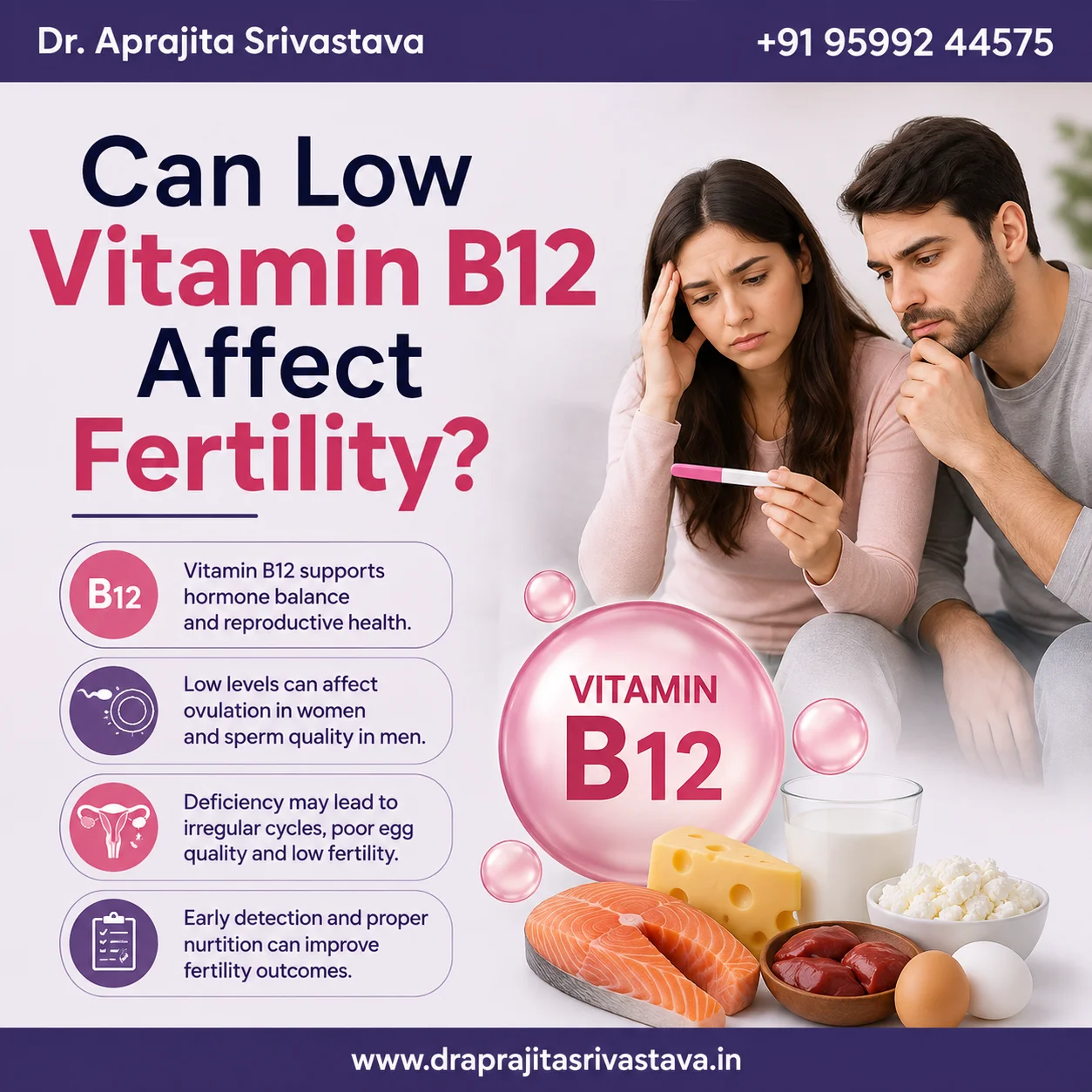
Vitamin B12 and fertility are closely connected. This vitamin supports key biological functions that directly impact reproductive health. Low levels can silently affect both men and wo-men.
Understanding this connection helps in identifying hidden causes of infertility.
What is Vitamin B12?
Vitamin B12 is a water-soluble vitamin. It supports the nervous system. It also helps in red blood cell formation.
More importantly, it plays a role in DNA synthesis. DNA is essential for healthy egg and sperm formation. Without proper DNA replication, reproductive cells may not function correctly.
This is why Vitamin B12 and fertility are linked at a cellular level.
The Role of Vitamin B12 in Reproductive Health
Reproductive health depends on proper cell division. Eggs and sperm are formed through rapid cell division. Vitamin B12 supports this process.
It also helps maintain hormonal balance. Hormones control ovulation and sperm production. Any imbalance can reduce fertility potential.
Nutrition plays a broader role in this process. You can explore how diet impacts conception in the role of nutrition in boosting fertility.
How Low Vitamin B12 Affects Female Fertility?
In women, Vitamin B12 deficiency can interfere with different stages of reproduction.
It may disrupt ovulation. Eggs may not mature properly. This reduces the chances of fertilization.
The uterine lining may also be affected. A healthy lining is required for embryo implantation. Poor lining reduces implantation success.
Many women experience irregular cycles when nutrient levels are low. Irregular ovulation cycles can delay conception. You can understand this better through irregular cycles and infertility.
Long-term deficiency may also increase the risk of early pregnancy loss.
How Low Vitamin B12 Affects Male Fertility?
Vitamin B12 supports sperm production. It helps in maintaining sperm quality.
Low levels may lead to reduced sperm count. Motility may also decrease. This affects the ability of sperm to reach the egg.
There may also be DNA damage in sperm cells. This reduces fertilization chances.
Some men may notice reduced libido as well.
To understand sperm health better, read about sperm motility and fertility.
Early Signs of Vitamin B12 Deficiency
Deficiency symptoms may appear gradually.
- Fatigue and low energy
- Weakness
- Pale or yellowish skin
- Memory issues
- Nerve-related discomfort
These symptoms may seem unrelated to fertility. But they often indicate underlying nutritional imbalance.
Who is at Higher Risk?
Some individuals are more prone to Vitamin B12 deficiency.
- Vegetarians and vegans
- People with digestive disorders
- Women with hormonal imbalance
- People on long-term medications
Conditions like PCOS may also affect nutrient balance and fertility. You can read about PCOS and its effect on fertility.
Dietary Sources of Vitamin B12
Vitamin B12 is mostly found in animal-based foods.
- Milk and dairy products
- Eggs
- Chicken and liver
- Fish like salmon and tuna
- Fortified cereals
People who avoid these foods may need alternative sources or supplements.
When Should You Check Vitamin B12 Levels?
A simple blood test can detect Vitamin B12 deficiency.
Testing is useful if you are trying to conceive and facing delays.
It is also recommended if you have symptoms like fatigue or irregular cycles.
Knowing when to consult a fertility specialist can help in early diagnosis.
Can Correcting Vitamin B12 Improve Fertility?
In many cases, improving Vitamin B12 levels supports fertility.
Egg quality may improve. Sperm health may also improve.
Hormonal balance can stabilize with proper nutrition.
However, results depend on overall health and other medical conditions.
Fertility issues often have multiple causes. Nutritional deficiency is one of them.
Ignoring it can delay treatment. Early evaluation helps in identifying the root cause.
Medical guidance ensures proper correction of deficiency.
Treatment, Recovery, and Improving Fertility Outcomes
In Part 1, we discussed how Vitamin B12 and fertility are connected. We also looked at how deficiency affects men and wo-men.
In this part, the focus is on correction. Understanding treatment options helps improve fertility outcomes.
How Vitamin B12 Deficiency is Treated?
Treatment depends on the severity of deficiency.
In mild cases, dietary changes may be enough. In moderate to severe cases, supplements are required.
The goal is to restore normal Vitamin B12 levels. This helps the body resume healthy cell function.
Dietary Changes That Help
Food is the first step in correction.
Vitamin B12 is found mainly in animal-based products.
- Milk and dairy products
- Eggs
- Chicken and meat
- Fish like salmon and tuna
- Fortified cereals
Regular intake of these foods can improve levels over time.
Balanced nutrition also supports reproductive health. You can understand this better in the role of nutrition in fertility.
Vitamin B12 Supplements
Supplements are often needed when diet alone is not enough.
Common forms include methylcobalamin and adenosylcobalamin.
These forms are easily absorbed by the body.
Dosage depends on individual needs. It should always be decided by a doctor.
How Long Does Recovery Take?
Recovery time varies.
Some people notice improvement within a few weeks. Others may take a few months.
Energy levels usually improve first. Fertility-related improvements may take longer.
This depends on overall health and other conditions.
Impact on Female Fertility After Treatment
Correcting Vitamin B12 levels can improve reproductive function.
Ovulation may become more regular. Egg quality may improve.
The uterine lining may also respond better. This supports implantation.
Women with irregular cycles may notice better cycle patterns. You can revisit irregular cycles and fertility issues to understand this link.
Impact on Male Fertility After Treatment
In men, sperm parameters may improve after correction.
Sperm count and motility may increase.
DNA integrity may also improve.
This increases the chances of successful fertilization.
For deeper insight, refer to sperm motility in fertility.
When Vitamin B12 Alone is Not Enough?
Fertility issues are often multi-factorial.
Vitamin B12 deficiency may be one part of the problem.
Other factors like hormonal imbalance, PCOS, or age may also play a role.
Understanding these factors is important. You can explore PCOS and fertility impact for additional clarity.
Medical Evaluation is Important
Self-treatment is not always enough.
A proper evaluation helps identify all contributing factors.
Doctors may recommend blood tests, hormone analysis, and fertility assessments.
Knowing when to consult a fertility specialist can prevent delays in treatment.
Role of Fertility Treatments
If natural conception does not happen, medical treatments may help.
Options include IUI and IVF.
These treatments are more effective when nutritional deficiencies are corrected.
Lifestyle Changes That Support Recovery
Along with treatment, lifestyle also matters.
- Eat a balanced diet
- Manage stress
- Maintain healthy weight
- Get enough sleep
These habits support overall fertility.
When to Seek Help
Consult a specialist if:
- You are trying to conceive for a long time
- You have known nutritional deficiencies
- You experience fatigue and irregular cycles
- You have previous fertility issues
Professional guidance helps create a personalized plan.
Final Thoughts
Vitamin B12 plays a vital role in fertility. Its deficiency can delay conception.
The good news is that it can be corrected. With proper diet, supplements, and medical support, fertility outcomes can improve.
Early action always gives better results.
Expert Guidance You Can Trust
Dr. Aprajita Srivastava, IVF Specialist in Noida, Best Gynaecologist in Noida.
Phone: +91 95992 44575
Address: Ofc No 143, 1st Floor, QURE CLINIC, Cleo St, Sector 121, Noida, Uttar Pradesh 201301
Dr. Aprajita Srivastava is a highly skilled gynecologist, IVF specialist, and laparoscopic surgeon. She specializes in infertility care, IVF, IUI, and egg freezing. She manages complex fertility issues and high-risk pregnancy cases with a practical and personalized approach.