
Dr. Aprajita Srivastava
IVF Specialist in Noida | Best Gynaecologist in Noida
Phone: +91 95992 44575
Address: Ofc No. 143, 1st Floor, QURE CLINIC, Cleo St, Sector 121, Noida, Uttar Pradesh 201301
Ovarian torsion is a serious gynecological emergency that requires immediate medical attention. Recognizing ovarian torsion symptoms early can help prevent permanent damage to the ovary and preserve fertility. The condition occurs when the ovary twists around the ligaments supporting it, cutting off its blood supply. If left untreated, ovarian torsion can lead to tissue death, infection, and even loss of ovarian function.
Although ovarian torsion is relatively uncommon, it is more frequently seen in women of reproductive age, preg n ant women, and those undergoing fertility treatments. Understanding ovarian torsion symptoms, causes, diagnosis, and treatment options can help women seek timely medical care and improve their chances of recovery.
What Is Ovarian Torsion?
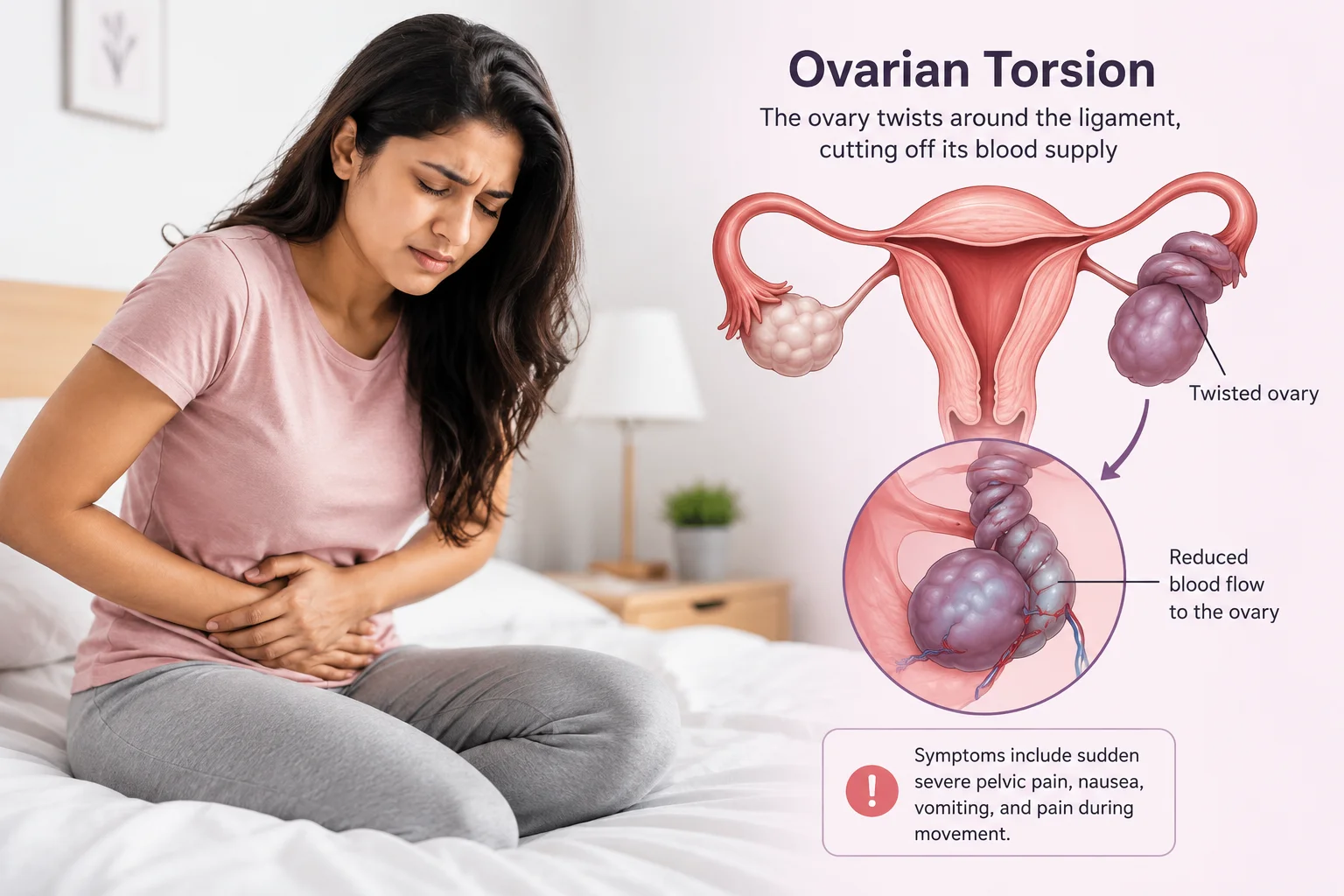
Ovarian torsion refers to the twisting of an ovary, sometimes along with the fallopian tube, around the tissues that hold it in place. This twisting blocks the normal blood supply to the ovary, causing severe pain and swelling.
Ovarian torsion accounts for approximately 2–3% of gynecological emergencies. The condition may develop suddenly and requires urgent surgical intervention. Prompt diagnosis and treatment can often save the affected ovary and maintain future fertility.
Women undergoing IVF treatment or ovulation induction therapies may have an increased risk because stimulated ovaries tend to become enlarged and heavier.
Ovarian Torsion Symptoms
Recognizing ovarian torsion symptoms is extremely important because delayed treatment may result in irreversible ovarian damage. Symptoms can vary from person to person, but the following warning signs are commonly reported.
1. Sudden Severe Pelvic Pain
The most common among all ovarian torsion symptoms is sudden and intense pain in the lower abdomen or pelvis. The pain usually affects only one side and may start without any apparent trigger.
Some women describe the pain as sharp, stabbing, or cramp-like. In certain cases, the pain may come and go as the ovary twists and untwists intermittently.
2. Nausea and Vomiting
Nausea and vomiting frequently accompany pelvic pain in women experiencing ovarian torsion symptoms. Reduced blood supply to the ovary and irritation of surrounding tissues may trigger these digestive symptoms.
3. Abdominal Tenderness
Women with ovarian torsion may notice tenderness when pressure is applied to the lower abdomen. Swelling and inflammation caused by restricted blood flow contribute to this discomfort.
4. Fever
Fever is considered a late symptom and may indicate that the ovarian tissue has started losing viability. It associated with pelvic pain should never be ignored.
5. Abdominal Bloating
Some women experience abdominal fullness or bloating because of pelvic inflammation and ovarian enlargement.
6. Pain During Walking or Movement
Certain body movements may worsen pain in women suffering from ovarian torsion symptoms. Walking, bending, or changing positions can increase discomfort.
What Causes Ovarian Torsion?
Several conditions can increase the likelihood of ovarian twisting.
Large Ovarian Cysts
Large ovarian cysts measuring more than 5 cm are the most common cause of ovarian torsion. Their additional weight and size make the ovary more mobile.
Women diagnosed with ovarian cysts may benefit from learning more about ovarian cysts and their impact on fertility.
Pregnancy
Hormonal changes during pregnancy may enlarge the ovaries, increasing their chances of twisting. Corpus luteum cysts formed during early pregnancy may further contribute to the risk.
Preg n ant women experiencing pelvic discomfort can also read about ovary pain during pregnancy.
Fertility Treatments
Ovulation induction medications used during IVF cycles stimulate the ovaries to produce multiple follicles. Enlarged ovaries become more susceptible to torsion.
Women considering assisted reproductive techniques can learn more about services available at an IVF Center in Noida.
PCOS
Women with polycystic ovary syndrome often have enlarged ovaries containing multiple follicles, increasing the risk of twisting.
Read more about PCOS and female fertility.
Ovarian Tumors
Benign ovarian masses and tumors can alter the normal position of the ovary and make it more mobile.
Long Ovarian Ligaments
Some women naturally have longer ovarian ligaments, which provide excessive mobility and increase the possibility of torsion.
Who Is at Risk for Ovarian Torsion?
Although ovarian torsion can affect females of any age, certain groups are at a higher risk.
- Women between 20 and 40 years of age
- Preg n ant women
- Women undergoing IVF treatment
- Patients with PCOS
- Women with large ovarian cysts
- Adolescent girls
- Women with previous ovarian torsion
- Patients with a history of pelvic surgery
Is Ovarian Torsion an Emergency?
Yes. Ovarian torsion is considered a medical emergency.
Blood flow obstruction can rapidly damage ovarian tissue. Early intervention significantly improves the chances of preserving the ovary and maintaining fertility.
If you experience sudden severe pelvic pain accompanied by nausea, vomiting, or fever, seek emergency medical care immediately.
Women experiencing persistent pelvic pain should consult a best gynecologist in Noida without delay.
How Is Ovarian Torsion Diagnosed?
Physical Examination
The doctor will assess the location and severity of pain and check for abdominal tenderness.
Pelvic Ultrasound
Ultrasound imaging may reveal:
- Enlarged ovary
- Peripheral follicles
- Fluid accumulation in the pelvis
Doppler Ultrasound
Doppler ultrasound evaluates blood flow to the ovary. However, normal blood flow findings do not completely rule out ovarian torsion.
CT Scan or MRI
Additional imaging tests may be recommended when ultrasound results are inconclusive.
Diagnostic Laparoscopy
Laparoscopy is considered the gold standard for confirming ovarian torsion. It allows surgeons to diagnose and treat the condition during the same procedure.
Conditions That Mimic Ovarian Torsion Symptoms
Several conditions may resemble ovarian torsion symptoms, making diagnosis challenging.
- Appendicitis
- Kidney stones
- Ectopic pregnancy
- Pelvic inflammatory disease
- Ruptured ovarian cyst
Emergency Treatment for Ovarian Torsion
Laparoscopic Detorsion
This is the preferred treatment option. Surgeons untwist the ovary using minimally invasive instruments to restore blood flow and preserve ovarian function.
Women requiring advanced surgical care may benefit from consulting specialists in gynae laparoscopic surgery.
Removal of Ovarian Cysts
If an ovarian cyst is responsible for torsion, doctors may remove it during surgery.
Oophoropexy
In women with recurrent ovarian torsion, surgeons may fix the ovary to the pelvic wall to prevent future twisting.
Oophorectomy
If the ovary has suffered irreversible damage, removal of the affected ovary may become necessary.
Can Ovarian Torsion Affect Fertility?
Early diagnosis and timely surgery can preserve fertility in most women. Even if one ovary is removed, the remaining healthy ovary can continue to produce eggs and maintain hormone levels.
Women planning pregnancy after ovarian torsion should consult an infertility specialist in Noida to discuss fertility preservation and conception options.
Recovery After Ovarian Torsion Surgery
Recovery following laparoscopic surgery is usually quick. Most women can return home within one or two days.
Recovery recommendations include:
- Avoid heavy lifting for two weeks.
- Drink plenty of fluids.
- Attend follow-up appointments.
- Undergo repeat ultrasounds if advised.
Most patients recover completely within one to two weeks and resume their normal activities shortly afterward.
When Should You See a Doctor?
Seek immediate medical attention if you experience:
- Sudden severe pelvic pain
- Persistent vomiting
- Pain associated with fever
- Severe pain during pregnancy
- Pain after fertility treatment
Prompt recognition of ovarian torsion symptoms and timely surgical treatment can save the ovary, preserve fertility, and prevent serious complications. Women experiencing any warning signs should not delay seeking medical help.