Hello, I’m Dr. Aprajita Srivastava, an IVF Specialist and Best Gynaecologist in Noida. Today, I want to talk about advanced cervical screening techniques beyond Pap smear and why they are essential for every woman’s health.
Cervical cancer is one of the most preventable cancers in women. Yet, it remains a leading health concern. Early detection is the key to prevention. Traditional Pap smears detect abnormal cells, but they sometimes miss early changes. That’s where modern screening comes in.
The Role of HPV in Cervical Health
Persistent infection with high-risk human papillomavirus (HPV) strains can lead to cervical cancer. Many HPV infections clear naturally. But some high-risk types can cause precancerous changes. Detecting HPV early gives us the chance to act before it progresses.
Advanced Cervical Screening Techniques
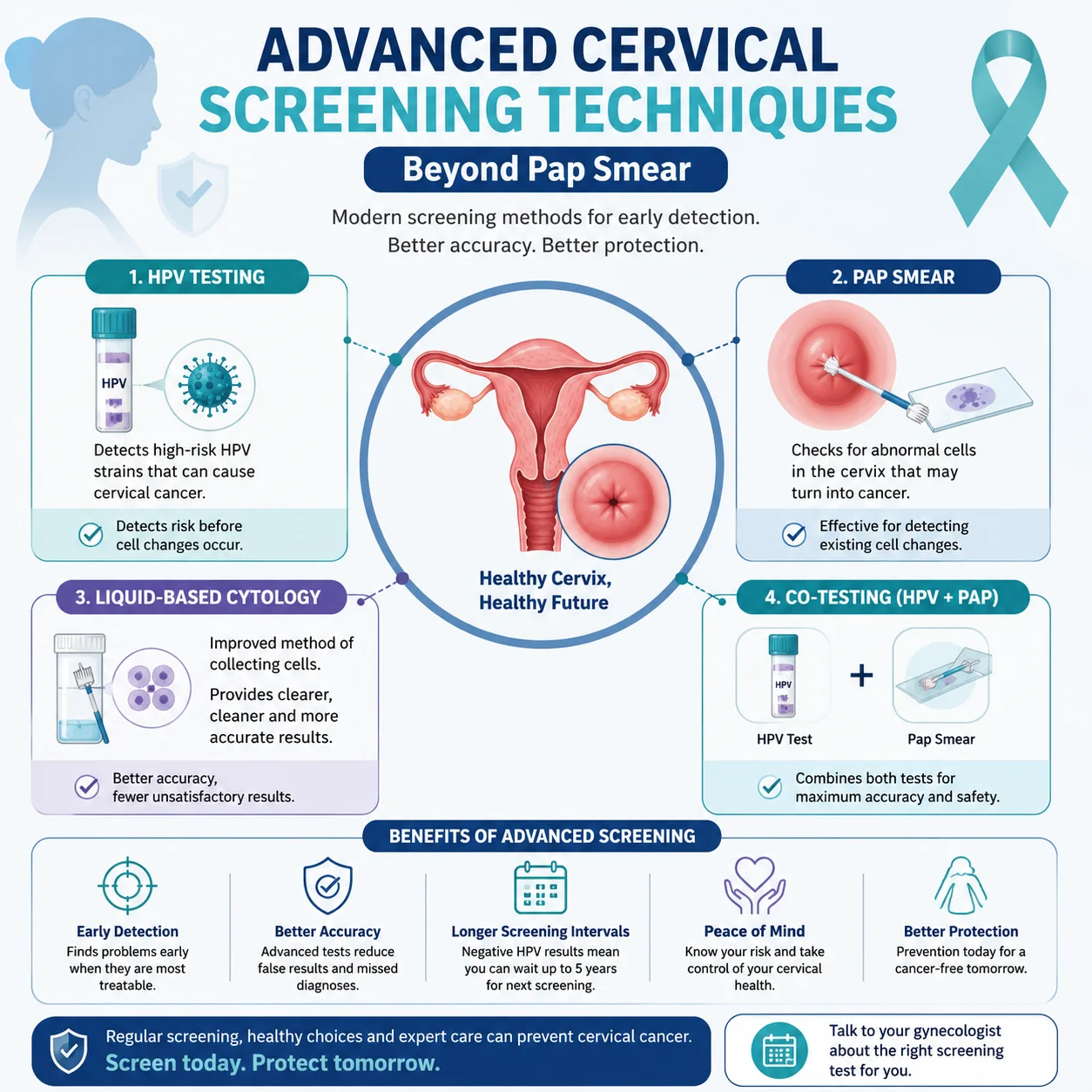
Over the years, cervical screening has evolved. Here are the modern techniques I use at QURE Clinic:
- HPV Testing: Detects high-risk HPV strains before abnormal cells appear. This helps in early prevention. Women with negative results can wait up to 5 years for the next test.
- Co-testing: Combines Pap smear and HPV testing. This method offers double assurance, especially for women over 30. Learn more about co-testing and fertility care.
- Molecular HPV DNA Testing: Identifies specific HPV types linked to cervical cancer. It allows us to monitor high-risk cases more closely.
- Liquid-Based Cytology (LBC): Provides clearer cell samples than traditional smears. It reduces errors and improves accuracy.
- Automated Image Analysis: AI-assisted systems minimize human error. They speed up results while improving detection rates.
Comparing Pap Smear and HPV Test
| Aspect | Pap Smear | HPV Test |
|---|---|---|
| Purpose | Detects abnormal or precancerous cells | Detects high-risk HPV infection |
| Best For | Early detection of cell changes | Identifying risk before abnormalities appear |
| Frequency | Every 3 years | Every 5 years (if negative) |
| Age Group | 21 years and above | 30 years and above (can combine with Pap) |
Who Should Get Screened?
All women should start screening at age 21. For women 21–29, Pap tests every 3 years are recommended. After 30, HPV testing or co-testing is preferred. Women with higher risk, such as immunocompromised patients or those with previous abnormal results, need more frequent checks. I also provide guidance for silent endometriosis and its effect on fertility.
Preparing for Screening
Before your appointment, avoid vaginal intercourse for 2 days. Refrain from tampons, creams, or lubricants. Schedule after your period. In some cases, tests can be done during menstruation if necessary.
Understanding the Results
Results can be:
- Normal/Negative: No abnormal cells or HPV detected.
- Abnormal/Positive: Abnormal cells or high-risk HPV found. This does not always mean cancer.
- Unclear/Unsatisfactory: Cells could not be evaluated clearly. Retesting is needed.
Abnormal results may require colposcopy or biopsy. At QURE Clinic, we guide patients through every step with care and precision.
My Approach to Cervical Health
I focus on personalized care. Every patient’s risk profile is different. My goal is to prevent cancer and preserve fertility. Regular screening allows timely intervention and reassurance. Women are encouraged to combine screening with overall reproductive health check-ups.
Silent Endometriosis and Fertility
Endometriosis can remain hidden yet impact IVF success. Detecting subtle changes in the cervix and uterus helps improve outcomes. I provide specialized care for such complex cases. Learn more about silent endometriosis and IVF.
Routine Screening Saves Lives
Advanced cervical screening is not just about detecting disease. It empowers women to take control of their health. Early detection allows us to prevent progression to cancer. It also ensures better fertility outcomes for women planning families.
Book Your Screening
At my clinic in Noida, we offer comprehensive cervical screening. My team and I prioritize comfort and accuracy.
Call +91 95992 44575 or visit our location in Sector 121, Noida to schedule your appointment.
Conclusion
Modern cervical screening techniques beyond Pap smear are critical. HPV testing, co-testing, LBC, and AI-assisted analysis improve early detection. By combining these methods with routine gynecological care, I help women stay healthy and fertile. Prioritize your cervical health today. Early detection saves lives.