
Diet plays a direct role in fertility. Many couples focus on adding healthy foods. Fewer people focus on removing harmful ones. This gap can delay results. Understanding foods to avoid while trying to conceive helps improve hormonal balance and reproductive health.
Food affects ovulation, sperm quality, and implantation. Poor choices can increase inflammation. They can also disturb insulin levels. Over time, this impacts fertility outcomes.
Dr. Aprajita Srivastava is a highly skilled gynecologist, IVF specialist, and laparoscopic surgeon based in Sector 121, Noida. She specializes in infertility care, IVF, IUI, and advanced reproductive treatments. Her approach focuses on practical lifestyle corrections along with medical care.
Before moving into detailed sections, here is a quick overview of foods that may reduce your chances of conception.
Quick List: Foods to Avoid While Trying to Conceive
- Excess caffeine
- Alcohol
- Processed and packaged foods
- High mercury fish
- Trans fats and unhealthy oils
- Sugary drinks and refined sugar
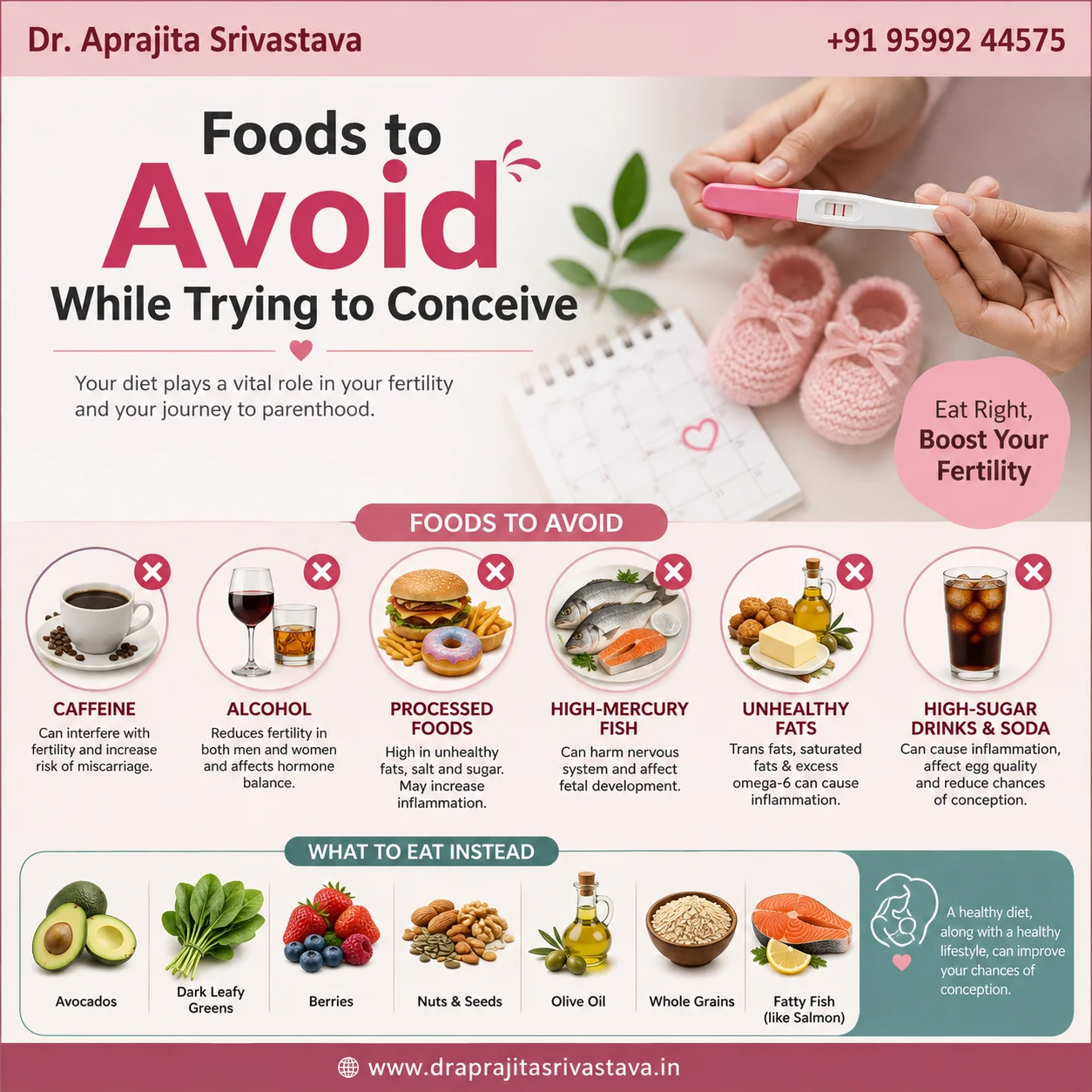
This list gives a basic direction. Each category affects fertility in a different way. The next sections explain this in detail.
Why Diet, When You Are Trying to Conceive?
The body needs the right nutrients to support reproduction. Hormones depend on balanced nutrition. Any imbalance can affect ovulation and sperm production.
Folic acid is one of the most important nutrients. It supports early embryo development. A deficiency can increase complications. Iron is also essential. It helps maintain oxygen supply in the body.
Body weight is another key factor. Poor diet can lead to weight gain or loss. Both conditions affect hormone levels. This can delay ovulation in women. It can also reduce sperm quality in men.
Insulin resistance is common in women with PCOS. Diet plays a major role here. High sugar intake worsens the condition. It can disturb menstrual cycles.
Inflammation is often ignored. Processed food and unhealthy fats increase inflammation. This can damage egg quality over time.
For deeper understanding, you can explore this guide on how nutrition supports fertility.
Foods to Avoid While Trying to Conceive
1. Caffeine
Caffeine is one of the most common items in daily diets. It is present in coffee, tea, chocolate, and energy drinks. High intake can affect fertility.
Excess caffeine may interfere with hormone regulation. It can also affect how the body absorbs nutrients. Some studies suggest it may impact implantation.
Limiting caffeine intake is important. One small cup per day is generally considered safe. Avoid strong coffee and energy drinks.
Replace it with herbal tea or low-caffeine options. This helps reduce stress on the body.
2. Alcohol
Alcohol affects both male and female fertility. It disrupts hormone levels. In women, it may affect ovulation timing. In men, it reduces sperm quality.
Even small amounts can have an impact over time. It can also increase the risk of early pregnancy complications.
Avoiding alcohol completely is the safest choice when trying to conceive.
3. Processed Foods
Processed foods are high in salt, sugar, and unhealthy fats. They are low in essential nutrients. This combination makes them harmful for fertility.
Regular intake can increase inflammation. It may also affect hormone balance. Over time, this impacts egg and sperm quality.
Common examples include packaged snacks, ready meals, and processed meats. Many so-called healthy snacks also fall into this category.
Switching to whole foods is a better approach. Fresh fruits, vegetables, and grains support overall health.
4. High Mercury Fish
Some fish contain high levels of mercury. This heavy metal can harm the nervous system. It is especially risky during early pregnancy.
High mercury levels may also affect reproductive health. Fish like shark, swordfish, and king mackerel should be avoided.
Safer options include salmon and shrimp. These provide essential nutrients without high risk.
5. Unhealthy Fats
Not all fats are harmful. However, trans fats and excessive saturated fats can affect fertility.
These fats increase inflammation. They may also disrupt hormone function. This can impact ovulation and sperm production.
Foods like fried snacks, fast food, and margarine contain high levels of trans fats. Limiting these is important.
Healthy fats are a better choice. Include sources like nuts, seeds, and olive oil.
6. Sugary Drinks and Refined Sugar
High sugar intake affects insulin levels. This is important in fertility. Poor insulin control can disturb ovulation.
Sugary drinks also add empty calories. They do not provide useful nutrients.
Regular intake may reduce egg quality. It can also affect long-term reproductive health.
Replace sugary drinks with water or natural beverages. This helps maintain balance in the body.
Understanding foods to avoid while trying to conceive is the first step. Making small changes can improve your chances over time.
In the next part, we will cover hidden foods, Indian diet mistakes, and what to eat instead for better fertility outcomes.
Hidden Foods That May Affect Fertility
Some foods appear healthy. Many people include them daily. But they may still impact fertility when consumed in excess. Understanding these hidden risks helps refine your diet further.
Diet Soda and Artificial Sweeteners
Diet drinks are often seen as a better choice than sugary beverages. However, artificial sweeteners may affect insulin response. This can indirectly disturb hormone balance.
Frequent intake may also impact gut health. A poor gut environment can affect nutrient absorption. Over time, this may influence reproductive health.
It is better to limit these drinks. Choose natural options like water or fresh homemade drinks.
Packaged Fruit Juices
Packaged juices often contain added sugar. They also lack fiber. This causes a quick spike in blood sugar levels.
Repeated spikes can affect insulin control. This is important for ovulation. It may also affect long-term fertility.
Fresh fruit is a better option. It provides fiber along with nutrients.
Low-Fat Dairy Products
Low-fat dairy is commonly used in weight management diets. However, some studies suggest it may not support fertility as expected.
Fat plays a role in hormone production. Removing it completely may disturb hormonal balance.
Moderate intake of full-fat dairy may be a better choice for some individuals.
Common Indian Diet Mistakes That Affect Fertility
Daily eating habits in India often include foods that may unknowingly affect fertility. Small adjustments can make a difference.
Excess Tea Consumption
Tea is a regular part of daily routine. Many people consume it multiple times a day. This increases caffeine intake.
High caffeine levels can affect hormone balance. It may also increase stress response in the body.
Limiting tea intake to one or two cups can help maintain balance.
Deep Fried Snacks
Foods like samosa, pakoda, and other fried snacks are high in unhealthy fats. Regular consumption increases inflammation.
This can affect both egg and sperm quality. Reducing intake is important for better outcomes.
Refined Flour (Maida)
Refined flour is used in many common foods. It has a high glycemic index. This causes rapid sugar spikes.
Over time, this affects insulin levels. It may disturb ovulation cycles.
Switching to whole grains is a better choice.
High Sugar Sweets
Traditional sweets are high in sugar. Frequent intake affects metabolic health.
This may impact fertility over time. Limiting sweets helps maintain better hormonal balance.
Male vs Female Fertility: Key Diet Differences
Fertility is not only a female concern. Male health also plays a role. Diet affects both partners in different ways.
For Women
Women need balanced hormones for ovulation. High sugar and processed food can disturb this balance.
Iron and folate are important nutrients. They support reproductive health and early pregnancy.
Maintaining a stable diet helps regulate cycles.
For Men
Men require good sperm quality. This includes count, motility, and structure.
Unhealthy fats and alcohol can reduce sperm quality. Nutrient-rich foods help improve overall reproductive function.
For more details, you can explore this guide on foods that support sperm health.
What to Eat Instead for Better Fertility
After understanding foods to avoid while trying to conceive, the next step is choosing the right alternatives.
A balanced diet should include whole foods. These support hormone balance and reduce inflammation.
Include fresh fruits and vegetables daily. Add whole grains like brown rice and whole wheat. Lentils and legumes provide essential nutrients.
Healthy fats are also important. Nuts, seeds, and olive oil support hormone production.
Protein intake should be balanced. Eggs, dairy, and plant-based sources are good options.
A simple daily pattern can help maintain consistency:
- Breakfast: whole grains with fruits
- Lunch: dal, vegetables, and roti
- Snacks: nuts and seeds
- Dinner: light and balanced meal
For a structured approach, you can refer to this PCOS and fertility diet plan.
Final Thoughts
Making the right dietary choices takes time. Avoiding harmful foods is a key step. It helps improve overall reproductive health.
Focus on consistency. Small daily changes create long-term results.
If you face difficulty in conceiving, expert guidance can help. Personalized advice ensures better outcomes.