
Many women experience mild discomfort or cramping around the time of ovulation. This temporary pain is known as Mittelschmerz, which means “middle pain” because it usually occurs in the middle of the menstrual cycle. Some women feel mild pressure, while others may notice sharp pain on one side of the abdomen.
In most cases, ovulation pain is harmless and short-lived. However, severe or persistent pain may sometimes indicate an underlying condition that needs medical attention.
What Is Ovulation Pain (Mittelschmerz)?
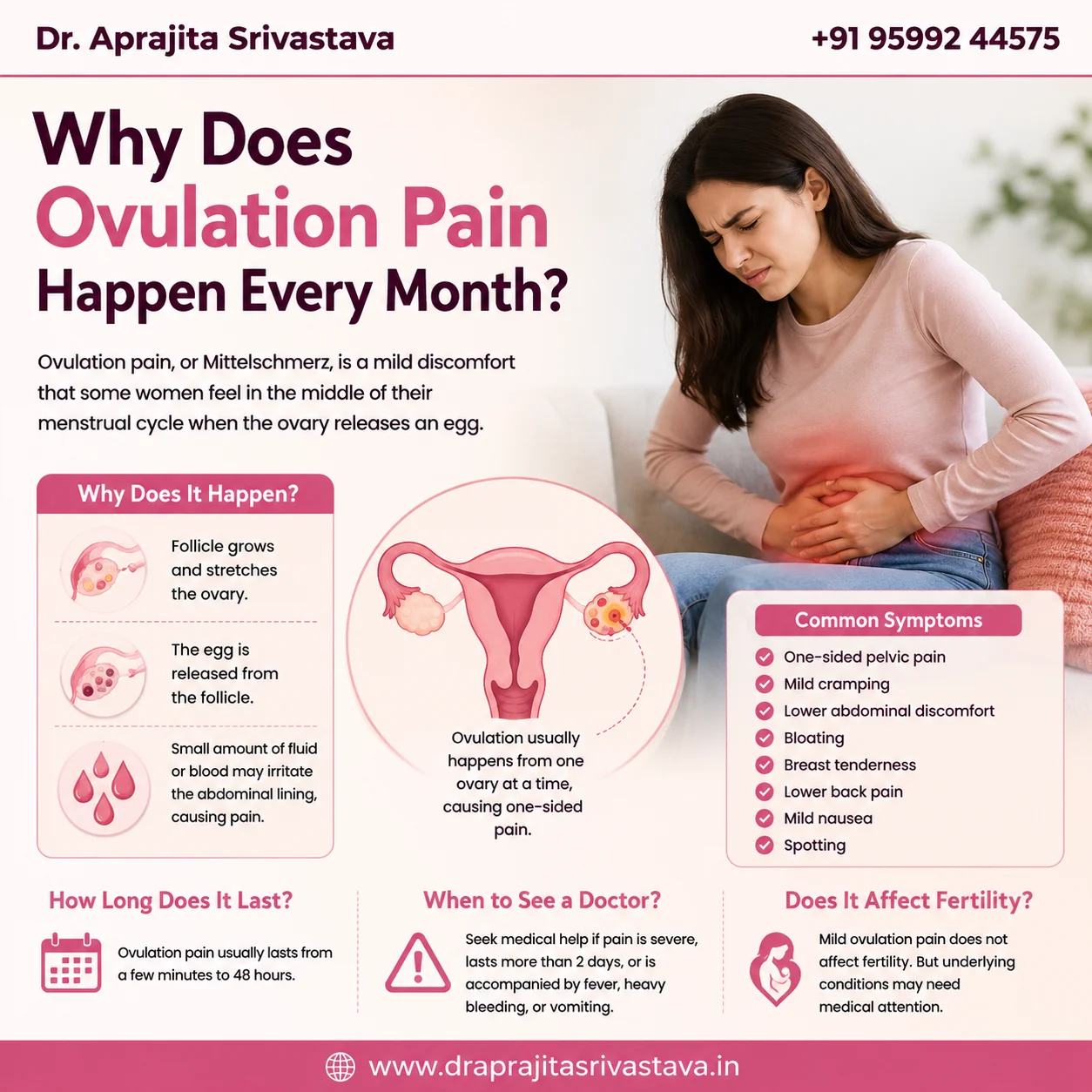
Mittelschmerz is the medical term used for pain that occurs during ovulation, when the ovary releases an egg. It usually happens around the middle of the cycle, about two weeks before the next period.
The pain is usually mild and temporary. Some women experience it every month, while others notice it occasionally. It often affects one side of the lower abdomen because ovulation occurs from one ovary at a time.
Why Does Ovulation Lead To Pain?
Several natural processes in the body during ovulation can cause pain or cramping.
Follicular Development and Egg Emission
Before ovulation, a follicle containing the egg grows in the ovary. As it grows, it stretches the surface of the ovary, which may cause discomfort.
When the egg is released, the follicle ruptures. This sudden release can cause brief pain. Learn more about this process here: egg rupture symptoms and causes.
Fluid or Blood Inflammation
After the follicle ruptures, a small amount of fluid or blood may be released into the abdominal cavity. This can irritate the lining of the abdomen and lead to cramps.
Contraction Of Uterine and Pelvic Muscles
Hormonal changes during ovulation can trigger contractions in the uterus and pelvic muscles. These contractions may result in cramping pain.
Common Symptoms of Ovulation Pain
Symptoms vary among women. Common signs include:
One-sided pelvic pain
Mild cramping
Lower abdominal discomfort
Spotting
Bloating
Breast tenderness
Lower back pain
Mild nausea
Some women may also feel fatigue or increased sensitivity in the pelvic area.
How Long Does Ovulation Pain Last?
Ovulation pain may last from a few minutes to up to 48 hours. For many women, the discomfort is short. Some may experience it every month, while others notice it occasionally. Duration and intensity depend on hormonal patterns and individual sensitivity.
Is Pain During Ovulation Normal?
Mild pain during ovulation is common and usually not a concern. However, severe pain is not always normal.
If pain interferes with daily activities or gets worse over time, it is important to seek medical advice. Symptoms like fever or heavy bleeding should not be ignored. Read more about warning signs here: signs to consult a gynecologist.
Lower Back Pain During Ovulation: Sign of Pregnancy?
Some women feel lower back pain during ovulation. This can happen due to hormonal changes and pelvic cramping.
However, ovulation itself does not confirm pregnancy. Pregnancy symptoms usually appear after implantation, which occurs a few days later.
Lower back pain alone is not a reliable sign of pregnancy. A pregnancy test after a missed period gives a more accurate result.
Tender Breast Post-Ovulation: Sign of Pregnancy?
Breast tenderness is common after ovulation due to hormonal changes. Progesterone levels increase during this phase, which may cause swelling or heaviness.
This symptom can be confused with early pregnancy. However, it is also a common premenstrual symptom. Proper testing is needed to confirm pregnancy.
Conditions Associated With Severe or Intense Ovulation Pains
Severe ovulation pain may sometimes be linked to conditions such as:
Ovarian cysts
Endometriosis
Pelvic inflammatory disease
Polycystic ovary syndrome
Fibroids
Explore related topics here:
endometriosis symptoms and treatment
PCOS and fertility
fibroids and fertility
Options for Treatment of Ovulation Pain
There are different ways to manage ovulation pain.
Home Treatment
Some simple methods can help:
Use a heating pad
Take proper rest
Stay hydrated
Take warm baths
Pain Relief Medications
Over-the-counter pain relief medicines may help. Always consult a doctor before taking any medication.
Healthy Lifestyle Choices
Healthy habits can reduce discomfort:
Exercise regularly
Manage stress
Eat balanced meals
Get proper sleep
Read more here: lifestyle and fertility health
Hormonal Birth Control
Hormonal contraceptives may help reduce ovulation pain by preventing ovulation in some cases.
When to See Your Physician?
Consult a doctor if you experience:
Sudden severe pain
Fever
Heavy bleeding
Vomiting
Pain lasting more than two days
Difficulty moving
Pain during intercourse
You can connect here: contact page
Can Ovulation Pain Affect Fertility?
Mild ovulation pain usually does not affect fertility. Some women use it as a natural sign of ovulation.
However, conditions like PCOS or endometriosis may impact fertility. In such cases, proper evaluation is needed. You can explore options here: infertility specialist in Noida.
How to Track Ovulation Symptoms?
Tracking ovulation helps understand your cycle better.
Common methods include:
Ovulation calendars
Basal body temperature tracking
Cervical mucus observation
Period tracking apps
Learn more here: fertile days in menstrual cycle
About Dr. Aprajita Srivastava
Dr. Aprajita Srivastava is a highly skilled gynecologist, IVF specialist, and laparoscopic surgeon based in Sector 121, Noida. With extensive expertise in reproductive medicine, infertility treatments, and advanced procedures like IVF, IUI, and egg freezing, she is known for addressing complex fertility and high-risk pregnancy cases.
Dr. Aprajita Srivastava, IVF Specialist in Noida, Best Gynaecologist in Noida
Phone : +91 95992 44575
Address: Ofc No 143, 1st Floor, QURE CLINIC, Cleo St, Sector 121, Noida, Uttar Pradesh 201301
https://maps.app.goo.gl/xKC5rTW5NfitCmBF6
Conclusion
Ovulation pain is a common mid-cycle symptom. In most cases, it is mild and temporary. However, severe or persistent pain should not be ignored. Understanding symptoms and tracking your cycle can help manage reproductive health better. Timely medical advice ensures proper care when needed.