
Pain during intercourse is a common concern among women of all ages. Medical experts call this condition dyspareunia. It refers to persistent or recurring pain before, during, or after sexual intercourse. The discomfort may be mild or severe. It can affect physical health, emotional well-being, and intimate relationships.
Occasional discomfort during sex may not always indicate a serious problem. However, repeated pain should never be ignored. Identifying the underlying cause can help women receive the right treatment and improve their quality of life.
What is Dyspareunia?
Dyspareunia is the medical term used for painful sexual intercourse. The pain may occur at the vaginal opening or deep inside the pelvis. Some women experience pain only in certain positions, while others feel discomfort every time they have intercourse.
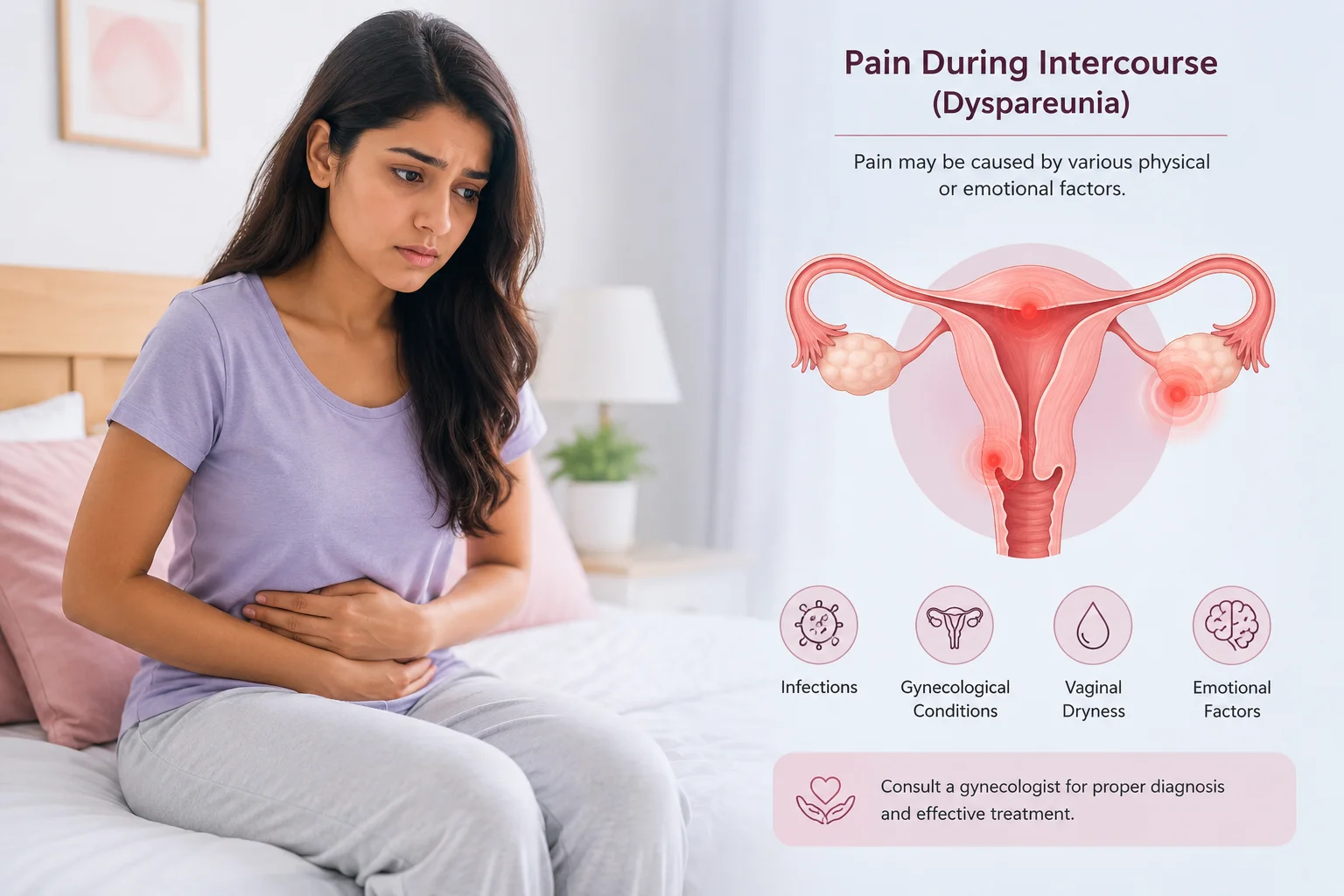
This condition is more common in women after menopause. However, younger women can also experience painful intercourse due to infections, hormonal changes, or gynecological disorders.
Types of Pain During Intercourse
Entry Pain
This pain occurs when penetration begins. It is usually felt around the vaginal opening. Vaginal dryness, infections, or skin conditions often cause this type of pain.
Deep Pain
Deep pain is felt inside the pelvis during thrusting. Conditions affecting the uterus, ovaries, or pelvic organs commonly cause this discomfort.
Symptoms of Pain During Intercourse
Symptoms vary from person to person. Common signs include:
- Burning sensation during penetration
- Sharp or stabbing pain
- Pelvic cramping during intercourse
- Throbbing pain lasting for hours after sex
- Vaginal dryness
- Pain while inserting a tampon
- Loss of sexual desire due to fear of pain
Causes of Pain During Intercourse
Several medical and emotional factors can lead to painful intercourse.
Vaginal Dryness
Insufficient lubrication is one of the most common causes. It can occur because of menopause, breastfeeding, certain medications, or inadequate foreplay.
Women experiencing menopause-related symptoms should seek advice from a best gynecologist in Noida for proper evaluation.
Vaginismus
Vaginismus causes involuntary tightening of vaginal muscles. This makes penetration painful or sometimes impossible.
You can learn more about vaginismus, its symptoms, causes, and treatment.
Endometriosis
Endometriosis develops when tissue similar to the uterine lining grows outside the uterus. It often causes severe pelvic pain, painful periods, and discomfort during intercourse.
Read more about endometriosis symptoms, diagnosis, and treatment.
Pelvic Inflammatory Disease
Pelvic inflammatory disease causes inflammation in reproductive organs. Pressure during intercourse may worsen the pain.
Ovarian Cysts
Large ovarian cysts can lead to deep pelvic pain. Some women also experience bloating and irregular menstrual cycles.
Uterine Fibroids
Fibroids are non-cancerous growths inside the uterus. Depending on their size and location, they may cause pain during intercourse.
Discover how uterine fibroids can affect fertility.
Infections
Bacterial infections, yeast infections, sexually transmitted infections, and urinary tract infections can irritate vaginal tissues and make intercourse uncomfortable.
Skin Disorders
Certain skin conditions such as eczema or lichen sclerosus may cause itching, irritation, and pain around the vulva.
Psychological Factors
Emotional health also plays an important role in sexual comfort.
- Stress
- Anxiety
- Depression
- Relationship difficulties
- Previous traumatic experiences
Pain During Intercourse After Childbirth
Some women notice pain while having sex after delivery. Hormonal changes can reduce natural lubrication. Vaginal tears and episiotomy scars may also contribute to discomfort.
Healing usually takes time. Women recovering from childbirth should follow proper postpartum care and recovery tips.
Can Pain During Intercourse Affect Fertility?
Pain during intercourse itself does not cause infertility. However, certain conditions responsible for pain can interfere with conception.
Examples include:
- Endometriosis
- Pelvic inflammatory disease
- Large fibroids
- Hormonal disorders
If painful intercourse is associated with difficulty conceiving, consulting an infertility specialist in Noida may help identify the underlying issue.
How is Dyspareunia Diagnosed?
A doctor will review your medical history and ask questions about your symptoms.
Diagnostic tests may include:
- Pelvic examination
- Vaginal swab tests
- Urine examination
- Ultrasound scan
- Sexually transmitted infection screening
- Laparoscopy in selected cases
Treatment for Pain During Intercourse
Treatment depends on the underlying cause.
Medications
- Antibiotics for bacterial infections
- Antifungal medicines for yeast infections
- Topical estrogen creams
- Pain-relieving medications
Pelvic Floor Therapy
Pelvic floor exercises help relax muscles and reduce pain. Biofeedback therapy may also improve symptoms.
Lubricants
Water-based lubricants can decrease friction and improve comfort during intercourse.
Counseling
Counseling may benefit women dealing with anxiety, fear, or relationship concerns. Open communication with a partner is equally important.
Home Remedies to Reduce Pain During Sex
- Spend more time on foreplay.
- Use water-based lubricants.
- Try positions that feel comfortable.
- Take a warm bath before intercourse.
- Avoid scented soaps and feminine hygiene sprays.
- Empty your bladder before sex.
- Practice stress management techniques.
When Should You See a Doctor?
You should seek medical attention if you experience:
- Pain during every sexual encounter
- Bleeding after intercourse
- Persistent pelvic pain
- Fever or unusual vaginal discharge
- Sudden worsening of symptoms
Women experiencing these symptoms should not delay medical consultation. Learn about other signs that indicate it is time to visit a gynecologist.
Conclusion
Pain during intercourse is a treatable condition. It can result from infections, hormonal changes, gynecological disorders, or emotional stress. Early diagnosis helps prevent complications and improves sexual health.
If painful intercourse continues despite self-care measures, consult a qualified gynecologist. Proper treatment can restore comfort, confidence, and intimacy.