
Many women feel anxious after an IVF cycle and wonder if complete bed rest after embryo transfer can improve their chances of pregnancy. Some families advise staying in bed for several days, while others encourage returning to normal activities. So, is bed rest necessary after embryo transfer?
Studies suggest that prolonged bed rest after embryo transfer does not increase implantation or pregnancy rates. Instead, maintaining a calm routine, following medications, and adopting healthy lifestyle habits may provide better support during the implantation period.
What Is Embryo Transfer?
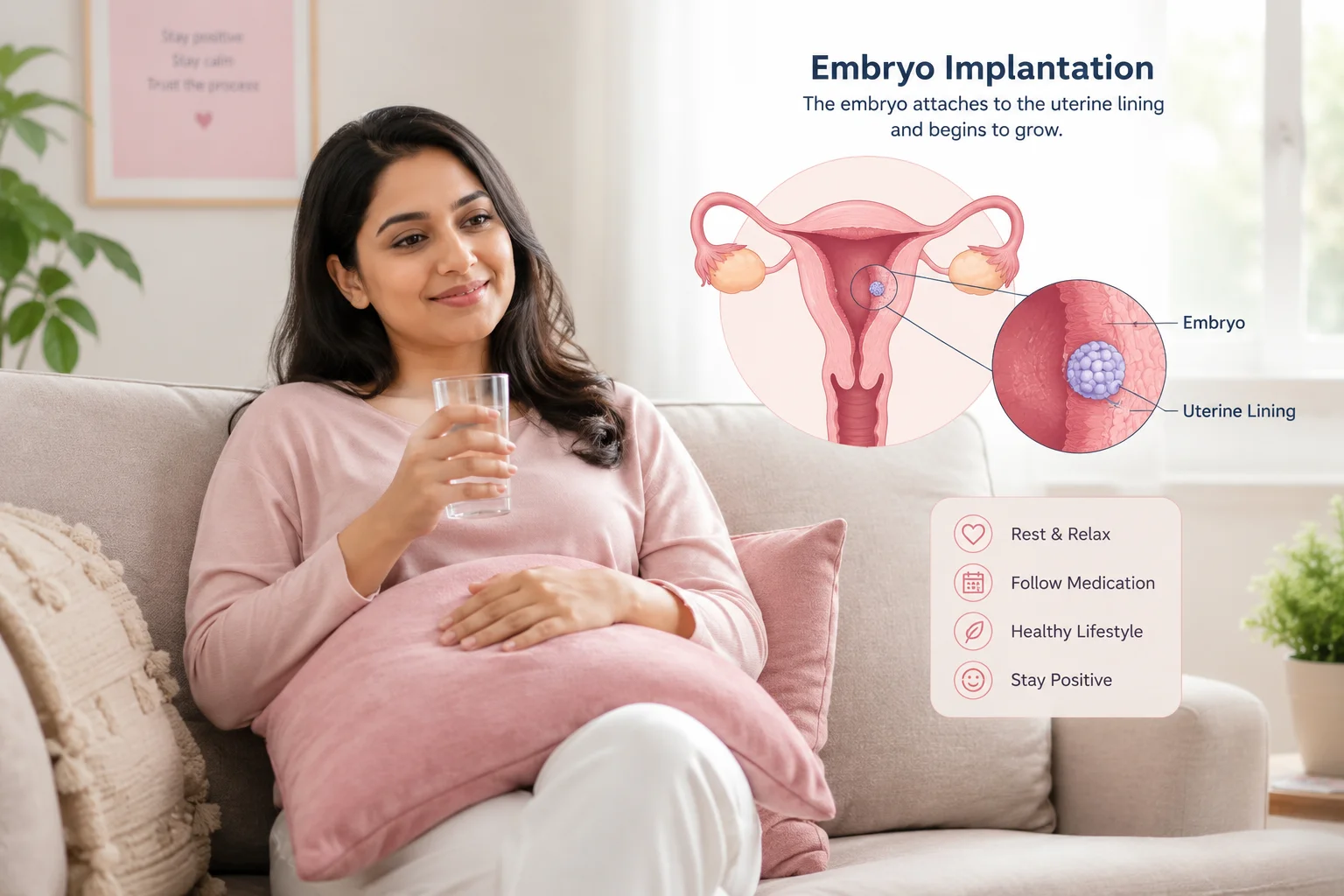
Embryo transfer is the final stage of an IVF cycle. During this procedure, a fertility specialist gently places a healthy embryo inside the uterus using a thin catheter. The process is quick, usually painless, and does not require anaesthesia in most cases.
For all the effort involved in an IVF journey, embryo transfer is the moment when pregnancy becomes possible. The procedure generally takes only a few minutes. Patients may rest at the clinic for a short period before returning home.
Many women search for information about bed rest after embryo transfer because they fear that movement may affect implantation. Fortunately, this concern is mostly based on myths.
Women planning treatment can also learn more about preparing for IVF treatment before starting their IVF journey.
What Happens Inside the Body After Embryo Transfer?
After embryo transfer, the embryo continues its natural development inside the uterus. Implantation is a complex biological process that takes place over several days.
| Days After Transfer | Embryo Development |
|---|---|
| Day 1 | The embryo begins hatching from its outer shell. |
| Day 2 | The embryo starts attaching to the uterine lining. |
| Day 3–5 | Implantation progresses deeper into the endometrium. |
| Day 6–10 | The body starts producing hCG hormone. |
It is important to understand that the embryo cannot simply fall out or become displaced by normal body movements. The uterus provides a protected environment for implantation.
Why Is Bed Rest Recommended After IVF Transfer?
Some fertility clinics suggest a short period of relaxation after embryo transfer. However, this recommendation is mainly intended to help patients feel comfortable.
Bed rest after embryo transfer may be advised for several reasons:
- To help patients relax after the procedure.
- To reduce stress-related uterine contractions.
- To provide emotional reassurance during the waiting period.
- To allow the medical team to observe the patient briefly before discharge.
- To minimise temporary discomfort caused by a full bladder used during the procedure.
Research has shown that prolonged bed rest after embryo transfer does not increase implantation rates or improve IVF success. In fact, complete inactivity may sometimes contribute to anxiety and emotional distress.
Is Bed Rest Necessary After Embryo Transfer?
No, prolonged bed rest after embryo transfer is generally not necessary.
Several studies have demonstrated that women who return to normal, non-strenuous activities have pregnancy rates similar to those who remain in bed for several days.
The embryo is securely placed inside the uterine cavity. Walking to the bathroom, preparing meals, reading, watching television, or sitting comfortably does not affect its position.
Dr. Aprajita Srivastava explains that patients should focus on maintaining a calm mindset instead of worrying excessively about movement. Stress management plays an important role during the implantation window.
Women experiencing repeated implantation failure may require further evaluation.
Couples seeking personalised fertility care can also consult an infertility specialist in Noida for a detailed assessment.
How Many Days of Bed Rest After IVF Treatment?
One of the most common questions patients ask is, “After IVF treatment, how many days of bed rest are needed?”
For most women, only a few hours of rest after embryo transfer are sufficient.
Many specialists advise light activity for the first 24 hours. Patients can then gradually return to their usual routine.
There is no scientific evidence supporting complete bed rest after embryo transfer for several days.
However, women should avoid physically demanding activities, including:
- Heavy lifting
- Intense exercise sessions
- High-impact sports
- Long-distance running
- Carrying heavy grocery bags
Simple household activities and slow walking are generally considered safe.
Activities That Are Safe and Activities to Avoid
Many women feel nervous after an embryo transfer and avoid almost every activity. However, moderate movement is safe and does not reduce implantation chances.
| Safe Activities | Activities to Avoid |
|---|---|
| Walking indoors | Running |
| Desk work | Gym workouts |
| Reading books | Heavy lifting |
| Cooking simple meals | Jumping exercises |
| Office work | Steam rooms and saunas |
Patients undergoing treatment at an IVF Center in Noida often receive personalised activity recommendations depending on their medical history and previous treatment outcomes.
What Is the Best Sleeping Position After Embryo Transfer?
Many women worry that sleeping in the wrong position could affect implantation.
Fortunately, sleeping position does not influence embryo attachment.
You may sleep on your back, left side, or right side according to your comfort level.
The most important goal is getting adequate sleep and allowing the body to recover naturally.
Avoid sleeping positions that cause discomfort or back pain.
Can Climbing Stairs Affect IVF Success?
No.
Climbing stairs slowly and carefully does not reduce IVF success rates.
The embryo remains protected inside the uterus. Moderate physical movement does not cause it to detach.
Patients living in multi-storey homes can continue using stairs unless advised otherwise by their fertility specialist.
What to Do After Embryo Transfer?
Instead of focusing entirely on bed rest after embryo transfer, women should adopt habits that support overall wellbeing and emotional balance.
- Continue taking all prescribed medications on time.
- Drink enough water throughout the day.
- Eat balanced meals rich in protein and essential nutrients.
- Practice meditation and deep breathing exercises.
- Maintain a positive routine.
- Avoid smoking and alcohol consumption.
- Limit excessive caffeine intake.
- Get at least seven to eight hours of sleep every night.
Following a healthy eating plan can also support hormonal balance. Patients may benefit from reading about food for IVF success and understanding IVF success rates in Noida before beginning treatment.
Symptoms During the Two-Week Wait
The period between embryo transfer and pregnancy testing is commonly known as the two-week wait. It can be emotionally challenging for many couples.
Some women experience mild symptoms during this phase, while others may not notice any changes at all.
Common symptoms during the two-week wait include:
- Mild abdominal cramping
- Breast tenderness
- Fatigue or tiredness
- Bloating
- Light spotting
- Mood swings
- Increased vaginal discharge
These symptoms do not always indicate successful implantation. They may also occur because of hormonal medications used during IVF treatment.
Women who feel anxious during this phase can benefit from discussing their concerns with an infertility specialist in Noida and receiving personalised guidance.
Does Silent Endometriosis Affect IVF Success?
Silent endometriosis is a condition in which endometrial-like tissue grows outside the uterus without causing obvious symptoms. Many women remain unaware of the condition until they undergo fertility investigations.
Inflammation associated with silent endometriosis may affect egg quality, embryo development, and implantation. Proper diagnosis and treatment may improve reproductive outcomes in selected patients.
Women diagnosed with endometriosis should discuss their treatment options with an experienced specialist before starting another IVF cycle.
Common Myths About Bed Rest After Embryo Transfer
Myth 1: Longer Bed Rest Improves Implantation
Fact: Scientific studies have found no evidence that prolonged bed rest after embryo transfer increases pregnancy rates. Short periods of relaxation are usually sufficient.
Myth 2: Walking Can Dislodge the Embryo
Fact: The embryo is safely placed inside the uterus. Walking, sitting, standing, and gentle movements do not cause the embryo to fall out.
Myth 3: Staying in Bed Prevents IVF Failure
Fact: IVF success depends on multiple factors. These include embryo quality, uterine receptivity, maternal age, hormonal balance, and underlying medical conditions.
Myth 4: Sleeping Only on the Back Helps Implantation
Fact: There is no scientific evidence showing that a specific sleeping position improves implantation.
When Should You Contact Your IVF Specialist?
Mild cramping and bloating are common after embryo transfer. However, certain symptoms require immediate medical attention.
Contact your doctor if you experience:
- Heavy vaginal bleeding
- Severe abdominal pain
- Difficulty breathing
- Persistent vomiting
- Sudden swelling of the legs
- High fever
Expert Advice From Dr. Aprajita Srivastava
According to Dr. Aprajita Srivastava, prolonged bed rest after embryo transfer is usually unnecessary. Most women can safely resume normal, non-strenuous activities within 24 hours.
She advises patients to focus on maintaining emotional wellbeing, following prescribed medications, staying hydrated, and eating nutritious meals. A positive mindset and reduced stress levels can make the waiting period more manageable.
QURE CLINIC
Ofc No 143, 1st Floor, Cleo St, Sector 121, Noida, Uttar Pradesh 201301
Phone : +91 95992 44575
Frequently Asked Questions
Can I sit normally after embryo transfer?
Yes. Sitting, standing, and walking are considered safe after embryo transfer. These activities do not affect embryo implantation.
How long should I rest after embryo transfer?
Most fertility specialists recommend resting for a few hours after the procedure. Light daily activities can usually be resumed within 24 hours.
Can I travel after embryo transfer?
Short-distance travel is generally safe. Long journeys should be discussed with your fertility specialist based on your individual condition.
Can stress affect implantation?
Although stress alone does not directly cause implantation failure, managing stress may improve emotional wellbeing during the two-week wait.
Can I climb stairs after embryo transfer?
Yes. Climbing stairs slowly and carefully does not reduce IVF success rates or disturb embryo implantation.
Conclusion
Bed rest after embryo transfer has long been considered an essential part of IVF recovery. However, current evidence suggests that extended bed rest after embryo transfer does not improve implantation or pregnancy outcomes.
A short period of relaxation may help patients feel comfortable, but complete inactivity is not necessary. Gentle movement, healthy eating habits, proper medication use, and emotional balance are more beneficial during the implantation period.
Always follow the advice of your fertility specialist, as every IVF journey is unique. With personalised care and appropriate guidance, patients can move through the two-week wait with greater confidence and peace of mind.